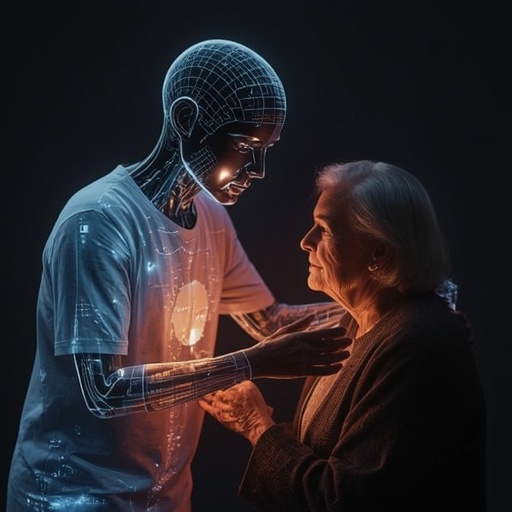
Artificial intelligence–powered chatbots are being introduced as potential companions for elderly individuals facing isolation, offering thoughtful conversation and a sense of presence in moments that would otherwise feel silent. These virtual interlocutors, designed to emulate empathy and friendly responsiveness, can indeed alleviate the acute sense of loneliness that often accompanies aging, particularly for those whose social circles have diminished with time. Through speech synthesis, adaptive language models, and responsive dialogue systems, many seniors find themselves with a newfound digital presence that listens without judgment and responds instantly.
However, experts at Yale University have expressed caution about embracing these AI-based companions too uncritically. While such systems can enrich daily life by providing comfort, they also carry subtle psychological consequences that warrant deeper reflection. Overreliance on synthetic conversation might gradually weaken our intrinsic capacity to cultivate authentic human relationships — the nuanced, unpredictable, and deeply emotional exchanges that form the essence of real social communication. In replacing organic warmth with algorithmic imitation, we risk attenuating interpersonal empathy, patience, and the very skills through which community and connection are sustained.
The challenge, therefore, lies not in rejecting AI companionship altogether but in cultivating equilibrium — learning how to integrate these technological aids into daily living without allowing them to substitute for human presence. Technology can be a bridge that lessens distance, brightens solitude, and fosters new forms of exchange; yet, if approached without mindfulness, it can become a comfortable but isolating barrier that detaches people from one another.
This is not simply a generational issue but a societal reflection on the evolving nature of companionship in an increasingly digital world. The ethical question at the heart of this discussion is profound: How do we ensure that artificial empathy augments, rather than replaces, the depth of human empathy? If we view AI as a tool for connection, tempered with awareness and boundaries, it might indeed serve as a powerful ally. But if used as a surrogate for meaningful interaction, it may inadvertently erode the emotional foundations that hold communities together.
As technology continues to advance, finding this delicate balance — between innovation and humanity, efficiency and warmth, convenience and authenticity — becomes a defining task for our era. Artificial intelligence can support, but never substitute, the complexity of the human heart.
Sourse: https://www.businessinsider.com/ai-chatbot-cure-loneliness-hurt-relationships-yale-professor-2026-7