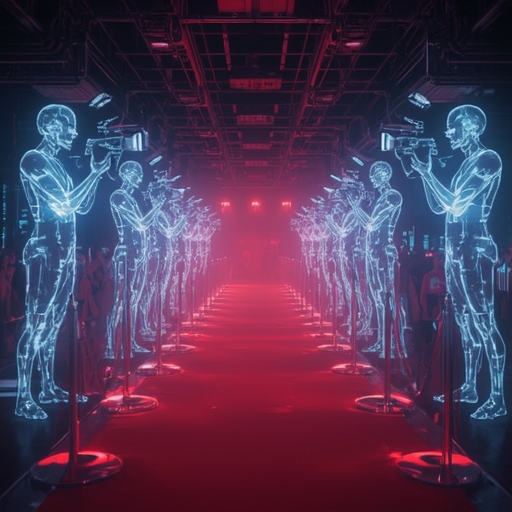
Hollywood has drawn a definitive boundary that underscores the tension between human artistry and machine-generated creativity. Artificially generated actors and scripts—no matter how convincing, sophisticated, or emotionally engaging—will no longer be eligible for recognition by the Academy Awards. This sweeping rule change by the Academy of Motion Picture Arts and Sciences represents far more than a mere technical clarification; it is a deliberate reaffirmation of the belief that cinema’s essence lies in the irreplaceable human touch.
In an era when artificial intelligence has begun transforming nearly every industry, from visual effects and scriptwriting to casting and production workflows, this decision sends a powerful cultural message. By explicitly excluding AI-generated performances and scripts, the Academy is reasserting that what distinguishes great film is not only innovation or efficiency but the uniquely human capacity for empathy, intention, and emotion. The Oscars, long regarded as the pinnacle of artistic achievement in film, are thus positioning themselves as guardians of authenticity amid a rapidly evolving technological landscape.
This move is likely to intensify ongoing debates about the role of artificial intelligence in the creative arts. Supporters of the decision argue that artistic recognition should remain rooted in human expression—an achievement born of creativity, vulnerability, and lived experience. They see this as a necessary step to protect the integrity of storytelling and the livelihoods of actors, writers, and filmmakers whose contributions could be overshadowed by algorithmic replication. Conversely, some innovators and technologists view the ban as a conservative reaction to progress, questioning whether creativity should be confined to the limits of biological authorship when AI can collaborate, inspire, and extend human imagination in unprecedented ways.
Whatever one’s stance, the Academy’s announcement is a pivotal moment in the evolving dialogue between art and technology. It challenges the film industry—and by extension, society at large—to reexamine what it truly means to create, perform, and communicate meaning through stories. In choosing to prioritize the human element, the Oscars are not just upholding tradition; they are inviting a profound conversation about the essence of creativity itself. This decision may mark the beginning of a new era—one defined not by the replacement of human talent with artificial intelligence, but by the mindful coexistence of artistic innovation and human authenticity.
Sourse: https://techcrunch.com/2026/05/02/ai-generated-actors-and-scripts-are-now-ineligible-for-oscars/


