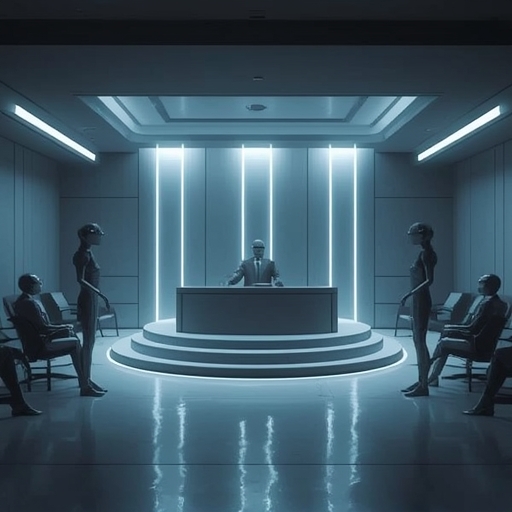
In an unexpected turn of events that captivated both the technology and legal communities, a prominent artificial intelligence executive made a surprise appearance in a California courtroom. What began as a standard round of jury selection quickly evolved into an illuminating snapshot of how AI has entered the collective consciousness of the public. As potential jurors voiced strong and often polarized opinions about artificial intelligence and the individuals and corporations spearheading its development, the proceedings revealed something far deeper than a mere legal formality — a cross-sectional view of our society’s hopes, fears, and divergent beliefs about the technologies shaping our future.
This surprising courtroom moment served as a tangible reminder that discussions surrounding AI are no longer confined to research labs, innovation hubs, or the insulated environments of Silicon Valley boardrooms. Instead, these conversations are now playing out in everyday civic spaces — in courthouses, classrooms, workplaces, and social gatherings. The courtroom atmosphere, charged with curiosity and tension, underscored how artificial intelligence has transcended its technical origins to become a moral, philosophical, and cultural issue. Questions of trust, bias, accountability, and transparency are not abstract policy debates anymore; they are real-world concerns influencing people’s perceptions and decisions.
As potential jurors expressed their opinions, some articulated excitement about AI’s potential to revolutionize medicine, education, and sustainability, while others voiced apprehension about automation, job displacement, data misuse, and the rise of opaque decision-making systems. This diversity of sentiment reflected the global conversation currently playing out across media platforms and public forums — a growing recognition that technological advancement must be balanced by ethical responsibility and human oversight.
For the AI executive, the moment carried symbolic weight. Their presence blurred the boundary between the architects of technological progress and the communities that must live with its consequences. It demonstrated how influential figures in the tech world, willingly or not, have become cultural lightning rods — embodiments of the promise and peril of modern innovation. The spontaneous, unscripted exchange in court thus became a poignant reflection of our era’s most pressing dilemma: how to reconcile humanity’s pursuit of progress with its moral duty to safeguard fairness, transparency, and human dignity.
Ultimately, this episode highlighted a broader societal shift. The debate over artificial intelligence has moved firmly into the public sphere, where ordinary citizens, not just experts or executives, are determining how they feel about the systems increasingly woven into the fabric of daily life. Whether celebrated as tools of empowerment or feared as instruments of control, AI technologies now sit at the heart of a dialogue about what it means to live responsibly in a digital age. The courtroom scene was therefore more than a passing news story — it was a living metaphor for the world’s negotiation with a rapidly changing technological reality. #AI #Ethics #Technology #Innovation #PublicTrust
Sourse: https://www.businessinsider.com/sam-altman-shows-up-court-jury-selection-elon-musk-trial-2026-4


