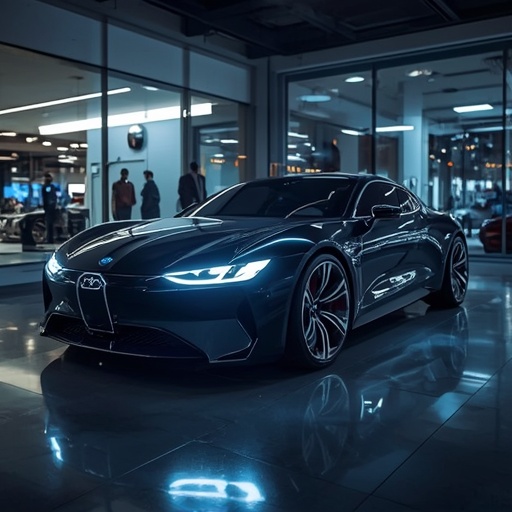
Artificial intelligence has evolved from a futuristic concept into a transformative force that is fundamentally reshaping the world of automotive design. Once, car creation followed a meticulous, time‑intensive process that could span as long as five years—a duration during which emerging technologies, shifting consumer demands, and new environmental considerations could render early design decisions obsolete. Today, however, the integration of AI into every stage of vehicle development is redefining not only the speed of innovation but also the scope of creativity that designers and engineers can achieve.
At its core, AI’s contribution lies in the powerful combination of data‑driven precision and imaginative synthesis. Modern AI systems can process vast libraries of design references, aerodynamic patterns, and ergonomic data far beyond what any human team could reasonably analyze. Using neural networks and machine learning algorithms, these tools detect subtle correlations in user behavior, market trends, and material performance, enabling them to generate conceptual models that are both aesthetically striking and functionally optimized. As a result, design teams can now fine‑tune prototypes in weeks rather than years, allowing for an unprecedented iterative rhythm between imagination and feasibility.
The human designer’s role, contrary to being diminished, has become more strategic and creative. Rather than sketching countless manual drafts, designers can guide AI frameworks through precise prompts, parameters, and stylistic cues. The algorithms then produce expansive arrays of possibilities—from sleek aerodynamic silhouettes to sustainable material combinations—each variation grounded in both artistic inspiration and scientific efficiency. In essence, AI acts as an intelligent collaborator, one capable of exploring creative territories that humans might never have considered but are instantly able to evaluate through simulation and feedback loops.
Beyond aesthetics, artificial intelligence also enhances engineering and user experience. Predictive analytics can anticipate not only how future drivers will interact with vehicles but also their unspoken needs in evolving urban and environmental contexts. For instance, AI models may propose designs that harmonize with smart‑city infrastructures or suggest configurations that reduce energy consumption without compromising luxury or performance. The outcome is a new generation of cars that are not only visually compelling but also adaptive—machines capable of adjusting their own systems and even their physical form in subtle ways according to real‑time data from drivers and surroundings.
Moreover, AI’s creative potential extends to redefining brand identity and personalization. Advanced generative models allow manufacturers to tailor designs to specific markets or even individual users, blending aesthetics with emotional resonance. Through these mechanisms, two cars of the same model may share an underlying framework while differing in stylistic nuances that reflect the driver’s preferences, lifestyle, or geographic climate. Such responsiveness would have been unimaginable within traditional, linear design pipelines.
As the automotive industry continues its evolution toward electrification and autonomy, AI’s influence will likely deepen. Vehicles conceived through algorithmic design will merge ergonomic intelligence, environmental mindfulness, and creative boldness in ways that blur the boundaries between technology and art. The future car will not merely be a mode of transportation—it will embody a continuously learning system, shaped by human imagination, refined through data, and born from collaboration between artistry and computation.
In this symbiotic partnership between human vision and machine precision, artificial intelligence is not replacing creativity; it is expanding its horizon. The cars of tomorrow—intelligent, adaptive, and aesthetically daring—stand as a testament to what is possible when design is informed by both human intuition and digital cognition. The revolution has already begun, and it promises to redefine what mobility, innovation, and beauty mean in the modern era.
Sourse: https://www.theverge.com/podcast/923974/ai-car-design-codex-vergecast


