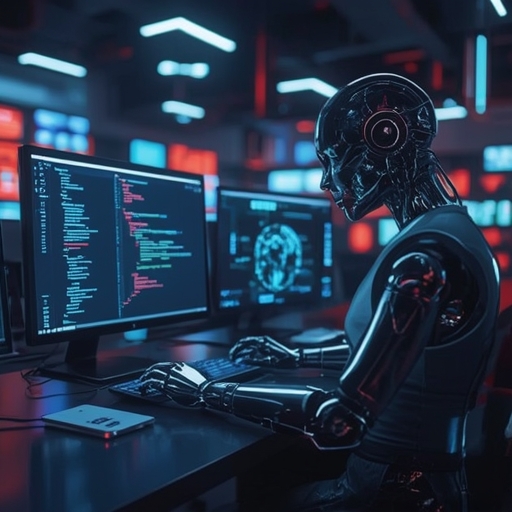
In the swiftly evolving world of software engineering, artificial intelligence has advanced from being a mere helper to becoming a formidable creative force and programming collaborator. OpenAI’s president, Greg Brockman, recently revealed a striking statistic: AI systems are now responsible for producing as much as eighty percent of the code generated by developers. This revelation underscores a dramatic transformation in the way we conceive, design, and implement digital solutions.
What was once considered a distant aspiration of human‑machine integration has now become a daily reality for countless developers worldwide. Instead of manually writing every line, professionals are guiding sophisticated AI models—systems that can instantly generate functional code snippets, recommend optimizations, and even foresee logic flaws before deployment. This deep synergy between human insight and synthetic intelligence is redefining productivity. Developers can now focus on higher‑order tasks such as architecture decisions, user experience refinement, and innovation strategy, while AI performs the mechanical yet critical groundwork of constructing executable components.
The effects of this partnership go far beyond time savings. It represents a paradigm shift that democratizes software creation. Individuals with limited programming background can now prototype applications through conversational interfaces, relying on AI to interpret intent and translate it into syntactically precise code. Teams, in turn, are discovering that coding no longer needs to be a solitary act of problem‑solving, but rather a fluid dialogue between human imagination and algorithmic precision.
This collaborative evolution, while immensely promising, also invites reflection on accountability, quality control, and creativity. As intelligent systems assume greater authorship over code, developers must cultivate new skills in prompt engineering, model evaluation, and ethical oversight. The goal is not to replace human ingenuity, but to amplify it—to construct a symbiotic environment where AI handles complexity and humans direct purpose.
Ultimately, the integration of AI at this scale signals the opening of a transformative chapter in technological history. The coding process is evolving from manual craftsmanship into a shared creative enterprise where machine intelligence accelerates discovery. The implication for businesses, researchers, and builders alike is clear: those who learn to collaborate effectively with AI will shape the next generation of digital innovation—and redefine what it means to write code in the twenty‑first century.
Sourse: https://www.businessinsider.com/openai-president-ai-now-writing-80-percent-of-code-2026-5


