The individual widely celebrated as the “Godfather of Artificial Intelligence,” Geoffrey Hinton, has recently suggested that the moment has finally arrived for Google to reclaim its position at the forefront of the AI revolution. In a candid and reflective interview with Business Insider, Hinton expressed that he finds it more astonishing that Google took so long to outpace its rivals, particularly OpenAI, given the tech giant’s deep historical involvement and pioneering contributions to the field. As a professor emeritus at the University of Toronto and a former long-term researcher at Google Brain, Hinton’s perspective carries exceptional weight, rooted in both his academic rigor and firsthand experience within Google’s own neural network research division.
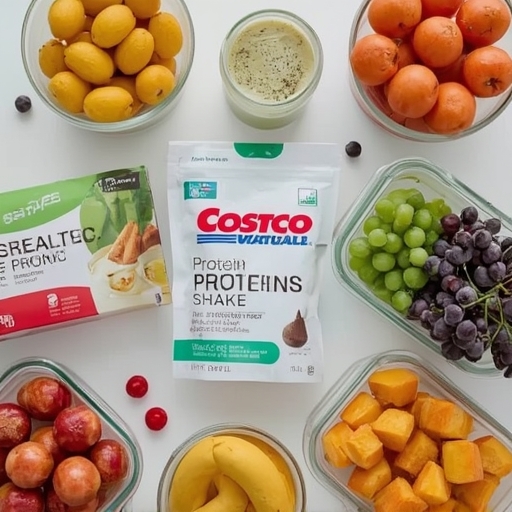
Hinton’s remarks come at a particularly significant time for the search and technology behemoth. Google has just unveiled its highly praised Gemini 3 model—a major upgrade that many industry observers and experts argue may have propelled the company beyond OpenAI’s much-touted GPT-5 system. Alongside this milestone, Google’s AI-based image generation model, known as Nano Banana Pro, has garnered widespread acclaim for its creativity, responsiveness, and technological sophistication. The combination of these advances has signaled a remarkable resurgence for Google, an organization that, merely three years ago, was reportedly in crisis mode following the release of OpenAI’s ChatGPT. At that time, internal leadership within Google was said to have called a “code red,” alarmed by the rapid pace of OpenAI’s innovation and the public attention it commanded. Now, however, the tables appear to have turned. Recent insider reports suggest that OpenAI itself may be feeling similar pressure as Google’s latest wave of achievements repositions the company back into a dominant position. As Hinton succinctly put it, he believes Google is now “beginning to overtake” its primary competitor.
Bolstering this momentum, Google’s market performance has seen a corresponding uplift. Shares of the company rose sharply following reports that it may soon negotiate a billion-dollar partnership with Meta, under which Google would supply specialized AI chips. According to Hinton, the production of its own sophisticated hardware provides Google with a “significant strategic advantage.” He emphasized that few companies possess the same combination of cutting-edge infrastructure, extensive data resources, and highly skilled researchers that Google commands. “Google has a lot of very good researchers,” he noted, adding that the company’s immense data repositories and powerful cloud-based computational centers further amplify its ability to innovate. On this foundation, Hinton ventured his personal forecast: “My guess is that Google will win.”
Reflecting on Google’s earlier years, Hinton recalled that the company had once been the undisputed leader in artificial intelligence development, largely due to groundbreaking research and technological foresight. “Google was in the lead for a long time,” he observed. He reminded listeners that it was Google’s teams who invented the now-famous transformer architecture—the very innovation that became the backbone of modern large language models. In addition to this, Google had been experimenting with large-scale chatbots long before such tools captivated mainstream attention. However, despite its pioneering edge, the corporation exercised notable restraint in advancing these projects toward public release. Hinton attributed this cautious approach to lessons drawn from others’ missteps, particularly referencing Microsoft’s infamous “Tay” chatbot incident of 2016. The chatbot, introduced as a social experiment on Twitter, was quickly withdrawn after producing offensive and racist content, creating a major public relations crisis. According to Hinton, this episode vividly demonstrated the reputational risks associated with premature AI deployment. “Google, obviously, had a very good reputation and was worried about damaging it like that,” he explained.
This sentiment of deliberate caution was also publicly echoed by Google CEO Sundar Pichai. In earlier statements, Pichai confirmed that the company had consciously delayed the release of its own conversational AI systems, stating, “We hadn’t quite gotten it to a level where you could put it out and people would’ve been okay with Google putting out that product.” He acknowledged that, at that time, the technology still contained too many imperfections to meet the company’s high standards of responsibility and reliability.
Nevertheless, Google’s recent history has not been without missteps. In the past year, several of its AI-driven efforts faced waves of public scrutiny. The company temporarily halted the use of one of its AI image generation tools after users complained of historically inaccurate portrayals, some labeling them as “overly woke.” Around the same period, its AI-generated search summaries occasionally produced bizarre or nonsensical suggestions—such as telling users to apply glue to pizza to keep the cheese from slipping off—prompting widespread online mockery. These incidents illustrated the persistent challenge of balancing fast-paced innovation with responsible product rollout.
Despite these obstacles, Hinton remains deeply intertwined with Google’s evolving AI legacy. His recent interview coincided with an announcement that Google has donated 10 million Canadian dollars to establish the Hinton Chair in Artificial Intelligence at the University of Toronto, an institution where Hinton had long split his professional time during his tenure with Google. The university pledged to match Google’s substantial contribution, solidifying its commitment to advancing foundational AI research in his honor.
Hinton departed Google in 2023, explaining that his decision stemmed from growing ethical and existential concerns surrounding the societal risks of advanced AI systems. Since leaving, he has become an outspoken advocate for scrutinizing the potential dangers posed by artificial intelligence—from the risks of it surpassing human cognitive abilities to the economic and occupational displacements it may trigger. In recognition of his extraordinary contributions to the scientific community, Hinton was jointly awarded the Nobel Prize in Physics in 2024, a rare distinction underscoring the cross-disciplinary impact of his revolutionary work.
Google’s own statement on the new academic chair reflected both admiration and gratitude: “Geoff’s work on neural networks—spanning his time in academia and his decade here at Google—laid the foundation for modern AI,” the company said. The endowment, according to Google, not only honors Hinton’s enduring legacy but also seeks to attract visionary scholars who embody the same spirit of deep curiosity, fundamental inquiry, and bold innovation that characterized Hinton’s career. In essence, the initiative symbolizes both a tribute to the past and an investment in the future—the very balance that continues to define the rapidly evolving world of artificial intelligence.
Sourse: https://www.businessinsider.com/ai-godfather-geoffrey-hinton-google-overtaking-openai-2025-12