Across the ever-evolving landscape of modern industry, Snap’s recently announced layoffs signify more than a temporary restructuring—they serve as a vivid representation of a far larger economic and technological transformation that is rapidly gaining momentum. A growing number of global enterprises, ranging from tech giants such as Meta to major financial institutions like JPMorgan, are strategically embracing artificial intelligence to reimagine how productivity and innovation are achieved.
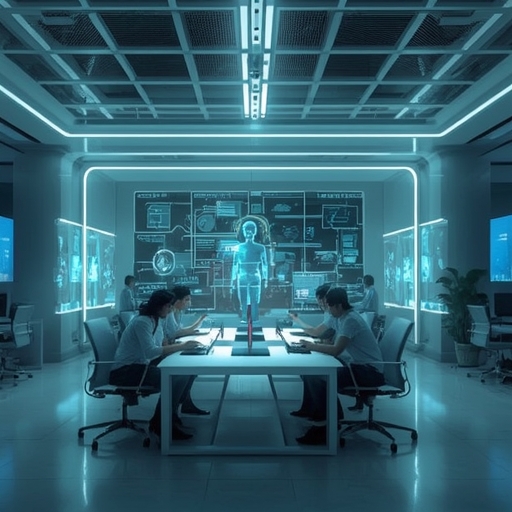
This shift isn’t merely about cutting costs or reducing operational overhead; rather, it marks the emergence of a fundamentally new paradigm where compact, highly efficient teams—often referred to as ‘tiny teams’—use AI-driven systems to amplify their capabilities exponentially. Within this framework, machine learning models and advanced automation tools perform the heavy cognitive lifting once reserved for larger human workforces, thereby allowing smaller groups of professionals to accomplish goals that previously demanded extensive coordination and vast resources.
Meta’s internal development divisions, for example, are exploring how generative AI can streamline creative workflows that traditionally required multiple specialists, while JPMorgan utilizes algorithmic decision-making to enhance analytical precision across its financial operations. These pioneering efforts collectively point toward a future labor environment shaped not by scale alone, but by a rich synthesis of human ingenuity and computational intelligence.
However, this reconfiguration of the workplace also provokes complex and essential questions. As organizations evolve toward leaner, technology-augmented structures, what will leadership, collaboration, and accountability look like when algorithms hold increasing influence over decisions? Furthermore, in redefining what constitutes efficiency and output, will this new era strengthen workforce resilience or risk diminishing opportunities for broader human contribution?
The present moment demands thoughtful consideration as AI continues to blur the boundary between digital systems and human skill. What is emerging is not merely a technological adjustment but a profound redefinition of work itself—one where intelligence, innovation, and adaptability triumph over size. In this dawning era of AI-empowered teams, efficiency and creativity no longer compete; they converge, forming the architecture of a truly intelligent, human‑machine collaborative future.
Sourse: https://www.businessinsider.com/snap-layoffs-highlight-workplace-trend-ai-powered-tiny-teams-2026-4