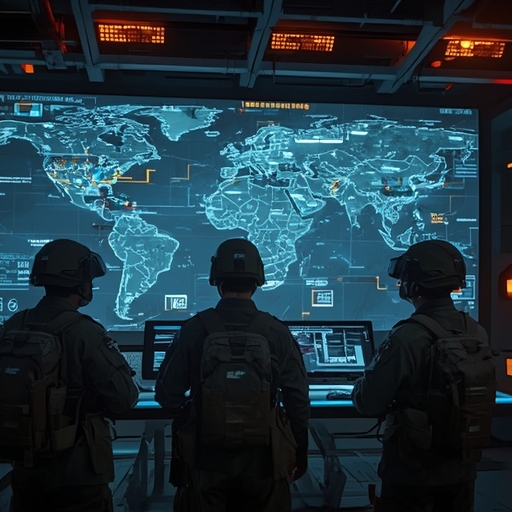
The rapidly shifting landscape of modern warfare has entered an age where the decisive advantage no longer relies solely on physical weaponry or troop strength but increasingly on a force’s ability to comprehend and act upon a constant torrent of digital information. Senior leaders within the United States Army have raised concerns that today’s soldiers are being inundated with an unprecedented volume of battlefield data—streams of intelligence, sensor input, and situational reports that flow faster than the human mind can interpret them. This flood of information, while promising in its potential to refine strategic awareness, can easily become paralyzing without the systems needed to organize it.
To confront this challenge, Artificial Intelligence is emerging as an essential ally, functioning almost as a second brain for the modern soldier. These AI-driven tools are designed to absorb massive datasets, filter through layers of noise, identify patterns that human analysts might overlook, and present clear, actionable insights in real time. Where once a commander struggled to balance a dozen simultaneous data streams, advanced algorithms now synthesize the crucial facts, displaying them through intuitive digital dashboards that transform confusion into comprehension. The result is a new kind of clarity — decisions made at computational speed, informed by a level of precision and foresight previously unattainable through human cognition alone.
This technological shift represents far more than a simple upgrade in software systems. It marks a profound rethinking of military doctrine itself, redefining how defense organizations perceive intelligence, strategy, and combat readiness. Rather than treating AI as a peripheral support mechanism, armies are beginning to weave machine learning, automation, and predictive analytics directly into their operational structures. Through these innovations, soldiers on the front lines are empowered not just as fighters, but as informed data interpreters collaborating with digital partners. For example, what once required hours of manual analysis—integrating reconnaissance imagery, radar signals, and verbal intelligence—can now be accomplished in moments through AI-assisted fusion engines.
Yet, the path to this AI-enhanced future is not without its ethical and logistical complexities. Military leaders must ensure that automated systems remain transparent, secure, and aligned with the principles of human judgment and accountability. The aim is to supplement, not replace, the warfighter: to extend human capability rather than surrender it to algorithms. Just as training once emphasized marksmanship and tactical awareness, tomorrow’s soldier will also cultivate data literacy and a deep understanding of algorithmic decision-support.
In this new era, the battlefield becomes an ecosystem of devices, networks, and intelligent systems—each node exchanging information at light speed. Within that complexity, Artificial Intelligence stands as the sentinel of order, capable of detecting threats, proposing responses, and even forecasting outcomes before they unfold. It transforms the overwhelming into the understandable, and the uncertain into the strategic. The soldier of the future, armed with machine intelligence as both tool and teammate, will navigate warfare not merely with firepower, but with insight drawn from the intricate patterns of data itself.
Sourse: https://www.businessinsider.com/tk-browser-based-on-whatever-headline-we-go-with-2026-2