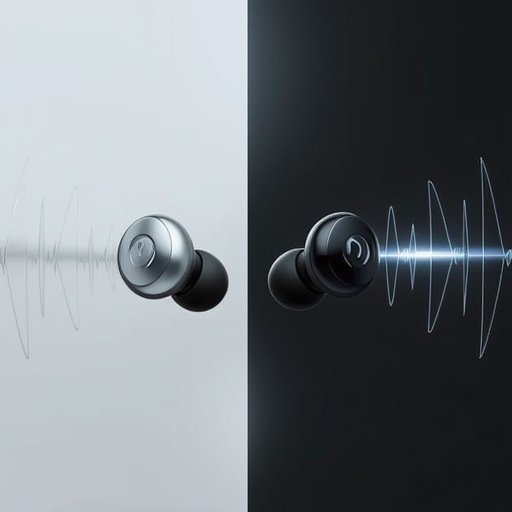
Premium wireless earbuds continue to evolve at a remarkable pace every year, with new models pushing the boundaries of what compact audio technology can achieve. While Apple’s AirPods Pro and Sony’s WF-series earbuds tend to dominate conversations around top-tier sound and active noise cancellation, Samsung’s high-end alternative—the Galaxy Buds 4 Pro—deserves equal recognition. These earbuds not only rival the most notable competitors in price, aligning closely with the AirPods Pro 3, but they also target the same discerning users who want the perfect blend of sound quality, smart features, and comfort in a truly wireless form.
Both the AirPods Pro 3 and the Galaxy Buds 4 Pro offer exceptional listening experiences with impressively rich sound, powerful noise suppression, and a growing array of intelligent features that extend far beyond the basic function of playing music. Yet, their respective advantages diverge in meaningful ways—making the decision between them less about which pair is objectively superior and more about which aligns best with your lifestyle and ecosystem of devices. Below is a detailed examination of where each model excels, how their specifications differ, and which users stand to benefit most from their unique strengths.
You should consider the **Apple AirPods Pro 3** if you prioritize three key aspects: world-class noise cancellation, a seamless connection across Apple’s ecosystem, and advanced health and hearing capabilities. The AirPods Pro 3 provide arguably the most well-rounded active noise cancellation (ANC) performance currently available in earbuds. They effectively neutralize low-frequency hums, such as the deep rumble of airplane engines, while also tackling more unpredictable noises—including bustling streets or lively cafés—with notable precision. What sets them apart even further is their handling of sharp, transient noises that often stump lesser earbuds. Although the Bose QuietComfort Ultra Earbuds maintain a narrow lead in sheer ANC strength, the gap has narrowed to the point that most listeners will not notice a practical difference.
Where Apple truly distinguishes itself is in its hallmark **Transparency Mode**. This mode allows surrounding environmental sounds to pass through with an exceptionally natural tonal balance, preserving spatial awareness without compromising clarity. The Adaptive Audio function builds upon this strength by continuously adjusting the level of external sound integration in real time, ensuring the perfect equilibrium between isolation and awareness. In contrast, Samsung’s similar Ambient Sound mode presents a faint hiss and tends to misrepresent certain high frequencies, which slightly diminishes the natural feel. Consequently, those seeking the most refined and balanced implementation of active noise control and transparency will find the AirPods Pro 3 to be the more polished option.
If you’re already immersed in the Apple ecosystem—perhaps owning an iPhone, iPad, and Mac—the integration experience is unmatched. The **Automatic Switching** capability allows seamless transitions from one device to another without any manual intervention; for instance, you could be enjoying a playlist on your iPad, take an incoming call on your iPhone, and then join a FaceTime meeting on your Mac without ever opening Bluetooth settings. Once accustomed to this effortless connectivity, it becomes almost impossible to revert to earbuds that require manual pairing. Additional ecosystem advantages include **Spatial Audio with head tracking**, leveraging Dolby Atmos mixes instead of artificial stereo simulations for movies and television, yielding convincing three-dimensional depth. Even charging has been simplified: the case accepts USB-C, MagSafe, and Apple Watch chargers, enhancing convenience for anyone deeply integrated into Apple’s hardware family.
Beyond the familiar audio capabilities, the AirPods Pro 3 introduce a range of advanced **health and hearing features** typically unseen in wireless earbuds. Heart rate tracking stands at the forefront of these innovations. Utilizing infrared sensors that pulse hundreds of times per second, the earbuds can monitor your heart rate accurately during exercise or throughout daily use, optionally combining data with your Apple Watch to deliver highly detailed metrics. Though they cannot fully replace the comprehensive suite of measurements available on the Apple Watch—such as step count, ECG, or sleep monitoring—they provide a meaningful layer of insight for users focused on health and wellness. Equally noteworthy are features tailored to auditory well-being. Functions like **Hearing Test**, **Hearing Assistance**, and **Hearing Protection** analyze your personal hearing profile, then automatically calibrate output levels or selectively amplify troublesome frequencies. The result is both a personalized listening experience and a proactive safeguard for long-term ear health.
On the other hand, the **Samsung Galaxy Buds 4 Pro** cater to a different set of priorities. They particularly excel in overall battery endurance, audio customization, and synergy with Samsung’s ecosystem of devices. Whereas the AirPods Pro 3 emphasize integration and audio balance, Samsung’s offering focuses on user control and longevity. When ANC is disabled, the Galaxy Buds 4 Pro deliver up to seven hours of continuous playback per charge, while the accompanying case extends total usage time to approximately thirty hours. Even with ANC engaged, the earbuds provide six hours of operation plus twenty-six more from the case. Although the AirPods Pro 3 slightly outperform them on a single uninterrupted charge, the Galaxy Buds’ charging case holds substantially more power—an advantage that manifests most clearly during travel or long days away from outlets.
Audio enthusiasts will also appreciate the Galaxy Buds 4 Pro’s **customizable sound performance**. Their dual-driver system combines an 11mm woofer with a discrete tweeter, achieving a sonic signature that’s both dynamic and sophisticated. Bass notes are well-controlled and layered, midranges sound full and articulate, and high frequencies remain crisp without introducing harshness. Samsung’s companion app includes a comprehensive eight-band equalizer, along with multiple presets and a fully adjustable manual mode spanning frequencies from 63Hz to 16kHz. This gives listeners direct authority over the tonal balance—something Apple continues to restrict to accessibility-based sound profiles. Consequently, those who view audio as an art requiring fine-tuning, rather than a one-size-fits-all experience, will find Samsung’s approach far more flexible.
Finally, when paired with a **Samsung Galaxy device**, the Buds 4 Pro unlock exclusive software features that make them far more than average earbuds. Owners benefit from 24-bit/96kHz high-resolution playback through Samsung’s proprietary codec, which provides additional depth and fidelity for lossless audio files. Features like **Real-Time Interpreter mode** enable live translation directly through the earbuds, while **360 Audio with head tracking** offers a spatially immersive listening environment akin to Apple’s Spatial Audio. There’s also **automatic device switching** across Samsung hardware, maintaining the fluid workflow Apple users already enjoy. However, these perks reveal an inherent limitation: Samsung’s feature set shines brightest within its own ecosystem, and users who pair these earbuds with non-Samsung Android or other devices might encounter reduced functionality. The lack of Bluetooth Multipoint—which would allow simultaneous connections to two external devices—is especially notable at this price range. Still, the presence of the LC3 codec and cutting-edge Bluetooth 6.1 ensures reliable connectivity and excellent call quality across a wide range of Android phones.
In summary, both earbuds epitomize the pinnacle of wireless audio engineering but appeal to different philosophies of use. For those who live and breathe within Apple’s world, the AirPods Pro 3 deliver unparalleled convenience, the industry’s finest Transparency Mode, and an innovative suite of wellness tools. Conversely, the Samsung Galaxy Buds 4 Pro stand out through longer aggregate battery life, exceptional customization options, and deeper integration with Galaxy smartphones and tablets. Choosing between them is less about identifying a superior product and more about selecting the one that aligns with your habits, hardware, and personal preferences.
From a personal standpoint, if seamless synchronization between multiple Apple products defines your routine—as it does for many professionals and creatives—the AirPods Pro 3 will likely feel indispensable. However, if your setup revolves around Samsung devices and you crave advanced sound sculpting and robust endurance, the Galaxy Buds 4 Pro emerge as the more logical choice. Both models are truly excellent examples of modern wearable technology, and the right pair ultimately depends on which ecosystem you call home.
Sourse: https://www.zdnet.com/article/airpods-pro-3-vs-samsung-galaxy-buds-4-pro/