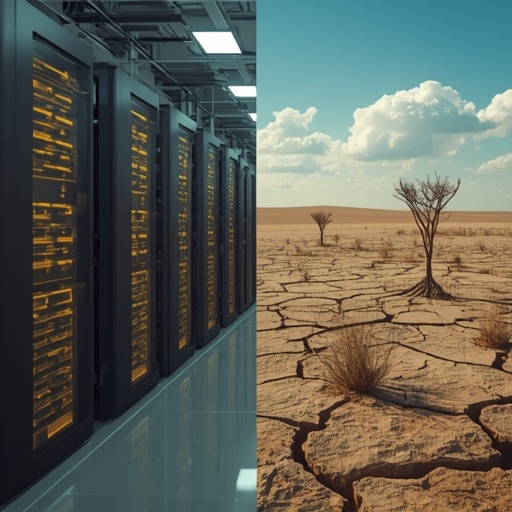
India’s rapid and ambitious drive to position itself at the forefront of the global artificial intelligence revolution is unfolding with remarkable intensity, yet this ascent is accompanied by substantial and complex trade‑offs. In its effort to attract leading international technology conglomerates—particularly American data giants such as Google—the Indian government has introduced an array of powerful incentives, including billions of dollars in subsidies, regulatory advantages, and favorable infrastructural commitments. These initiatives are designed to signal openness to technological investment and to transform the country into a major AI production and development hub. However, beneath the surface of this impressive acceleration toward digital dominance lies a growing concern about the environmental and social consequences of this expansion.
The establishment and maintenance of sprawling data centers, which serve as the physical backbone of AI infrastructure, require enormous quantities of both energy and water. These essential resources are already scarce in several regions of India, where local communities depend heavily on limited groundwater reserves for drinking, agriculture, and daily sustenance. Reports from residents and environmental observers suggest that the rapid proliferation of AI and data facilities is beginning to exert visible pressure on local ecosystems, intensifying pre‑existing challenges related to drought and excessive energy consumption. Hence, while innovation promises long‑term prosperity, it also magnifies the tension between economic ambition and ecological responsibility.
This juxtaposition between digital progress and environmental fragility raises a fundamental ethical question: Can a nation pursue technological leadership without compromising the sustainability of its natural and human environments? Achieving such equilibrium demands not only thoughtful policymaking but also a cooperative approach that integrates corporate accountability, governmental foresight, and community participation. How India chooses to navigate this delicate balance—ensuring that the promise of AI development does not come at the irreversible expense of its natural lifelines—will ultimately define the next chapter of its technology narrative. In essence, the true measure of India’s success in the AI era will rest upon its capacity to harmonize innovation with the enduring needs of both its people and its planet.
Sourse: https://www.wsj.com/tech/ai/big-subsidies-for-google-limited-water-for-locals-the-dilemma-of-ai-in-india-105a770e?mod=rss_Technology