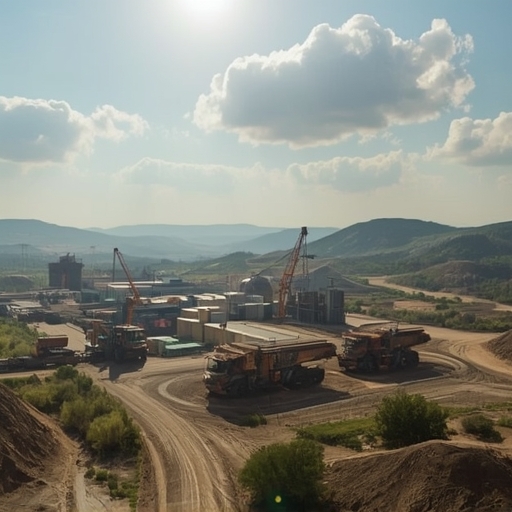
The coming wave of artificial intelligence innovation is moving far beyond data centers and software startups—it is descending into the tangible, physical world of labor and industry. According to the chief executive officer of a leading AI enterprise valued at fifteen billion dollars, the next defining winners of the AI revolution will not be the usual Silicon Valley software giants, but rather the sectors that shape the backbone of the global economy: agriculture, mining, and transportation. These fields, long associated with heavy machinery and manual effort, are on the threshold of being reinvented through intelligent automation, where algorithms and robotics merge to augment every stage of production, extraction, and logistics.
This shift represents more than just a technological upgrade; it signals a deep evolution in how value is created and sustained. Farming, for instance, is being reimagined through sensor-driven tractors and predictive crop management systems capable of analyzing soil health, weather conditions, and yield outcomes in real time. In mining, autonomous equipment and AI-powered monitoring tools promise not only greater efficiency but also enhanced safety and resource optimization. Trucking, a cornerstone of global commerce, is on the verge of an automation leap that could redefine long-haul logistics through self-driving fleets that coordinate seamlessly across digital networks.
As artificial intelligence begins to animate steel and diesel rather than digital code alone, the dividing line between the virtual and physical economies is dissolving. Machines are learning to make decisions previously reserved for humans—where to plow, how to extract, and when to deliver—transforming industries that have historically depended on endurance and intuition. This transition brings both opportunity and challenge: while productivity and precision will soar, society must be prepared for the reconfiguration of labor, training, and infrastructure that intelligent automation inevitably demands.
The broader narrative is clear—AI’s future is not confined to glowing screens or cloud servers. Its greatest impact may unfold in the dust of a field, the depths of a mine, or the roar of an engine. As technology fuses with the material world, economies will need to adapt, and industries that embrace this convergence will lead the next era of growth. The question that remains for policymakers, businesses, and workers alike is whether we are ready to coexist and collaborate with this new generation of thinking machines that are poised to cultivate, extract, and transport the very foundation of modern civilization.
Sourse: https://www.businessinsider.com/ai-biggest-winners-farms-mines-trucks-blue-collar-software-2026-3