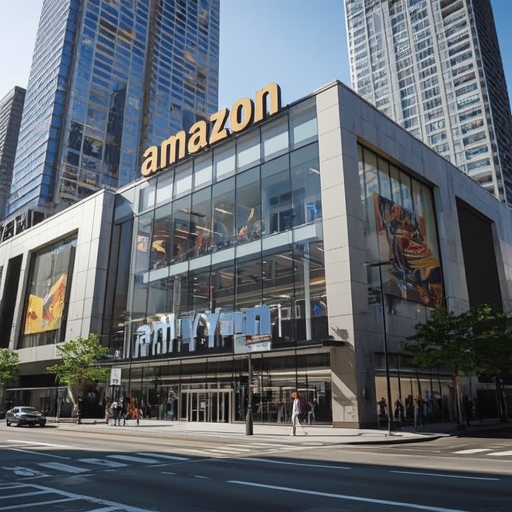
Amazon has unveiled ambitious plans for a major new venture into physical retail: a sprawling, 229,000-square-foot megastore set to rise in Orland Park, a southwestern suburb of Chicago. More than a simple addition to its retail network, this project represents a sophisticated fusion of digital efficiency and tangible, in-person commerce. Dubbed by many observers as a potential ‘Super Amazon-mart,’ the proposed facility could embody the ultimate realization of Amazon’s long-stated vision—bridging the speed and personalization of e-commerce with the tactile experience of brick-and-mortar shopping.
According to municipal reports and early design documents, the forthcoming structure will bear many hallmarks of Amazon’s data-driven, customer-centric philosophy. Its vast scale suggests not only retail space for consumer goods but also the integration of fulfillment and last-mile logistics, enabling rapid order processing and direct customer pickup. Analysts point out that such a dual-purpose configuration could redefine traditional retail blueprints by transforming physical stores into dynamic operational ecosystems.
The Orland Park development also resonates with broader shifts in Amazon’s corporate strategy. Having already established Amazon Go convenience stores and Amazon Fresh supermarkets, the company is now venturing into the higher-volume territory long dominated by supercenters such as Walmart and Target. Yet, rather than merely replicating their format, Amazon seeks to infuse physical spaces with technological sophistication—automation, AI-driven inventory systems, contactless checkout, and deep localization tailored to community demands.
If completed as envisioned, the Super Amazon-mart would mark a pivotal point in retail evolution. It would demonstrate how digital-first enterprises can conquer the physical marketplace without relinquishing their technological edge. Consumers could encounter a shopping environment where real and virtual experiences converge seamlessly: touchscreen previews of products, instant integration with Prime accounts, and same-day delivery coordination embedded into each transaction.
For the surrounding region, this ambitious construction promises measurable economic impact. Local contractors, suppliers, and staff recruitment efforts are expected to generate considerable employment opportunities, while the store itself could become a regional landmark symbolizing the next phase of retail transformation. Whether this bold experiment proves to be a visionary leap or another iteration in Amazon’s ongoing exploration of hybrid commerce, one fact remains clear: the line separating online and offline shopping continues to blur, and Amazon is determined to lead that convergence from the heart of the Midwest.
Sourse: https://www.theverge.com/news/860058/amazon-chicago-supercenter-store-plans