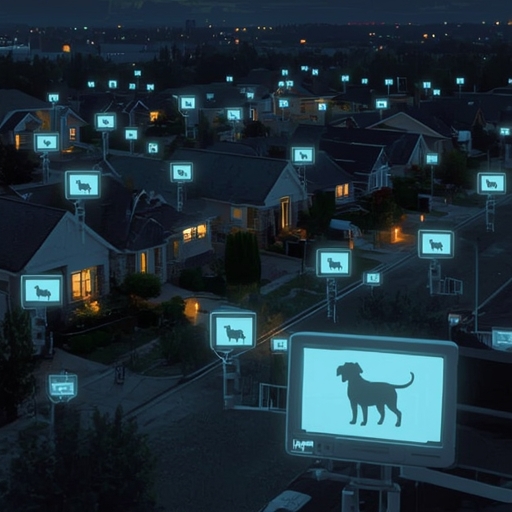
Amazon’s much-discussed Super Bowl advertisement for its Ring ‘Search Party’ feature has become a focal point for conversation about the fine and fragile boundary between technological convenience and the erosion of personal privacy. On the surface, the commercial presents a heartwarming storyline: an entire community unites through the power of Ring’s interconnected cameras to locate a neighbor’s missing dog. The narrative emphasizes solidarity, compassion, and the promise of technology as a facilitator of human collaboration. However, beneath this seemingly wholesome premise lies a vein of unease that many viewers could not ignore.
Across social media platforms, critics have voiced concern that this promotional campaign does more than showcase a helpful tool—it subtly normalizes the ubiquity of perpetual surveillance in residential spaces. The cheerful depiction of neighbors effortlessly sharing footage from doorbell cameras glosses over the profound ethical questions that accompany such interconnected systems. Observers argue that behind the veneer of community spirit, the ad situates surveillance as an everyday, even desirable, reality. In doing so, it risks desensitizing audiences to the broader implications of constant observation.
Ring’s technology, long praised for enhancing a sense of safety and deterrence, simultaneously exists within a complex web of privacy challenges. Each camera positioned at a doorway has the potential not only to safeguard but also to record and archive life beyond its intended field of protection. Supporters maintain that these devices create an invaluable digital neighborhood watch capable of quick responses to emergencies or lost property. Yet detractors counter that such functionality can easily extend into forms of monitoring that blur the line between protective vigilance and invasive scrutiny.
This advertisement, therefore, stands at the intersection of two contrasting narratives: one championing innovation in community security, the other warning of the creeping normalization of a surveillance society. In an era dominated by artificial intelligence, smart home ecosystems, and data-sharing infrastructures, every advancement in safety is ideally accompanied by transparent ethical accountability. Many commentators have framed this debate not simply as a marketing conversation but as a reflection of larger societal questions—chief among them, the implicit trade-offs between technological progress, individual autonomy, and the right to remain unobserved.
By transforming a lost pet story into a grand celebration of networked vigilance, Amazon has—inadvertently or not—piqued the very anxieties it might have sought to allay. The ‘Search Party’ feature encapsulates both the promise and the peril of our increasingly connected existence: it demonstrates how innovation can foster cooperation and compassion while simultaneously requiring us to confront the unsettling reality that convenience often arrives hand in hand with surveillance. The continuing discussion sparked by this Super Bowl ad serves as a timely reminder that the digital future demands more than clever technology—it calls for an ongoing public reckoning with the ethics that govern how we watch, share, and safeguard one another in a world that is always watching back.
Sourse: https://www.theverge.com/tech/876866/ring-search-party-super-bowl-ad-online-backlash