Amazon has provided an extensive update on its ambitious initiative to accelerate the deployment of nuclear energy throughout Washington State—the region where the company itself is headquartered and deeply rooted. This announcement sheds new light on a long-term plan designed not only to enhance the state’s clean energy capacity but also to demonstrate Amazon’s growing role as a key participant in the evolution of sustainable and carbon-free power generation within the United States.
Approximately one year ago, Amazon entered into a formal agreement with Energy Northwest, a consortium that unites multiple public utilities across Washington State. The purpose of this partnership is to support and facilitate the development of as many as twelve next-generation nuclear reactors by the early 2030s. According to the terms of the agreement, once the initial stage of the project—comprising a 320-megawatt phase—has been completed, Amazon will hold the option to purchase electricity directly from that portion of the facility. Any additional energy output generated beyond this first phase would remain available for Amazon’s internal operations as well as for the broader network of local participating utilities, strengthening regional energy resilience and reliability.
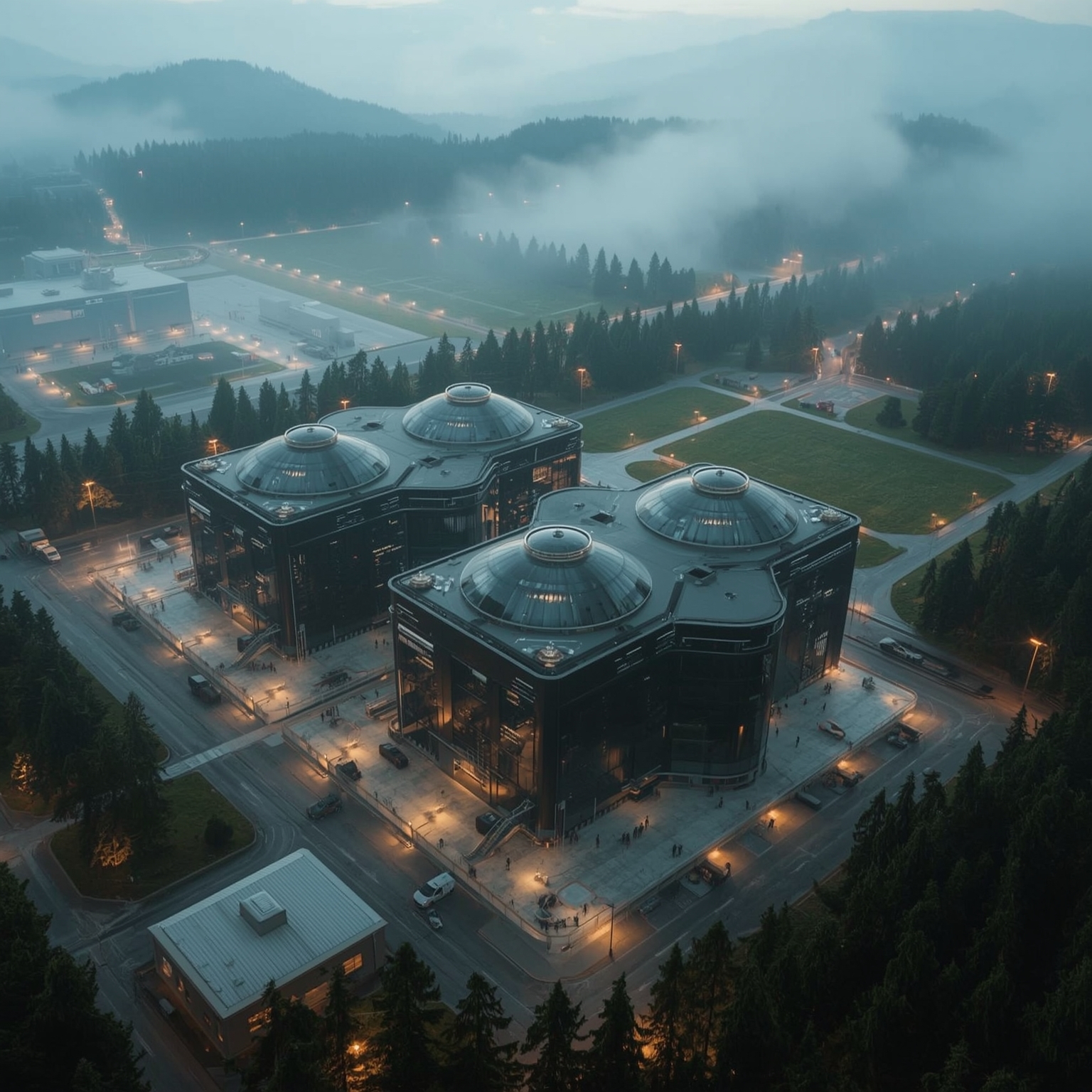
What sets these prospective reactors apart from conventional nuclear facilities is their design philosophy. They belong to a class of small modular reactors (SMRs), which are engineered to be more compact, flexible, and cost-effective in both construction and deployment. Unlike traditional large-scale nuclear plants, which can span vast tracts of land, these smaller units are built to be prefabricated in sections and assembled on-site more efficiently, thereby reducing both financial barriers and construction timelines. To help the public visualize this innovation, Amazon shared several detailed renderings depicting the proposed design of the first such installation, planned for a location just outside the city of Richland, Washington.
This facility, officially named the Cascade Advanced Energy Facility, is projected to consist of three major units that together will generate up to 960 megawatts of electrical power. That amount of clean energy is sufficient, according to Amazon’s estimates, to supply roughly 770,000 average U.S. homes. The company highlighted that whereas a conventional, older-style nuclear power plant producing the same level of capacity might extend across more than a square mile, the Cascade facility is expected to occupy just a few city blocks. This compact footprint illustrates one of the greatest advantages of modular reactor technology: its ability to concentrate advanced energy generation within a smaller geographic space, making it a more adaptable solution for modern infrastructure needs.
In its recent blog post, Amazon also emphasized the economic and employment benefits associated with the Cascade project. Once operational, the facility is anticipated to create approximately one hundred well-paid, permanent positions in engineering, maintenance, and operations. Furthermore, during the construction period, more than one thousand temporary jobs are expected to be generated, providing a substantial short-term boost to the regional labor market. Despite this optimism, Amazon noted that these next-generation reactors are still undergoing technical development and must successfully complete a rigorous licensing and regulatory review process before any construction can begin. As a result, groundbreaking for the Cascade Advanced Energy Facility is not forecast to occur until the conclusion of this decade.
In essence, Amazon’s effort represents a bold and forward-looking investment in advanced nuclear energy technology—one that aims to balance environmental responsibility, economic progress, and innovation in the pursuit of long-term sustainability for both the company and the communities it serves.
Sourse: https://www.theverge.com/news/801257/amazon-nuclear-energy-reactor-first-look