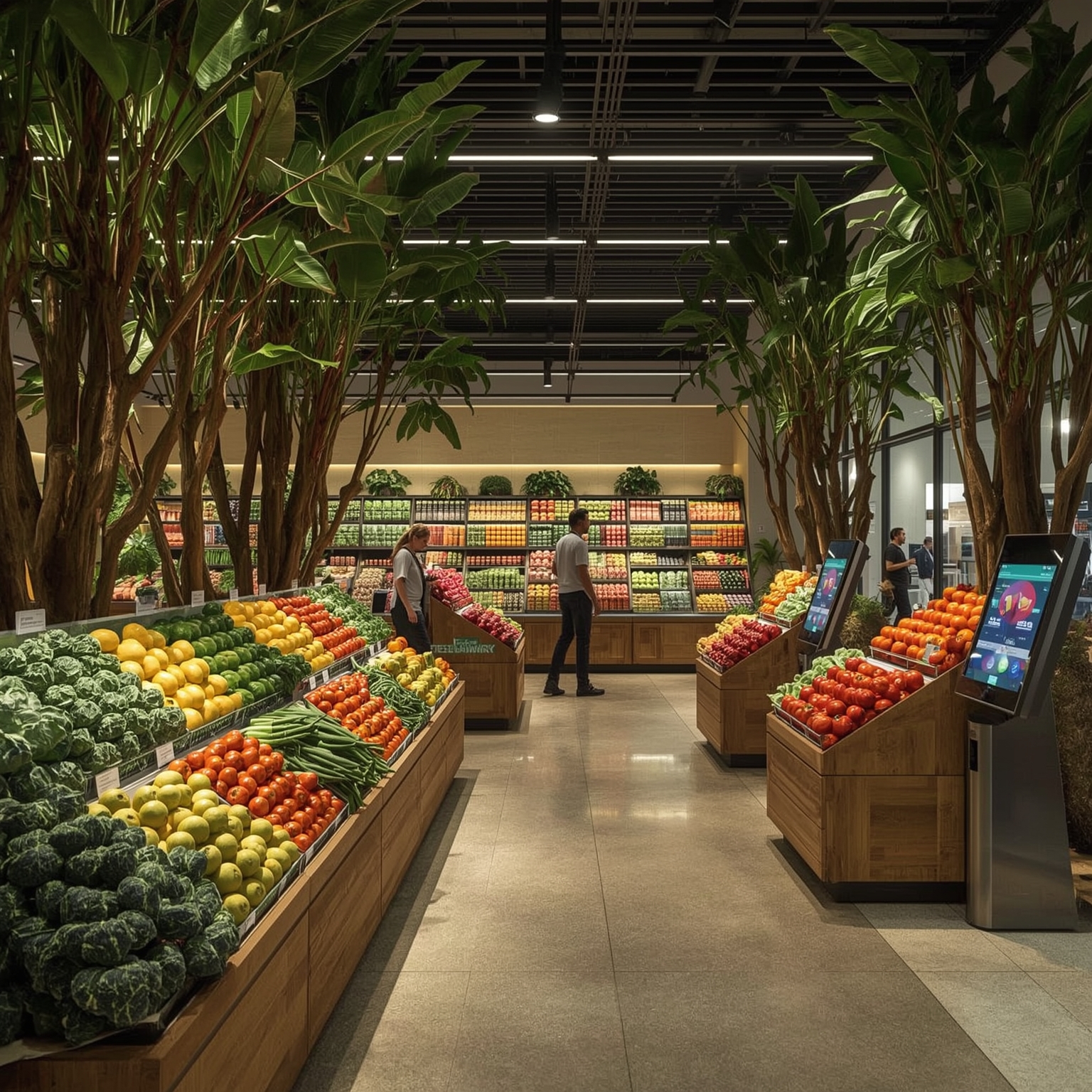
Amazon has introduced an innovative retail experiment that merges familiar household favorites like Kraft Mac & Cheese, Goldfish crackers, and Nestlé Drumsticks with the polished atmosphere of its Whole Foods Market stores. Inside one of its Pennsylvania locations, the tech and retail giant has built an in-store portal that connects Whole Foods’ premium environment to Amazon’s expansive grocery network — and the company has made clear its intent to replicate this model in additional stores across the country. Detailed in a corporate blog post released on Wednesday, Amazon describes how this initiative is part of a broader effort to fuse digital convenience with physical shopping. The pilot store, located in Plymouth Meeting, Pennsylvania, functions as a concept location where traditional grocery shopping intersects with cutting-edge technology. Throughout the supermarket, shoppers can scan strategically placed QR codes to order grocery and pantry items directly from Amazon’s online marketplace, effectively blending the digital experience with the tactile act of browsing store aisles.
What sets the Pennsylvania store apart is its integrated “microfulfillment center,” a compact yet highly efficient logistics hub built directly into the facility. This section of the store houses numerous products that most customers would not typically expect to find within a conventional Whole Foods, which is renowned for its emphasis on natural, organic, and ethically sourced goods. Once a customer places an order through Amazon Fresh, a fleet of autonomous robots known as “ShopBots” — developed by a robotics firm called Fulfil — immediately begins to process and retrieve the requested items from storage. When the order is ready, customers are notified via text message and can pick up their purchases from the centralized Amazon pickup and returns counter within the store, adding a new dimension of convenience to the shopping journey.
Amazon has emphasized that this initial rollout serves as a testing ground for future refinement. The company stated that by collecting insights and feedback from users of the Plymouth Meeting location, it will continue to adjust and expand the concept to other Whole Foods stores across the country over time. A previous report from The Wall Street Journal had already brought attention to this Pennsylvania-based experiment, but Amazon’s new blog post offers a deeper look into the details and motivations behind the concept. The company’s strategy seeks to subtly introduce a broader array of products into Whole Foods outlets without undermining the brand’s long-standing image as a haven for quality, health-conscious, and eco-friendly food options. Parallel to this initiative, Amazon is testing another grocery experiment in Chicago, where a full Amazon Fresh store sits directly alongside a Whole Foods Market, effectively creating a side-by-side model of its two grocery formats.
Over the past year, the integration of Amazon’s grocery operations with Whole Foods has accelerated significantly. In January, Amazon announced the appointment of Whole Foods CEO Jason Buechel as Vice President overseeing its entire grocery business — a move that symbolized the company’s intent to unify leadership across its food retail divisions. Later in the year, Amazon disclosed plans to transition Whole Foods’ corporate employees into Amazon’s broader workforce, a change scheduled to take effect in December. These decisions highlight Amazon’s long-term ambition to harmonize its digital infrastructure, logistics systems, and retail expertise under a single, cohesive strategy.
In addition to the in-store purchasing option at the Plymouth Meeting location, Amazon has expanded convenience for local customers by allowing them to place grocery orders online. These can be fulfilled through in-store pickup or home delivery, ensuring that shoppers can choose whichever method best fits their schedules. As Jason Buechel explained, Amazon aims to elevate the grocery experience by seamlessly integrating digital ordering with traditional retail engagement, effectively designing a shopping model that is as efficient as it is intuitive. “We are enhancing the grocery experience for our customers,” he noted, “by thoughtfully merging our various grocery capabilities and employing innovative fulfillment technologies to create a more dynamic and convenient way to shop.” Through such experimental ventures, Amazon continues to reimagine what modern grocery shopping can look like — an experience where technology and taste intersect in an increasingly sophisticated and customer-centric way.
Sourse: https://www.theverge.com/news/814454/amazon-whole-foods-fulfillment-concept-store


