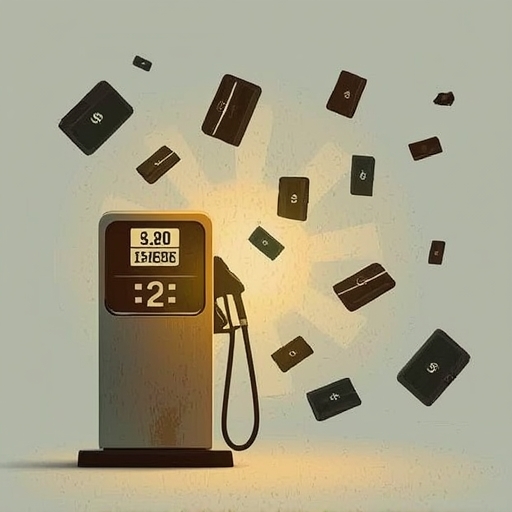
Across the United States, a growing sense of financial strain is taking hold of households from every walk of life. Americans are increasingly expressing acute concern about the state of the economy, and the most striking indicator of this unease is evident in the soaring cost of gasoline. Rising fuel prices have evolved beyond a mere statistical measure or a minor inconvenience; they now stand as a visible and emotionally charged emblem of deeper economic instability. For many, each visit to the gas station serves as a tangible reminder of tightening budgets, diminishing purchasing power, and the persistent challenge of making ends meet in an environment where wages often fail to keep pace with inflation.
This mounting economic pessimism is reflective of a broader downturn in national confidence. The decline in public sentiment underscores an awareness not only of the immediate pain of higher expenses but also of a more pervasive uncertainty about the country’s financial trajectory. When individuals feel their daily costs rising—be it through transportation, groceries, housing, or utilities—they begin to question the resilience of the economy itself and to doubt whether conditions will improve in the near future.
Businesses and policymakers, too, are paying attention to these mood shifts, recognizing that consumer confidence is both a barometer and a driver of economic performance. When people reduce discretionary spending out of caution, it ripples through industries, influencing everything from supply chains to employment levels. The challenge, therefore, extends beyond mitigating inflationary pressures; it involves rebuilding a sense of trust and stability that encourages optimism and spending.
In conversations across social media, at gas stations, and around kitchen tables, Americans are asking how they can adapt to these cost of living changes. Some budget more carefully or delay major purchases, while others look for alternative transportation or adjust consumption habits in subtle but telling ways. The tone of these discussions reveals both resilience and frustration: a determination to cope tempered by fatigue from persistent financial headwinds.
Ultimately, the nation’s collective anxiety over the economy is more than a fleeting reaction to pump prices—it is a reflection of broader fears about long-term affordability, income inequality, and the perceived mismatch between effort and economic reward. As the cost of living continues to reshape household priorities, the question remains: how will individuals, companies, and governments collaborate to restore confidence and alleviate pressure on the American wallet?
Sourse: https://www.businessinsider.com/consumer-sentiment-record-low-umich-gas-prices-inflation-economy-2026-4