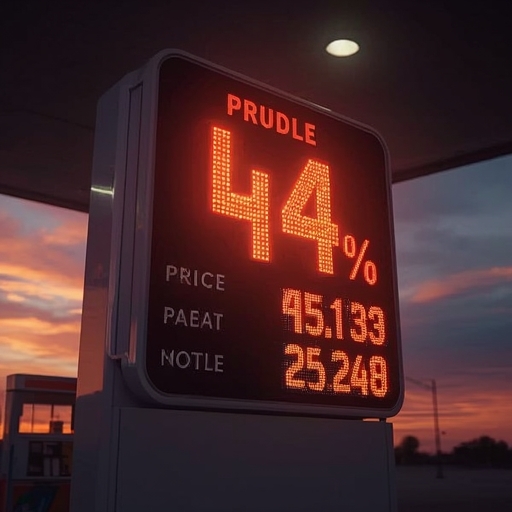
Across the United States, motorists are now facing an unmistakable reality at the pump: the national average price for gasoline has surged past the crucial threshold of four dollars per gallon. This development is not occurring in isolation, but rather as a direct response to the escalating conflict unfolding in the Middle East—a region whose geopolitical stability remains central to the global energy supply chain. As tensions heighten and crude oil markets react with pronounced volatility, the ripple effects are being felt vividly at local service stations from coast to coast.
This latest spike represents far more than a temporary inconvenience for drivers; it constitutes yet another major stress point for household budgets already burdened by persistent inflationary pressures. The simultaneous rise in transportation and logistics costs is likely to cascade through nearly every sector of the economy, from the price of groceries and consumer goods to industrial operations dependent on fuel-intensive supply networks. With energy markets exhibiting heightened sensitivity to political and military developments abroad, even relatively small disruptions to production or shipping routes can trigger swift and substantial jumps in oil futures—subsequently reflected in what consumers pay daily at the pump.
Economists caution that sustained high fuel costs can complicate the progress policymakers have made toward moderating overall inflation. Businesses, facing higher operational expenses, may feel compelled to pass those increases along to consumers, thereby reigniting price pressures across multiple industries. Meanwhile, individual commuters, delivery drivers, and small business owners dependent on transportation are being forced to reevaluate their spending habits, travel routines, and budget priorities.
Despite these challenges, there is also a renewed emphasis on energy diversification and efficiency. Many consumers are exploring hybrid and electric vehicle options or turning to public transportation in response to volatile fuel costs. At the same time, analysts suggest that short‑term relief will depend largely on diplomatic outcomes and the pace of negotiations aimed at restoring stability in oil‑producing regions. Until then, the four‑dollar mark serves as a potent symbol of the intricate ties between geopolitics and personal finance—a reminder of how events half a world away can reverberate through every gas tank and paycheck here at home.
In sum, the crossing of this price threshold underscores the fragile balance between global energy markets and domestic economic health. Whether this surge proves temporary or ushers in a more prolonged period of elevated costs, it challenges both policymakers and the public to adapt, conserve, and plan strategically amid an increasingly unpredictable energy landscape.
Sourse: https://www.businessinsider.com/americans-paying-4-gallon-gas-2026-3