In December 2025, I embarked on an intriguing travel experience: a business‑class journey aboard the newly launched Amtrak NextGen Acela, traveling from New York City to Washington, DC. The ticket cost me $180 — a price point that immediately positioned the trip as a premium indulgence rather than a practical commute. This train, heralded as Amtrak’s most technologically advanced model, promised a combination of speed, modern design, and comfort enhancements aimed at redefining rail travel along the Northeast Corridor. Yet as polished and pleasant as the experience proved to be, I found myself questioning whether those upgrades truly justified the considerable fare difference from a standard coach seat.
The new Acela service, already known for connecting major East Coast cities from Boston to Washington, introduced its NextGen fleet in August 2025. These sleek trains boast a top speed of 160 miles per hour, making them the fastest in Amtrak’s history. Beyond their performance, the interiors reflect a contemporary aesthetic — ergonomic seating with adjustable features, retractable shades, advanced overhead storage, and digital information screens designed to enhance the passenger experience. Amenities such as 5G WiFi and touch‑free restroom technology promise a smoother, more efficient journey. On paper, it appears as though Amtrak sought to rival not only its own prior offerings but also the comfort associated with short‑haul flights.
When I purchased my business‑class ticket, priced at $180, I couldn’t help noticing that a comparable regional Amtrak coach ticket — one taking just half an hour longer — cost merely $40. The four‑fold price gap became the lens through which I evaluated every aspect of the trip. Upon arriving at New York’s Penn Station that morning, any notion of exclusivity was quickly tempered by the realities of rail travel. My train’s departure was delayed by an hour and a half, leaving me to contemplate whether I should retreat to the Metropolitan Lounge — a serene, elevated space complete with soft seating and complimentary refreshments. Access, however, was restricted to first‑class passengers and riders with sleeper accommodations unless one paid an additional $50 fee. Having already splurged on the upgraded seat, I opted against spending more, instead searching for a spot in the crowded waiting area. When that proved impossible, I wound up sitting on the floor by the wall, a leveling experience that reminded me how thin the boundary can be between luxury and ordinary transit.
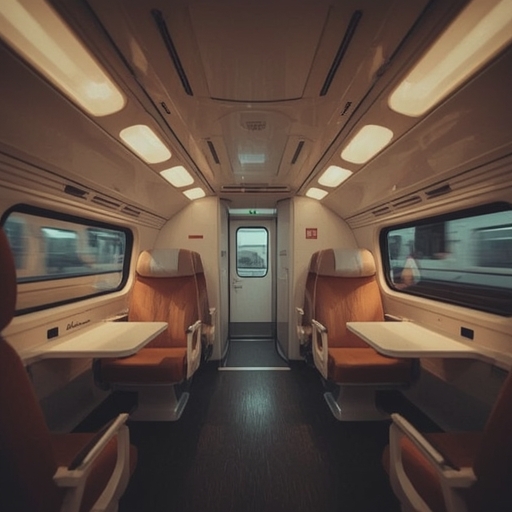
Once boarding was announced, I discovered that my business‑class fare did not entitle me to early access. Only first‑class travelers enjoyed that privilege. The process was orderly, though unremarkable, reinforcing the impression that, while labeled as business class, my ticket belonged to the general Acela category rather than a tier offering markedly distinct treatment. Inside, however, the difference became apparent. The cabin exuded a clean, minimalistic sophistication: seats upholstered in quality fabric, metallic finishes, ambient lighting, and thoughtfully arranged amenities suggested a deliberate effort to evoke serenity and efficiency.
My seat proved exceptionally ergonomic — spacious with ample legroom, supportive cushioning, and adjustable features such as a reclining back and a footrest. Integrated power outlets, USB charging ports, and a focused reading lamp contributed to a sense of practicality that business travelers would appreciate. A stowable tray table and a small cupholder added functionality without clutter. Settling in, I found the environment far more refined than that of any other Amtrak service I had tried in the United States. It felt like the domestic train system had finally caught up, at least visually, with some of the more acclaimed international rail lines I have experienced.
During the approximately three‑hour ride, the highlight turned out to be the 5G WiFi connection. Historically, Amtrak’s onboard internet service has been serviceable at best — sufficient for checking emails or quick searches, but hardly capable of supporting high‑bandwidth tasks. On this trip, however, the difference was striking. I was able to stream high‑definition videos seamlessly for nearly the entire journey, something previously unimaginable on American rail. The connectivity allowed me to occupy the ride productively, or at least enjoyably, without navigating the frustrations of lag and intermittent signal drops that I had come to expect.
Equally impressive was the restroom design. My previous experiences on trains have led me to maintain modest expectations: outdated fixtures, cramped dimensions, and an unpredictable level of cleanliness. The NextGen Acela, by contrast, delivered something scarcely recognizable as a train lavatory. The automatic door opened to reveal an immaculate space — unexpectedly large, stylishly accented with red trim, and equipped with touchless soap, water, and drying mechanisms. The thoughtful layout and hygienic design illustrated that Amtrak had invested genuinely in improving passenger comfort, not merely in appearance but also in functionality.
Nevertheless, once the train began gliding smoothly through the landscape between New York and Washington, I couldn’t entirely silence the pragmatic voice in my head evaluating the cost‑to‑benefit ratio. While the seat enveloped me in comfort and the onboard technology worked flawlessly, the reality was that the Acela’s business class still only marginally shortened the travel time compared to the regional alternative. That economical $40 coach option, though lacking in finesse, delivers travelers to the very same destination only thirty minutes later. The luxury of faster WiFi and brisker boarding simply may not outweigh the steep premium for most passengers.
An Amtrak representative later explained via email that the company seeks to provide options for every traveler’s preference: those desiring premium amenities may choose the Acela, while those prioritizing affordability can comfortably travel aboard the Northeast Regional network. That sentiment encapsulates the trade‑off I felt throughout the experience — a reminder that convenience, comfort, and exclusivity each carry a price, and one must determine which of those aspects holds true value personally.
Reflecting on the journey, I can state without hesitation that this was the best business‑class Amtrak experience I have had within the United States — efficient, aesthetically pleasing, and technologically modern. Yet even at its best, the service left me uncertain whether such comfort warranted paying more than four times the coach fare. When I next board an Amtrak train, I will undoubtedly miss the plush seating, the impeccable restroom, and the streaming‑fast 5G connection. Still, from a cost perspective, I suspect I will find myself content once again in coach, confident that practicality sometimes outweighs refinement when traveling from one downtown to another.
Sourse: https://www.businessinsider.com/amtrak-nextgen-acela-business-class-review