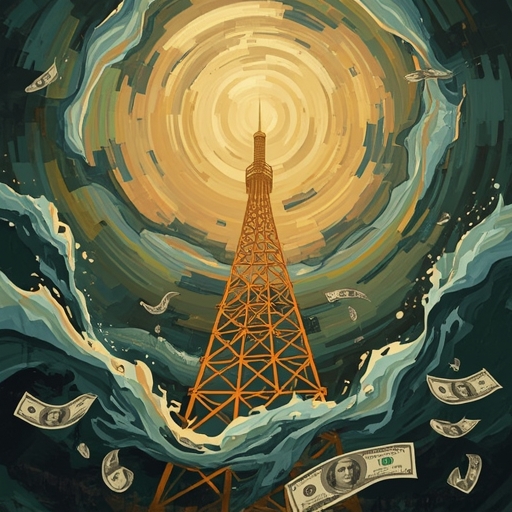
The recent $80 million donation to public radio has ignited a far-reaching conversation about the evolving nature of funding in journalism and the ethical balance between financial generosity and editorial autonomy. On the surface, this substantial philanthropic gift appears to be a decisive victory—a moment that offers financial stability to institutions that have long struggled with declining public funding and increasing operational costs. Yet beneath the surface lies a series of deeply complex questions that reveal how intertwined money and media independence have become in the modern era.
This extraordinary contribution offers lifeblood to public media outlets, enabling them to sustain investigative reporting, expand audience outreach, and strengthen community engagement. However, philanthropy of this magnitude invariably introduces uncertainties about influence and accountability. If a donation, no matter how benevolent in spirit, carries implicit expectations—whether related to content, governance, or brand alignment—it poses a potential challenge to the journalistic integrity that public institutions are built upon. It is a delicate equilibrium: accepting vast sums without compromising the very ethos that defines public service journalism.
For public broadcasters such as NPR and its affiliates, maintaining credibility relies not only on transparency but also on their capacity to resist subtle forms of pressure that may arise from the influence of benefactors. Philanthropic capital, though vital in preserving quality reporting, must coexist with safeguards ensuring editorial separation—policies that protect journalists from even the perception of bias. The dialogue now taking place across the media landscape underscores this point: public media must evolve to thrive financially while defending its independence with rigor and clarity.
This moment also serves as a microcosm of a broader transformation shaping the global news ecosystem. As traditional sources of revenue—government grants, audience memberships, and advertising—continue to wane, nonprofit and philanthropic models have surged to fill the void. Yet, as essential as these contributions are, they highlight the precariousness of media structures dependent on private generosity to fulfill what has historically been a public mission. The $80 million gift is therefore both a blessing and a mirror—reflecting the tension between sustainability and integrity that defines the future of journalism.
Ultimately, this development invites a vital question for citizens, funders, and journalists alike: how can public media accept transformative gifts while remaining truly independent, transparent, and accountable to the people it serves rather than to those who fund it? The answer will shape not only the fate of a single institution but also the principles guiding the entire field of mission-driven media in the decades ahead.
Sourse: https://www.theverge.com/news/913518/ballmer-gives-80-million-to-npr-with-strings-attached