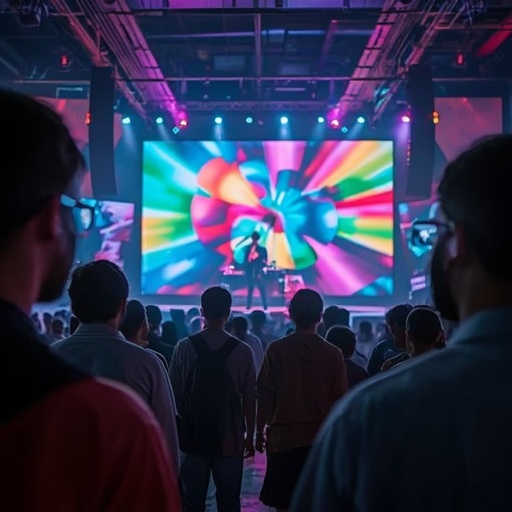
In the midst of a dazzling international music festival—a space where art, technology, and cultural experimentation naturally collide—one outspoken performer made waves by openly criticizing the latest generation of AI-powered smartglasses. The artist’s sharp remark, delivered with both humor and provocation, questioned not only the device’s aesthetics but its perceived lack of human magnetism, boldly suggesting that despite their technological brilliance, the glasses were simply ‘not sexy enough.’ This spontaneous moment resonated far beyond the stage, stirring widespread debate across creative and tech communities about the complex relationship between innovation, emotion, and personal allure.\n\nThe controversy illuminates a deeper cultural shift: as AI rapidly reshapes how we perceive and interact with the world, we are forced to confront the boundaries between authenticity and artificiality. Smartglasses, equipped with sophisticated algorithms that integrate augmented reality, facial recognition, and voice-guided assistance, represent the cutting edge of wearable technology. Yet, for artists and style-conscious individuals, their appeal—or lack thereof—highlights a fundamental tension between the sleek efficiency of machines and the expressive imperfection of humanity. Can a meticulously engineered device ever mimic the spontaneity, warmth, and individuality that make human presence captivating?\n\nFrom a sociological perspective, this moment encapsulates how design now carries psychological and emotional dimensions that extend far beyond utility. Where earlier technologies aimed to solve problems or improve performance, modern devices must also convey meaning, taste, and identity. The festival stage thus became a microcosm for a global dialogue: is technology enhancing our self-expression or gradually eroding it under layers of standardized digital gloss?\n\nFor creatives, these smartglasses may symbolize progress—tools capable of transforming live performance and audience engagement through real-time data visualization, interactive visuals, and AI-driven improvisation. For others, however, they serve as a reminder that innovation without a sense of sensuality or character risks feeling hollow. The artist’s public critique tapped into a latent unease many share: that even as we push toward hyper-connected futures, something essential in our human experience—our charisma, unpredictability, and tactile connection—may be slipping away.\n\nUltimately, the incident was less about rejecting technology and more about reasserting human values within it. The intersection of art and AI continues to generate friction, inspiration, and introspection in equal measure. Whether AI smartglasses will evolve into icons of futuristic elegance or remain symbols of sterile sophistication depends largely on how designers reconcile function with feeling. The conversation reignited by this festival performer reminds us that being ‘cool’ has never been purely about innovation—it’s about resonance, emotion, and the ineffable spark that machines, no matter how advanced, still struggle to imitate.
Sourse: https://www.theverge.com/ai-artificial-intelligence/964539/lorde-says-ray-ban-meta-ai-glasses-are-not-sexy