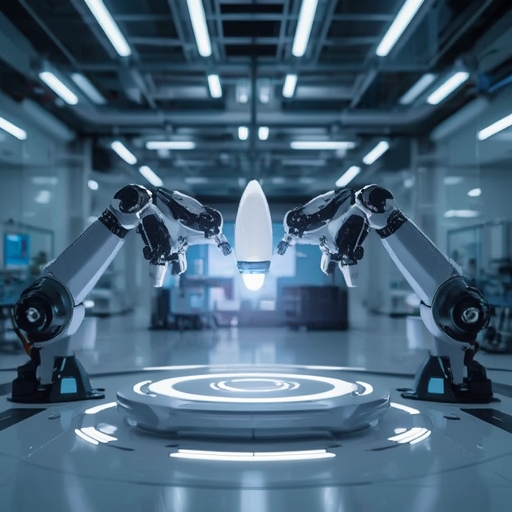
Over the past few years, we have witnessed an extraordinary acceleration in technological progress, with robotics emerging as one of the most transformative and influential fields driving this change. Today, a visionary leader from the technology industry has unveiled a groundbreaking initiative that seeks to push the boundaries of what machines and humans can achieve together. This new robotics venture does more than introduce mechanical innovation—it symbolizes a deeper evolution in how we conceptualize progress, creativity, and intelligence.
The announcement marks a pivotal moment in our collective pursuit of a future where human ingenuity converges seamlessly with the precision and efficiency of automated systems. Robotics, once confined to industrial settings and specialized tasks, is now expanding into domains that directly enhance human capability rather than merely replacing it. From healthcare and design to architecture and environmental sustainability, this new wave of intelligent automation represents the dawn of a modern renaissance—one powered by algorithms as much as imagination.
Experts view this development not as a replacement for human labor or thought, but rather as an extension of our creative reach. Machines can now learn, adapt, and collaborate, creating feedback loops that amplify invention itself. This new enterprise embodies that philosophy by focusing on tools designed to augment human skill and curiosity, offering an optimistic vision of progress rooted in partnership rather than competition.
If realized fully, the endeavor could herald what many are calling a golden age of innovation—a period defined by harmony between creativity and computation. Yet, with this promise also comes the weight of responsibility. As robotics becomes more deeply integrated into our social and economic structures, questions arise about ethics, employment, and equality. Can we ensure that the benefits of automated intelligence serve humanity as a whole rather than a privileged few? Such considerations remind us that technological leadership must be guided not only by brilliance and ambition but by wisdom and empathy as well.
Nonetheless, there is undeniable excitement surrounding this initiative. Its launch encapsulates an enduring human truth: we persistently strive to transcend our limitations. The prospect of uniting automation’s precision with the imagination that defines our species hints at a future rich with opportunity and wonder. This visionary undertaking, therefore, is not merely about the technology of robotics itself—it is about rediscovering what makes us innovative beings, poised on the edge of a new and luminous chapter in human history.
Sourse: https://www.businessinsider.com/travis-kalanick-atoms-uber-humanoid-robots-golden-age-2026-3