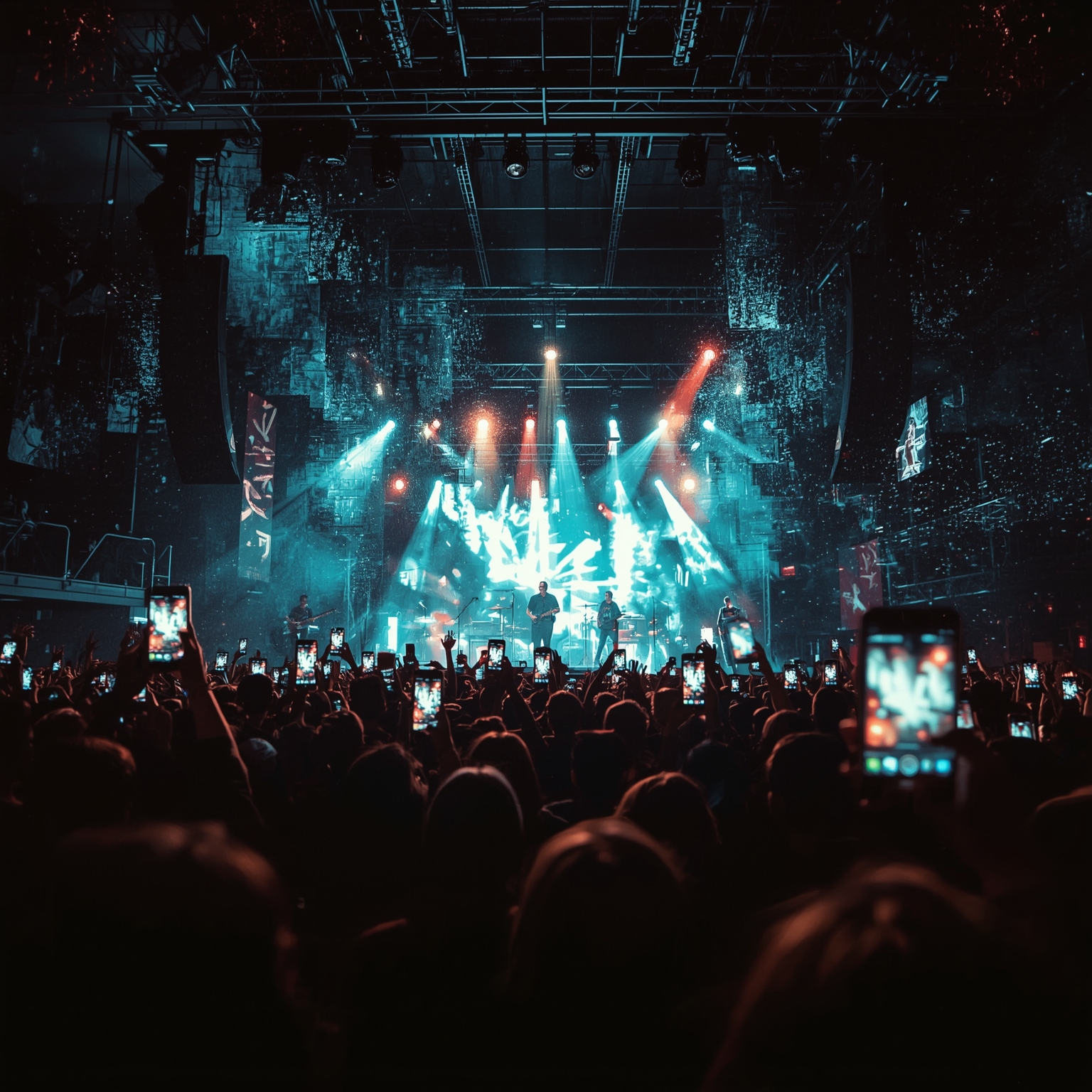
This past autumn, I made the somewhat impulsive decision to attend an Oasis concert, driven by a mix of nostalgia and last-minute excitement. The tickets I secured were far from inexpensive—each costing an astonishing $275—and, given their scarcity, they placed my husband and me in the so-called nosebleed section, the kinds of seats that make the stage appear as a vibrant glimmer in the distance. Despite the sheer cost and elevation, the performance itself was exceptional, imbued with the raw energy and anthemic quality that has long characterized the band’s live shows. Yet, our enjoyment was tempered by an unexpected modern reality: for much of the evening, our actual view of the musicians was filtered through a shimmering sea of illuminated smartphones held aloft by fellow attendees. A significant portion of the audience seemed more invested in recording or photographing the event than in simply being present for it. By my rough estimate, at least a third of the concert unfurled beneath a forest of raised hands, each clutching a device intent on capturing what could never quite be replicated on a screen.
As someone who still values direct experience, I made a deliberate effort to resist that compulsion. Apart from snapping a single memento photo for memory’s sake, I chose to keep my phone tucked away and to live—if only for those few hours—within the immediacy of sound, light, and emotion. I belong to Generation X, a demographic that grew up watching the rise of technology but also remembers a time before it dominated every facet of social life. Over the years, I have attended a respectable number of concerts, enough to recognize the singular thrill that comes from standing within a crowd, united by rhythm and melody rather than pixels and posts. My husband, by contrast, is a proud boomer, born in 1961, and he never misses a chance to boast about his concert-going résumé: more than one hundred shows, he’ll remind you, and one of his favorite bands from the 1970s he has managed to see thirty-four times. He treats these experiences almost as personal milestones, evidence of a life steeped in live music culture.
Looking back, the U2 concert I attended at London’s Wembley Stadium in the late 1980s remains my most powerful musical memory. I went with a handful of college friends, and though the details of the setlist have faded, the sensations remain vivid—the pulse of the bass, the communal singing, the unbounded sense of euphoria. We didn’t have cellphones then; the idea of documenting every moment hadn’t yet entered our social consciousness. We simply inhabited the experience, laughing, dancing, and belting out the lyrics in a state of collective release. Nearly four decades later, what I cherish most about that night is precisely its state of being unplugged: no anxiety about missed angles, no need to verify or share, only genuine, undistracted joy.
Today, however, the omnipresence of smartphones often makes that kind of organic immersion almost impossible. While I do appreciate the convenience and connectivity that technology affords—after all, it keeps families and friends linked across great distances—I can’t help but wish it were less intrusive. The infiltration extends far beyond concert venues. I recall a Broadway production I attended just last year. As the performers delivered a particularly moving scene, a phone chimed loudly from the seat beside me. The device belonged to the woman next to me, who frantically rummaged through her handbag in an attempt to silence it. When she finally located it, she not only answered but proceeded to engage in a full conversation—loud enough for those around her, including me, to overhear her post-show dinner plans. While I directed a very pointed glare her way, the rest of the audience seemed oddly unfazed, as though this minor technological intrusion had become part of the expected theater-going experience.
Similarly, I have endured countless school recitals where my view of my own child was obstructed by the enthusiastic yet inconsiderate maneuverings of parents wielding smartphones and tablets. These individuals, in their earnestness to record every moment, forget that their field of vision encompasses more than just the small digital frame they’re composing. It’s frustrating to sit behind someone who spends the entire performance documenting each song, speech, or step as though assembling an exhaustive visual archive. Personally, I feel no need to photograph my children from every conceivable angle; their essence cannot be compressed into an endless stream of images. Nevertheless, my restraint rarely solves the problem of others leaning into aisles, crouching beneath tripods, or inadvertently blocking others’ views in pursuit of their perfect shot. Even when the devices are not directly obstructing my line of sight, the persistent glow from their screens cuts through the dimness of the auditorium, a harsh reminder that presence and participation are too often sacrificed for documentation. Moreover, this incessant photographing doesn’t merely affect the spectators—it subtly burdens the performers, the children themselves, who feel compelled to rehearse smiles and poses until they satisfy their parent’s artistic ideal.
In my own household, I’ve tried to counteract these habits through modest rebellion. I have long maintained a family rule that bans phones at mealtimes, a campaign that has met with mixed success. My teenage children, like so many of their generation, are seemingly tethered to TikTok, eyes scrolling through endless snippets of entertainment. Their father, for his part, removes himself only slightly from the digital fray, catching up on The Wall Street Journal through its app between mouthfuls of dinner. Such divided attention has driven me to what some might call extreme solutions, including literally locking everyone’s devices in a small container prior to meals in an effort to revive the lost art of conversation. I will admit, however, that these strategies rarely last long. My resolve tends to weaken within minutes, undone by the collective sighs, complaints, and relentless pleading that erupt from my family. It’s a truth I would rather conceal, yet honesty compels me to acknowledge that maintaining boundaries with technology is not only difficult for them—it is difficult for me as well.
Indeed, my imperfection became apparent during a recent celebration of my wedding anniversary. My husband and I had gone out to a lovely restaurant, intending to enjoy a long, uninterrupted evening together. And yet, there I was, glancing covertly at my phone to check incoming texts—justifying it to myself as harmless multitasking. In a moment of ironic hypocrisy, I found myself secretly relieved that my husband was not watching from across the table, as he had stepped away briefly. If only I could say with conviction that my reaction would have been any different had he been sitting right there. The truth is that even the most self-aware among us must now fight an internal battle between our longing for connection in the real world and the gravitational pull of our digital lives.
Perhaps that is the larger lesson of all these vignettes. We are creatures yearning for presence, yet we are constantly tempted by devices that promise engagement while subtly stripping it away. It is not technology itself that is the villain but our unexamined dependence on it—our inability to look up long enough to truly witness the world unfolding before us.
Sourse: https://www.businessinsider.com/gen-xer-glad-grew-up-iphone-free-world-2025-11


