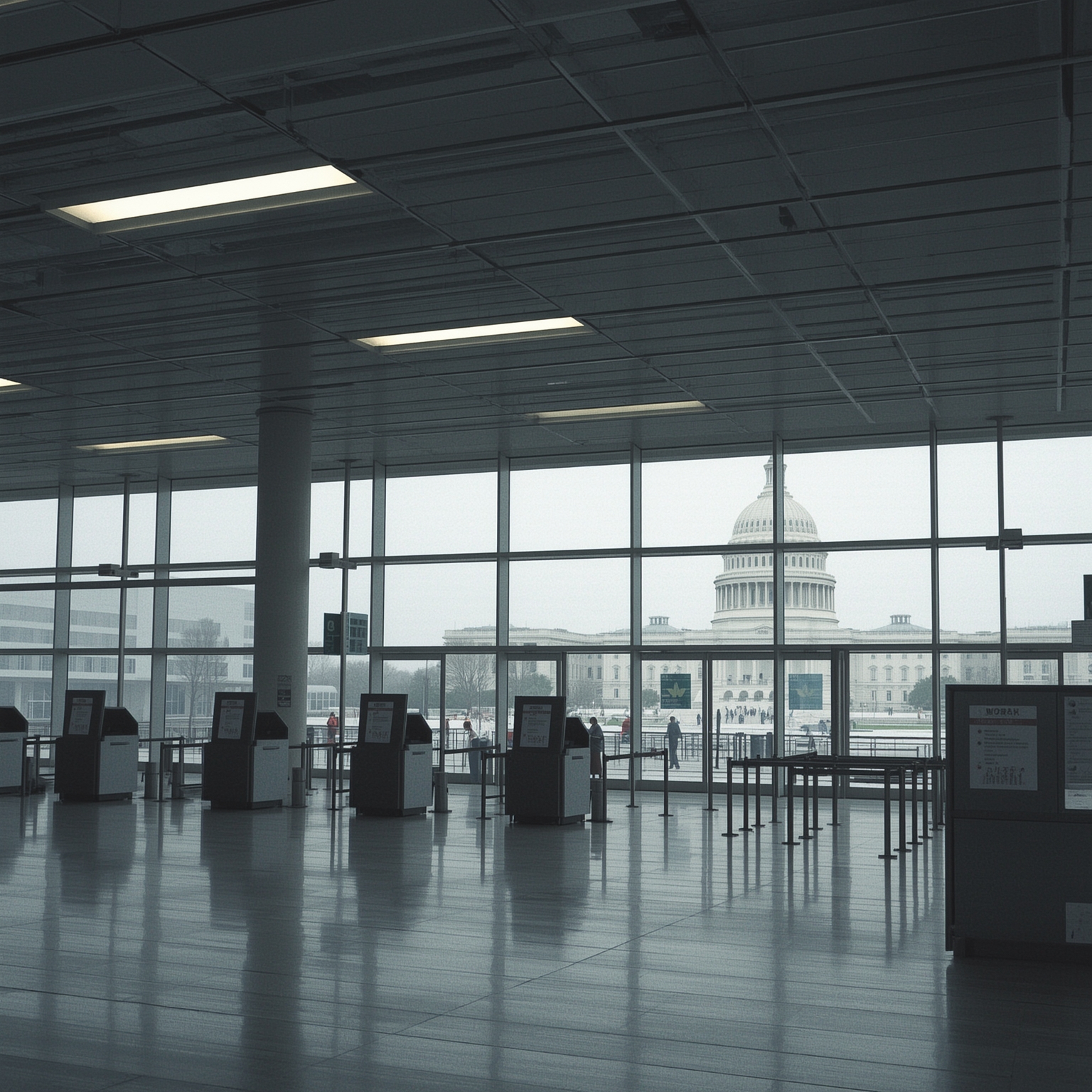
As the calendar marks Day 36, the United States continues to endure the longest government shutdown in its history—an unprecedented event that has stretched beyond all prior records. The ramifications of this prolonged political impasse have seeped into nearly every aspect of American life. At airports across the nation, passengers face mounting frustrations from extensive flight delays caused by insufficient staffing and stretched security personnel working without pay. Meanwhile, in the country’s treasured national parks, unattended trash bins overflow, scenic trails fall into neglect, and basic services that help protect both visitors and the environment have been drastically curtailed. Vital social safety-net programs, which serve as lifelines for millions, are gradually exhausting their funds, leaving wide uncertainty about how long they can continue operating. Hundreds of thousands of federal employees remain in limbo—either furloughed without income or compelled to continue performing their duties despite receiving no paycheck for weeks.
The shutdown began at the stroke of 12:01 a.m. on October 1, when the government ceased all nonessential operations after lawmakers failed to agree on a funding bill. With no consensus in sight, the timeline for reopening remains entirely unclear. To grasp the historical magnitude of this situation, it is worth noting that the previous record-holder for the longest shutdown lasted 35 days, occurring between late 2018 and early 2019. Before that, such shutdowns typically spanned only hours or, at most, a few weeks.
For ordinary Americans, the consequences of this political stalemate are tangible and far-reaching. Everyday life—ranging from family travel to the timely arrival of benefit checks—has been touched by the freeze in government activity. The Supplemental Nutrition Assistance Program (SNAP), upon which over 42 million citizens depend for essential groceries, stands particularly vulnerable. The program depleted its available funds for November benefits, and although a late-October court ruling ordered the Trump administration to allocate emergency resources to cover part of the obligation, the president’s subsequent remarks clarified that full benefits would be withheld until the shutdown ends. In parallel, thousands of low-income households face the impending risk of losing access to Head Start programs, with early childhood centers in fourteen states already shuttering. Other initiatives, including the Temporary Assistance for Needy Families (TANF) program and the Special Supplemental Nutrition Program for Women, Infants, and Children (WIC), may also see their operations interrupted until government funding is restored. In contrast, entitlements such as Social Security, Medicare, and Medicaid continue to deliver payments unabated.
Federal employees have found themselves among the most directly affected. Workers from an array of agencies have reported to Business Insider that they have already missed multiple paychecks, forcing drastic adjustments in personal spending habits. More than two dozen employees disclosed measures such as reducing their children’s extracurricular activities, postponing necessary home repairs, and curtailing social outings to conserve dwindling funds. Many also expressed anxiety over potential layoffs within the Trump administration’s restructuring initiatives—measures currently on hold due to a court injunction. The White House, however, has signaled that back pay for these workers is not guaranteed, deepening fears of long-term financial instability.
Certain essential law enforcement functions continue notwithstanding the fiscal deadlock. Border Patrol agents, members of the Secret Service, and deportation officers remain on active duty, as do all branches of the armed forces. To sustain these operations, the administration has drawn upon the Department of Homeland Security’s remaining budget and an undisclosed multimillion-dollar private donation.
Airports, one of the most visible examples of federal dysfunction, are grappling with the strain of both unpaid labor and record-high travel volumes as holiday travel season approaches. Employees describe overwhelming workloads, low morale, and diminished staffing. At the same time, travelers express growing concern over safety, scheduling reliability, and the general breakdown of normalcy. Beyond the terminals, national landmarks—museums, zoos, historic sites, and parks—operate at partial capacity or stand closed entirely, depriving the public of educational and recreational access.
Looking ahead, the path toward resolution remains clouded by partisanship and legislative gridlock. The Senate has yet to coalesce around a spending framework that could reopen the government. Although the House successfully passed a preliminary budget on September 19, Senate negotiations collapsed only a week later, largely over disagreements tied to funding the Affordable Care Act subsidies and Medicaid provisions. Democrats have urged their Republican counterparts to not only extend the ACA subsidies beyond their December 31 expiration but also to reverse Medicaid revisions implemented under President Donald Trump’s One Big Beautiful Bill Act. As open enrollment for health insurance begins, many Americans purchasing coverage through the ACA Marketplace now face the likelihood of increased premiums for 2026.
President Trump, addressing the nation through a Truth Social post on October 6, placed responsibility squarely on Democratic lawmakers, asserting that they had brought about the shutdown during what he described as one of the most successful economic periods in modern history. He lamented that vital services and programs many citizens depend on have been needlessly obstructed, urging Congress to act swiftly. However, the resolution ultimately hinges on Congress determining an acceptable funding arrangement—whether a temporary continuing resolution or a comprehensive long-term plan—which would then require the president’s signature. Until such a compromise is achieved, the machinery of government remains partially immobilized, leaving both the nation’s workers and its institutions suspended in an uneasy state of uncertainty.
Sourse: https://www.businessinsider.com/longest-government-shutdown-ever-impact-on-airports-snap-workforce-2025-11


