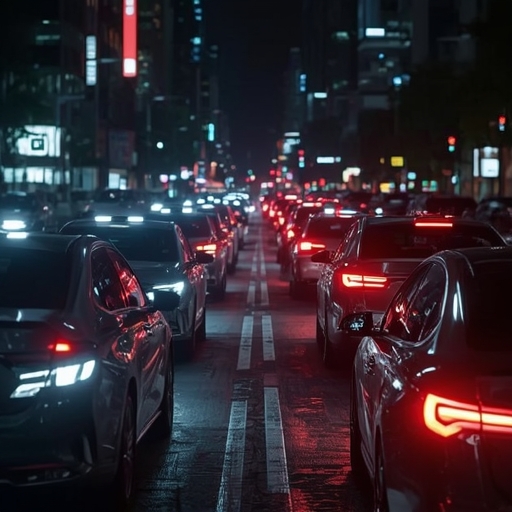
Baidu’s fleet of self-driving robotaxis recently encountered a serious and highly visible crisis on the streets of Wuhan, one of China’s major metropolitan areas. During what appeared to be a normal day of autonomous operation, several vehicles belonging to Baidu’s Apollo Go program abruptly halted in the middle of traffic. These unplanned stops occurred simultaneously, leaving both passengers and nearby drivers caught in a state of confusion and frustration. The vehicles, designed to function without direct human input, froze in place — a failure that instantly disrupted normal city flow and raised new alarms about the readiness of artificial intelligence–driven transportation systems in dense urban settings.
Eyewitnesses reported instances of passengers trapped inside, unable to exit or communicate effectively with system operators while traffic began to pile up. Scenes of congested roads filled social media shortly thereafter, amplifying the sense of public unease and skepticism surrounding rapid deployment of AI-based autonomous mobility solutions. Although no injuries were reported, the episode effectively demonstrated how even a brief software malfunction can cascade into large-scale urban disruption when algorithms replace human reflexes behind the wheel.
This event underscores the critical importance of technical resilience, redundant safeguards, and clear human intervention mechanisms in the rollout of autonomous vehicles. The autonomous driving industry has long promised improved safety and efficiency, but the Wuhan malfunction serves as a sobering reminder that innovation cannot be separated from reliability. For Baidu and competing tech giants pursuing driverless services, the incident offers both a reputational challenge and a valuable learning opportunity. Engineers and policymakers are now confronted with pressing questions: How should AI systems handle unpredictable situations in real-world environments? What emergency overrides must exist to protect passengers and the public when autonomy fails?
Beyond its immediate technical implications, this breakdown touches on wider societal and ethical debates about human trust in automation. Public acceptance of driverless transportation depends heavily on transparent communication, well-tested safety protocols, and swift accountability when issues arise. For urban planners and leaders in emerging technology, Wuhan’s robotaxi standstill should serve as a call to reevaluate how autonomous mobility is introduced into complex ecosystems already burdened by congestion and risk. As the boundaries between human intuition and artificial decision-making continue to blur, ensuring that safety frameworks evolve as rapidly as the algorithms themselves is no longer optional — it is essential for sustaining public confidence in the future of intelligent transport.
Sourse: https://www.theverge.com/ai-artificial-intelligence/905012/baidu-apollo-robotaxi-freeze-china