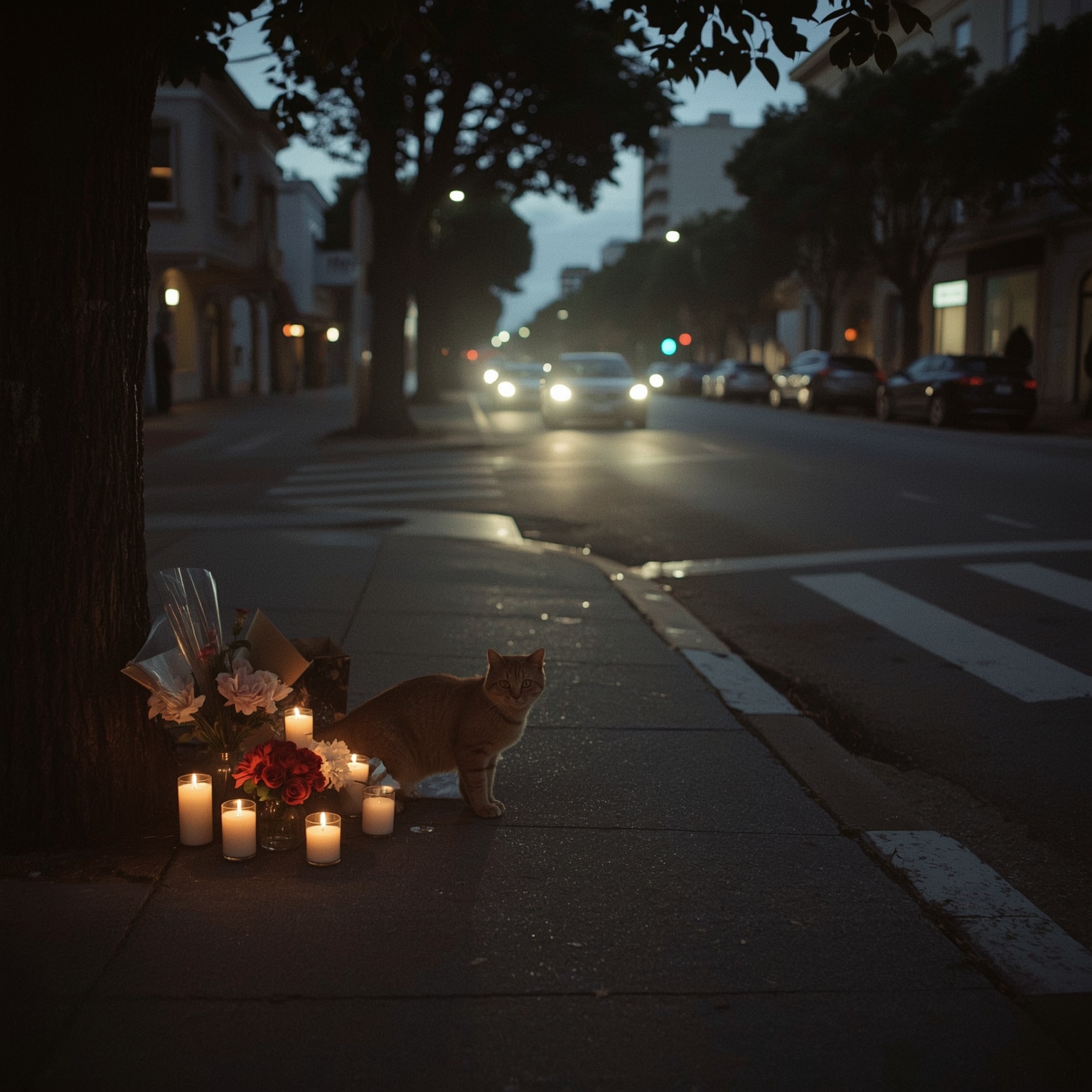
The passing of Kit Kat, a cherished neighborhood cat who had long been considered the unofficial guardian and mascot of a Mission District bodega, has sent a wave of sorrow and shock through the heart of San Francisco, according to reporting by The New York Times. For many residents, Kit Kat’s presence represented more than just a beloved pet; he embodied the small, communal intimacy that ties urban neighborhoods together amid an increasingly tech‑driven cityscape. His sudden death has therefore resonated far beyond a single street corner, stirring grief, anger, and reflection across the community.
On the evening of October 27, tragedy struck when a Waymo robotaxi — one of San Francisco’s widely discussed autonomous vehicles — fatally struck Kit Kat as the car began to move away. The details remain painful for residents, who in the aftermath swiftly turned the site of the accident into an impromptu memorial adorned with flowers, photographs, handwritten notes, and flickering candles. This makeshift shrine soon grew into a poignant space of collective mourning. Yet alongside the expressions of affection for the cat, the surrounding area became a battleground of opinions: posters and placards appeared, some condemning Waymo for the collision and calling for stricter oversight of self‑driving technology, while others argued for perspective by drawing attention to the far greater number of fatalities historically caused by human drivers.
Amid this emotional and civic tension, Jackie Fielder — the elected representative for the Mission District on San Francisco’s Board of Supervisors — invoked Kit Kat’s death during a public discussion about an upcoming city resolution. This proposed measure would request that the state grant local voters the right to determine whether driverless vehicles should be permitted to operate within their neighborhoods. Fielder used the incident as a tragic but instructive example of a larger concern: accountability in the age of automation. In her interview with The New York Times, she emphasized that when a crash involves a human driver, there exists a clear framework for responsibility. A person can exit the vehicle, express remorse, and be held legally answerable by the authorities in the event of wrongdoing, such as a hit‑and‑run. However, when a driverless car is responsible, this human chain of accountability evaporates. There is, as Fielder poignantly observed, no individual to face the consequences, no one to offer an apology or answer for the event directly.
Waymo, the company behind the autonomous vehicle involved in the incident, responded by expressing sympathy and seeking to clarify its understanding of what occurred. Citing internal review, the firm stated that the cat had suddenly dashed beneath the vehicle just as it began to pull away—an unpredictable movement that even a vigilant human driver might have struggled to prevent. In its official statement, Waymo extended what it described as its deepest condolences to Kit Kat’s owner and to the wider Mission District community whose daily rhythms had included the cat’s playful presence. The company’s co‑chief executive, who had recently spoken at TechCrunch Disrupt about the company’s ongoing efforts to improve safety and build public trust, reiterated that preserving human (and animal) life remains the company’s paramount concern.
Still, for many San Franciscans, the tragedy of Kit Kat has come to symbolize something much broader than a single fatal encounter. It epitomizes the collision between technological progress and the fragile, deeply personal fabric of local communities. As autonomous vehicles continue to populate the city’s streets, residents are left to grapple with profound questions — not merely about the mechanics of safety protocols, but about the moral and civic responsibilities that accompany innovation. In that sense, the story of Kit Kat has transformed from a neighborhood loss into a catalyst for city‑wide debate over what kind of future San Francisco is prepared to accept, and at what emotional and ethical cost.
Sourse: https://techcrunch.com/2025/11/16/beloved-sf-cats-death-fuels-waymo-criticism/


