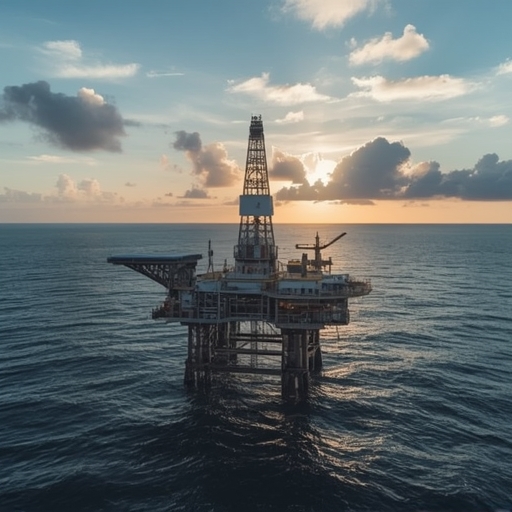
Amid escalating political and economic turbulence in Iran—a nation whose energy landscape has long influenced global oil markets—the world’s most powerful petroleum corporations are once again demonstrating their remarkable capacity for strategic adaptation. As the risks surrounding the Middle East’s traditional energy strongholds intensify, industry leaders such as ExxonMobil and Chevron are deliberately redirecting vast financial resources, amounting to many billions of dollars, toward large-scale exploration and production projects across the African and South American continents. This significant geographical and operational reorientation marks not merely a temporary adjustment but a carefully calculated transformation in how Big Oil seeks stability, growth, and long-term resilience within an increasingly volatile global energy system.
The strategic logic behind this shift is both pragmatic and forward-looking. Africa and South America—regions endowed with abundant untapped reserves, emerging regulatory frameworks, and rapidly developing infrastructure—are being perceived as fertile ground for growth, partly insulated from the geopolitical risks that have characterized the Middle East in recent decades. Investment initiatives in countries such as Guyana, Brazil, Nigeria, and Angola, for instance, have begun to draw attention as testing grounds for next-generation extraction technologies and diversified operational models. Through these efforts, the industry aims not only to secure a more predictable supply chain but also to create a stable foundation for capital expansion in an era when the balance between fossil fuel dependency and the global transition toward renewable energy is becoming increasingly delicate.
This pivot should be understood as part of a larger narrative in which global energy corporations continuously recalibrate their portfolios to align with shifting political realities and resource dynamics. While Iran’s internal instability and international pressures amplify uncertainty, Africa and South America offer alternative arenas where energy multinationals can maintain profitability while minimizing exposure to volatile geopolitical tensions. In this context, Exxon and Chevron’s strategic realignment symbolizes a broader movement toward diversification—one that balances the imperative of ensuring secure oil output with a growing corporate emphasis on adaptability, sustainability, and regional partnership.
Ultimately, the decision to redirect investment flows from the Middle East to new frontiers in the Global South encapsulates the essence of modern energy strategy: a pursuit not merely of short-term gain, but of durable influence across continents poised for economic and industrial expansion. It reflects a sophisticated blend of risk management, foresight, and opportunity-seeking that defines the current phase of the world’s energy transition, as multinational players strive to remain at the forefront of an industry evolving under profound geopolitical and environmental pressures.
Sourse: https://www.wsj.com/business/energy-oil/big-oil-plows-billions-into-far-flung-drilling-sites-to-escape-iran-turmoil-cdb6ab26?mod=pls_whats_news_us_business_f


