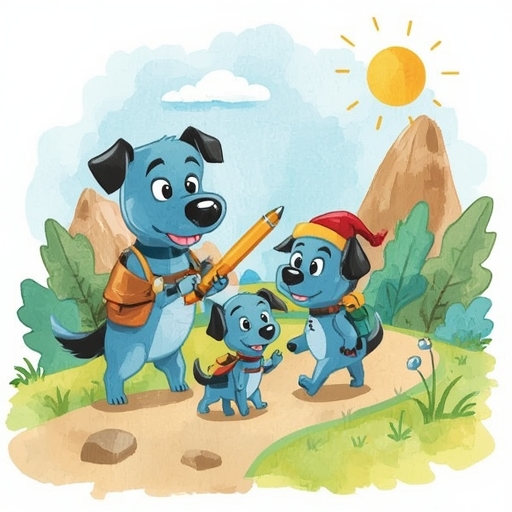
In an uncommon and particularly revealing interview, Bluey creator Joe Brumm—the imaginative force and principal architect behind the globally adored children’s series—sat down with Shainiel Deo, the CEO of Halfbrick Studios, the Australian developer widely recognized for the hit game Fruit Ninja. Their in-depth conversation delved into the origins, collaborative process, and creative philosophies guiding the development of their new joint venture: *Bluey’s Quest for the Gold Pen*. This project is one of the few new opportunities in 2024 for fans to experience original storytelling within the Bluey universe, making it not only a much-anticipated gaming release but also one of Brumm’s final personal contributions to the series he famously created and nurtured.
The partnership between Brumm and Deo stretches back many years, defined by mutual respect and a shared spirit of experimentation. When Brumm first began conceptualizing the game’s design and narrative, he instinctively knew that Halfbrick’s nimble, indie sensibilities would perfectly align with the playful and inventive nature of Bluey. Reflecting on his decision to collaborate with Deo, Brumm explained that Halfbrick has a long-standing reputation for creating games with an independent artistic edge—a quality that resonates deeply with the subversive, imaginative energy that fuels Bluey itself. He described the show’s creative ethos as having a “punk rock” personality, meaning it thrives on creative freedom and the joy of discovery rather than adhering to convention. This same energy, he noted, has always attracted like-minded collaborators who operate as if powered by an “alternate energy source,” a creative fuel that often produces unexpectedly beautiful results. According to Brumm, this intangible spark is what leads to the show’s most memorable moments.
One clear example of this sort of creative enrichment can be seen in the show’s fan-favorite episodes, such as *Dragon* and *Escape*, where the Heeler family’s adventures unfold inside their own hand-drawn imaginary worlds. Brumm discussed how the simple but profound concept of children’s art coming to life inspired a fresh gameplay mechanic for *Bluey’s Quest for the Gold Pen*. In these episodes, the kids draw pictures that magically animate, transporting audiences into their lively sketches. Translating that concept into an interactive format struck Brumm as a natural evolution for the Bluey universe. He imagined a scenario familiar to any parent or child—a rainy day spent indoors, the whole family gathered around a kitchen table with pencils and paper, conjuring flights of fancy through art. The game’s story, he continued, emerges directly from that domestic creativity: Bandit, Bluey’s dad, mischievously takes the coveted golden pen for his own use, sparking a whimsical chase across multiple art-inspired levels. Throughout the unfolding adventure, Bandit continually manages to slip away, propelled by his usual playfulness, while Bluey and her family navigate the many imaginative worlds that Mum—ever the creator—has illustrated for them.
Deo expressed genuine admiration for Brumm’s decision to center the game around the constructed worlds of childhood imagination. He described how the creative freedom inherent in these “drawn worlds” removed the limitations that define the show’s more grounded domestic setting. This design approach allowed the Halfbrick team to produce an astonishing range of prototype environments and scenarios that, while anchored in Bluey’s characteristic warmth, also stretch beyond what would be visually or narratively possible in a television format. Brumm elaborated that the attraction of these worlds lies in their theatrical exaggeration—spaces where mild villainy, fantastical mischief, and over-the-top fairy-tale antics delight rather than disturb. The children within the story relish the chaos precisely because it remains playful and innocent, devoid of malice. The experience, Brumm noted, is meant to feel like an elaborate family game driven purely by laughter and imagination.
Deo went on to discuss their shared set of influences in shaping the game’s mechanics. He likened the structure to classic adventure experiences, describing an almost open-world environment where Bluey could freely explore, embodying the curiosity and independence that define her personality. The team drew inspiration from nostalgic titles such as early *Zelda* games and top-down isometric adventures, blending these influences with platforming and exploration mechanics reminiscent of *Mario Odyssey*. This blend, he believed, achieves a balance between classic gameplay foundations and modern design sensibilities, giving the game both familiarity and freshness for players across generations. Brumm echoed this sentiment by highlighting that at its core, *Bluey’s Quest for the Gold Pen* is built to be pure fun. Its narrative, he said, deliberately embraces simplicity—reminiscent of vintage Commodore 64 titles with straightforward yet compelling premises: there is a problem to solve, a villain to chase, and an adventure to embark upon. The elegance of that simplicity, he suggested, lies in its ability to convey joy without complication.
Deo also emphasized that Halfbrick sought to honor the emotional essence of the Bluey franchise—the heartfelt family dynamics and everyday wonder that have resonated with audiences worldwide. To him, the game embodies an old-fashioned spirit of play: charmingly whimsical, unpretentious, and rooted in warmth. Its characters and narrative preserve the series’ distinctive tone—wholesome and loving, yet at times gently irreverent and wry in humor. More than anything else, Deo described the project as a wholesome experience designed to bring families together through interactive storytelling.
Brumm reflected on how the storyline connects to the larger mythology of Bluey, developed through more than a decade of animated adventures. He revealed that Bandit’s possession of the magical gold pen—a pen capable of turning anything it touches to gold—adds an intriguing symbolic layer. He likened the character to a mix between King Midas, with his transformative touch, and the exuberant charisma of David Lee Roth. With a chuckle, Brumm admitted that Bandit represents a version of himself, confirming what many devoted fans had long suspected: that the beloved father figure in Bluey often serves as his alter ego. Deo, smiling, agreed wholeheartedly, remarking that Brumm had indeed infused the story with pieces of his own personality, making the connection between creator and creation unmistakably authentic.
As the discussion drew to a close, Brumm articulated his hopes for the new release. For him, the game’s success cannot be measured solely in downloads or commercial performance but rather in the same terms as the show’s enduring legacy—by the happiness it brings to children. He envisions kids smiling at their screens, giggling as they play, proudly showing their parents the worlds they explore, and sharing the joyful experience with friends. That shared sense of delight, he concluded, is the truest mark of Bluey’s success, both as a series and now as a game.
*Bluey’s Quest for the Gold Pen* will launch on the Apple App Store on December 11, offering players a complimentary trial version along with the option for a one-time purchase unlocking the full set of levels. The Android release on the Google Play Store is scheduled for January 10, 2026, with broader platform expansions—including PC, Nintendo Switch, Nintendo Switch 2, PlayStation 5, and Xbox Series X|S—planned for later in the same year. For followers of io9’s entertainment coverage, updates about related projects—from the next chapters of the Marvel, Star Wars, and Star Trek universes to upcoming developments across the DC film and television universe, as well as future seasons of *Doctor Who*—remain just a click away, ensuring fans stay connected to the broader worlds of imagination that inspire creators like Brumm and Deo.
Sourse: https://gizmodo.com/bluey-gold-pen-game-inspiration-joe-brumm-2000696293