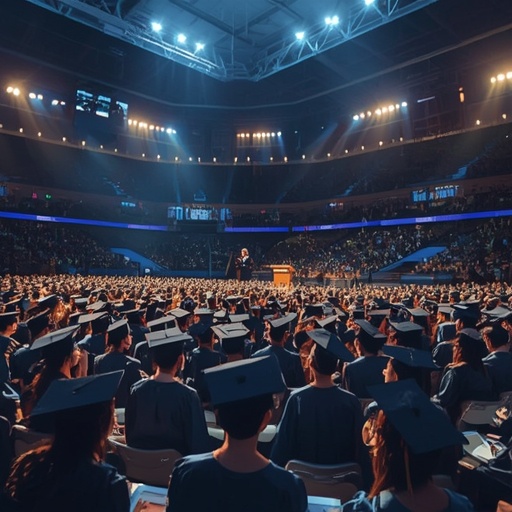
During a recent university commencement ceremony, a well-known technology pioneer—once celebrated as a leading visionary of innovation—faced an unexpectedly cold reception when addressing graduates about artificial intelligence. This moment, brief yet powerful, spoke volumes about the shifting public mood surrounding the tech industry and the uncertainty that now shadows rapid digital advancement. What once inspired awe and optimism has, for many, started to evoke unease, as questions about automation, ethics, and human relevance dominate the global dialogue on AI.
The scene captured an extraordinary contrast: a figure who once symbolized progress standing before a new generation, many of whom see technology less as liberation and more as disruption. The soft hum of anticipation that typically fills commencement halls gave way to audible dissent—a collective expression of frustration and skepticism about AI’s encroachment on jobs, privacy, creativity, and identity itself. To some observers, the moment represented a symbolic reversal, with the innovators of yesterday now called to answer for the broader consequences of their creations.
Beyond the immediate emotion of the event, the incident underscores a deeper cultural reckoning with the role of artificial intelligence in shaping human life. Graduates—digital natives who grew up surrounded by algorithms and automation—are perhaps the most qualified to both critique and reshape the systems defining the next era. Their reaction could be read not as hostility toward technology, but as a demand for accountability, transparency, and empathy from those driving its evolution.
For every engineer and entrepreneur pursuing AI breakthroughs, this moment offers a sobering reflection: progress without trust cannot flourish. Modern innovation, no matter how advanced, must be accompanied by open dialogue and a willingness to confront social and ethical implications. The boos heard that day were not merely an indictment of one speaker—they were a collective call for a more human-centered vision of technology, one that advances with conscience and care.
In the end, that graduation day will likely be remembered less for the discomfort it caused and more for the conversation it sparked—about who gets to shape the future, how we define intelligence, and what it means to remain truly human in an age increasingly governed by machines. It serves as both caution and catalyst: a reminder that the story of AI is as much about values and vision as it is about code and computation.
Sourse: https://www.businessinsider.com/students-boo-eric-schmidt-google-ceo-ai-university-arizona-2026-5