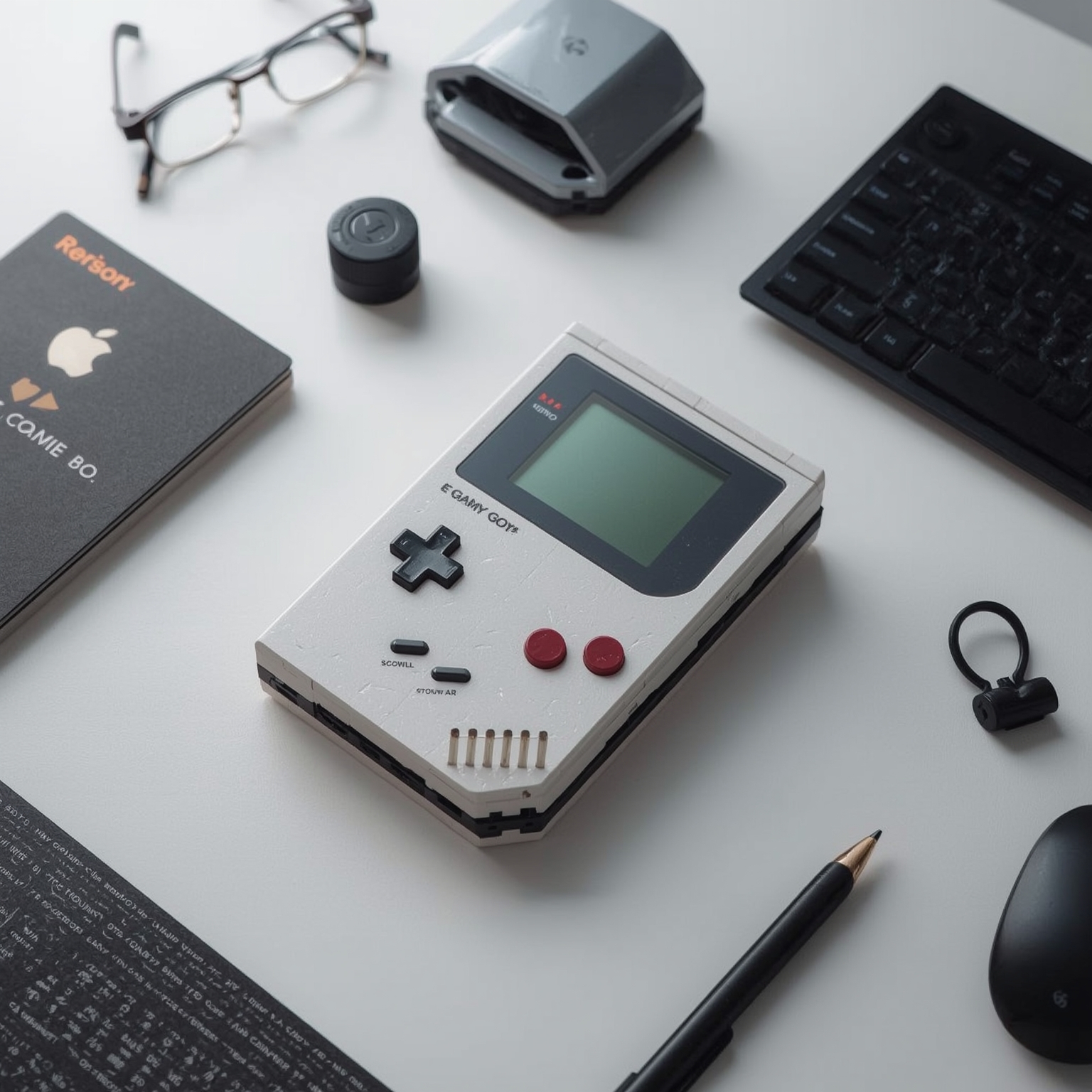
Following its announcement just a week ago, the much-anticipated BrickBoy kit — an inventive modification that transforms Lego’s intricately buildable Game Boy model into a fully operational handheld console through the power of software emulation — has officially begun its crowdfunding campaign on Kickstarter. Despite the excitement surrounding the project and its clever merging of nostalgia and modern ingenuity, one significant concern looms over potential backers: the pricing, which may prove to be a serious obstacle for many fans.
The BrickBoy is available in three distinct configurations, each differing in capability and cost. The entry-level option, aptly named the Essential Kit, offers only the most fundamental experience. It allows users to play classic Game Boy titles strictly in grayscale, replicating the monochrome visuals of the original hardware. Audio output is limited as well, featuring a single mono speaker that evokes the simplicity of early handheld systems. This model is priced at €129, roughly equivalent to $150, a figure that stands at more than twice the cost of Lego’s own $60 Game Boy set — a separate purchase not included in any BrickBoy package. Even with an early-backer discount lowering the price to €99 (approximately $115), the Essential Kit still feels comparatively expensive, particularly when measured against the wealth of competing devices from established brands like Anbernic. Those devices, known for their versatility and superior emulation capabilities, typically come fully assembled and ready for immediate use, requiring none of the additional assembly or modifications that the BrickBoy demands.
For enthusiasts seeking expanded functionality, the BrickBoy’s mid-tier offering, called the Gamer Kit, provides a considerably enhanced experience. This version introduces support for Game Boy Color and Game Boy Advance titles, significantly broadening the playable library. It also features modern conveniences such as Bluetooth compatibility for wireless headphones and a built-in rechargeable battery for improved portability. Priced at €169, or about $197 without any discounts, this model adds convenience and versatility yet remains positioned in a price category that invites debate about value.
At the top of the lineup, the Collector’s Edition caters to those who appreciate display-worthy craftsmanship as much as playability. This premium edition can transform the Lego Game Boy model into a working showcase piece that continuously runs demonstration programs, turning the nostalgic toy into a functional artifact for collectors. It is offered at €189, approximately $220, reflecting its status as a niche item geared toward display enthusiasts rather than everyday gamers. All three versions are projected to begin shipping around March 2026, giving supporters a long wait before they can hold their fully functioning Lego-inspired handhelds in their hands.
Taken together, these pricing tiers underscore a tension between innovation and practicality: while the BrickBoy embodies impressive creativity and technical charm, its cost may surpass what most retro gaming fans deem reasonable for a decorative and ergonomically questionable replica. Nonetheless, its reliance on digital ROMs means players are not constrained by the need to find original game cartridges — an advantage over other upgrade kits such as Natalie the Nerd’s conversion kit, which retains compatibility with authentic game carts. In essence, the BrickBoy stands as a fascinating, if somewhat extravagant, fusion of nostalgic design, DIY culture, and emulation technology that reimagines how vintage gaming is experienced and displayed.
Sourse: https://www.theverge.com/news/808051/brickboy-lego-game-boy-emulator-upgrade-kit-kickstarter


