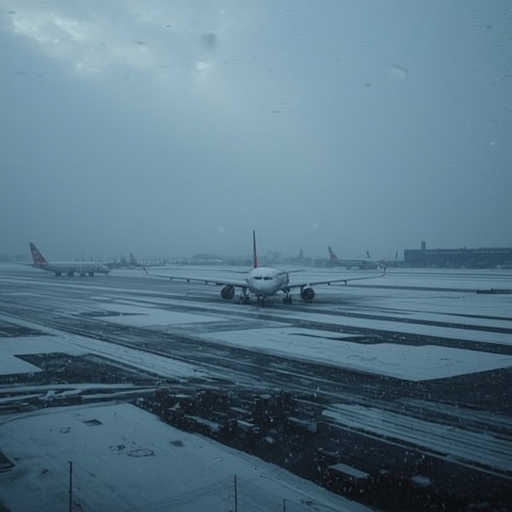
Travelers preparing for upcoming journeys should exercise both caution and patience, as yet another powerful round of blizzards is forecasted to sweep across the Eastern and Midwestern regions of the United States. These intense winter storms are expected to blanket vast areas with thick layers of snow, bringing along fierce winds and drastically reduced visibility that collectively create hazardous conditions for all forms of transportation. Air travel, in particular, is projected to suffer widespread disruptions. Airports from major hubs to regional terminals will likely experience substantial flight delays, numerous cancellations, and congested schedules as airlines struggle to accommodate shifting weather patterns and ensure passenger safety.
For anyone planning to fly during this period, frequent monitoring of airline notifications and flight status updates is crucial. Travelers should take advantage of mobile applications, airport alert systems, and official airline websites to remain informed about potential changes to departure and arrival times. In addition, flexibility should be regarded as an essential part of travel planning—rebooking options and alternative routes may become necessary as storm fronts intensify. Packing extra essentials such as warm clothing, snacks, and power banks can provide comfort during unforeseen waiting times in terminals or while in transit.
The impact of these winter storms extends well beyond the immediate experience of delayed flights. Logistics networks, road travel, and even public transportation may face secondary complications stemming from the same meteorological systems. Heavy snowfall and icy roadways can hamper travel to and from airports, further exacerbating the ripple effect of cancellations and delays. As a result, individuals should allocate additional time for every leg of their journey and avoid last-minute departures that could be hindered by inclement weather.
Meteorologists emphasize that the combination of cold Arctic air masses with moist atmospheric currents from the south is fueling this extreme weather event. The resulting convergence leads to the creation of rapidly developing snow bands capable of producing heavy accumulations within short timeframes. Emergency management agencies and transportation authorities across affected states are coordinating responses to maintain operational continuity, clear runways, and safeguard travelers, yet the unpredictability of such storms means that disruptions will be unavoidable.
In these circumstances, mental preparation is as vital as logistical readiness. Travelers are encouraged to remain patient, understanding that cancellations and extended delays—though frustrating—are primarily safety precautions designed to prevent more severe consequences. Communication with airlines, travel agents, and even local accommodations can mitigate stress by securing alternative arrangements swiftly.
Ultimately, as the blizzards advance through the East Coast and Midwest, the most prudent approach combines awareness, flexibility, and preparedness. By staying informed, planning cautiously, and embracing patience, travelers can navigate this challenging period of winter weather with greater confidence and composure, even amid the cold chaos unfolding across the nation’s skies.
Sourse: https://www.businessinsider.com/flight-delays-snow-storm-east-coast-midwest-2025-12