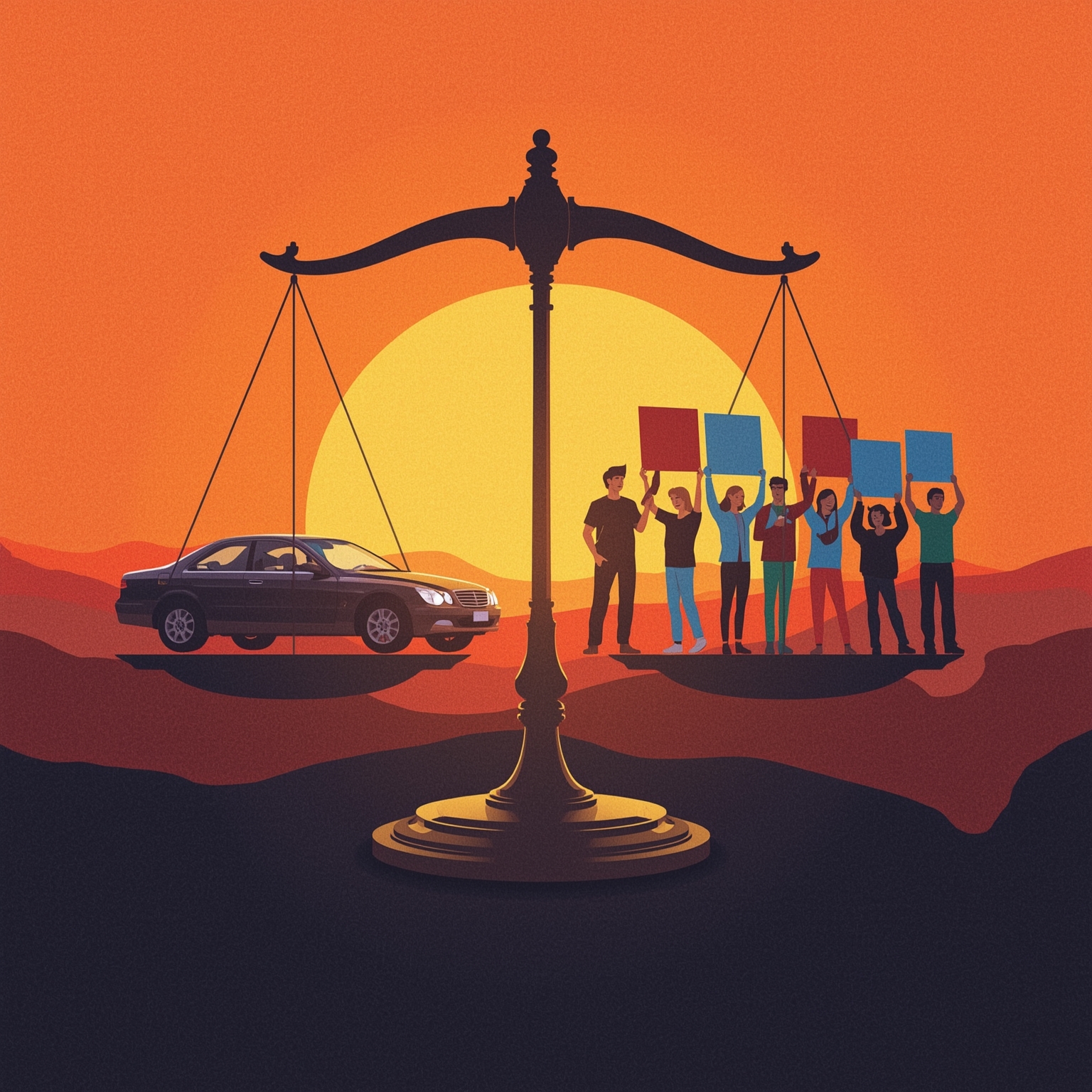
Drivers employed by ride-hailing platforms such as Uber and Lyft are on the verge of gaining a significant new labor right in California: the legal ability to unionize while continuing to operate as independent contractors. This milestone development, made possible through a bill formally signed into law on Friday by Governor Gavin Newsom, represents a major shift in how the state—and potentially the nation—approaches labor organization within the growing gig economy. By extending union rights to contractors rather than exclusively to traditional employees, California is once again positioning itself at the forefront of progressive labor reform, redefining the boundaries of worker representation in an era dominated by flexible, app-based employment models.
The legislation is part of a broader negotiated settlement that brought together a diverse coalition of stakeholders, including state legislators, organized labor unions, and the major ride-hailing corporations themselves. As a result of these complex negotiations, two separate but interrelated bills were approved: one easing insurance requirements for companies such as Uber and Lyft, and another formally extending collective bargaining rights to their drivers. When details of this carefully balanced agreement were first revealed in August, Governor Newsom characterized it as an ‘historic agreement between workers and business that only California could deliver’—a statement highlighting both the scale of the cooperative effort and the uniqueness of California’s political and economic landscape, where innovation and labor reform frequently intersect.
According to reporting from the Associated Press, this new legal framework is expected to directly impact more than 800,000 ride-hailing drivers across the state, granting them the right to join unions and participate in collective bargaining. This means that drivers will now be empowered to negotiate collectively for higher wages, improved health and safety standards, and expanded access to benefits that have traditionally been limited to employees rather than contractors. Ramona Prieto, who serves as Uber’s head of public policy for California, described the outcome as a carefully constructed compromise—one that simultaneously reduces operating costs for passengers while strengthening the collective voice and social standing of the driving workforce. Her remarks underscore the attempt to strike equilibrium between affordability for consumers and fairness for workers within a highly competitive, innovation-driven market.
This legislative milestone does not stand alone within the national context. A similar initiative recently gained traction beyond California’s borders: in Massachusetts, voters approved a ballot measure in the previous autumn that likewise granted ride-hailing drivers the right to unionize. The parallel development suggests that the movement to extend collective bargaining rights to gig workers is gaining momentum across the United States, signaling a gradual but profound transformation in how digital platform labor is governed. In this way, California’s new law represents both a local triumph for labor rights and a potential blueprint for other states seeking to reconcile technological progress with social and economic justice.
Sourse: https://techcrunch.com/2025/10/04/newsom-signs-bill-giving-uber-and-lyft-drivers-in-california-the-right-to-unionize/