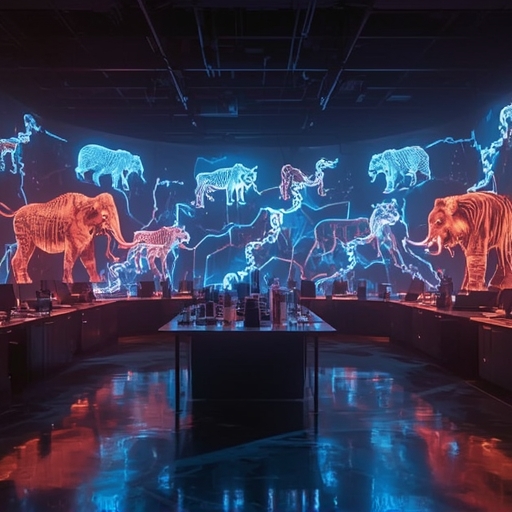
Humanity stands at a remarkable crossroads, one where science’s ambition intertwines with nature’s deepest mysteries. Across research facilities and genetic laboratories, a new kind of frontier is emerging—one that dares to challenge the irreversible boundaries of extinction itself. At the heart of this effort lies a pioneering Dallas-based biotechnology company with a mission as visionary as it is controversial: to reintroduce vanished species such as the woolly mammoth and the Tasmanian tiger. Through the convergence of advanced genetic sequencing, artificial intelligence, and synthetic biology, this initiative seeks not only to recreate the physical form of extinct organisms but also to revive the ecological balance they once helped sustain.
Backed by substantial investment from leading scientific and venture groups, this company aspires to push beyond traditional notions of conservation. Its research focuses on reconstructing lost genomes, cultivating viable embryos, and eventually reestablishing species that disappeared centuries or millennia ago. Yet, the implications exceed mere technological triumph. ‘De-extinction,’ as this movement is popularly known, provokes profound debates concerning ethics, environmental stewardship, and the very definition of what it means to engineer life.
Supporters believe that reviving certain extinct species could help restore damaged ecosystems—filling ecological roles once left vacant and potentially counteracting the impact of human activity on biodiversity. For example, bringing back a cold-adapted mammoth-like hybrid might help preserve Arctic permafrost by maintaining grassland ecosystems, thereby slowing the release of greenhouse gases. Critics, however, warn that such endeavors may overstep ethical boundaries, posing risks to existing habitats and diverting attention and funding from protecting the species that currently face extinction.
Nevertheless, this initiative ignites the imagination. The idea that something once confined to the pages of natural history could again stride across the Earth touches a deep human fascination with both loss and restoration. Through careful scientific methodology, this company aims to transform fiction into tangible fact—reawakening species that symbolize resilience, curiosity, and the enduring power of innovation.
Ultimately, this ‘de-extinction’ revolution invites us to reconsider humanity’s relationship with nature. Is this a monumental act of restoration—an opportunity to mend what was broken—or an unsettling step toward designing the future of life itself? The answer may define not only the next era of biotechnology but also the broader moral narrative of how humans choose to use the tools of creation they now possess. As research advances and public dialogue deepens, one truth becomes inescapable: we are no longer merely observers of evolution—we have become its deliberate architects.
Sourse: https://www.theverge.com/science/921088/colossal-de-extinction-antelope-reproduction


