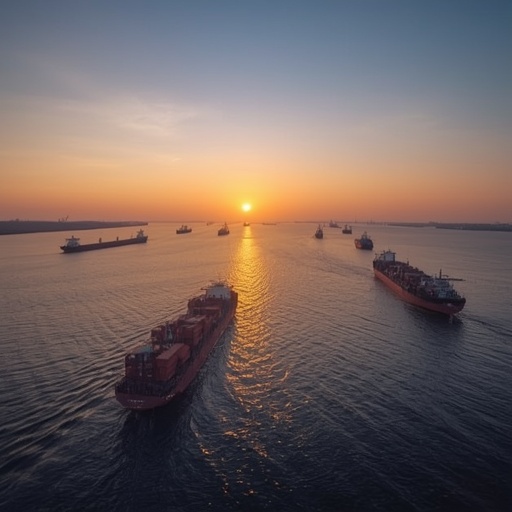
Following an extended period of political tension and commercial uncertainty, a new diplomatic understanding between the United States and Iran has culminated in an agreement to reopen the Strait of Hormuz—one of the most strategically important maritime corridors for international trade and energy transport. This decision signals a potentially transformative moment for global oil dynamics, as the narrow passage connecting the Persian Gulf to the wider world once again becomes accessible to large fleets of oil tankers and cargo vessels that had been idled or rerouted for months. Although the announcement has generated a wave of optimism among energy analysts and economic observers, enthusiasm is tempered by cautious realism regarding the pace of recovery.
Industry professionals underscore that while the resumption of oil flow heralds renewed commercial activity, the process of restoring full production capacity and rebuilding depleted inventories will inevitably unfold slowly. Complex logistical networks—spanning extraction sites, port terminals, shipping lanes, and refineries—must all synchronize before stability can be reestablished. Many companies are therefore adopting a measured approach, reactivating operations in stages rather than rushing to pre-crisis levels. This strategy aims to mitigate risks related to supply misalignment, transportation bottlenecks, and potential geopolitical volatility that could resurface without warning.
At the same time, market participants across the globe are monitoring the situation with both hope and restraint. Economists note that while immediate price adjustments may occur as oil begins to move outward from the Gulf once more, sustained stabilization depends on consistent output and predictable shipping conditions in the weeks ahead. Governments, traders, and logistics specialists alike are working to evaluate how quickly and effectively the global supply chain can adapt to the renewed flow, integrating it into an international economy that remains sensitive to fluctuations in energy availability.
As vessels reposition themselves across calm Gulf waters and port authorities prepare for the steady hum of engines and the renewed loading of crude oil, the region stands at a critical intersection between relief and vigilance. The world’s attention has once again turned to this vital maritime artery—not merely as a symbol of resumed commerce, but as a reminder of how deeply interconnected political diplomacy, energy policy, and global trade truly are. #EnergyNews #OilMarket #GlobalTrade #GulfEnergy
Sourse: https://www.wsj.com/business/energy-oil/oil-markets-hormuz-us-iran-deal-cf79ca70?mod=pls_whats_news_us_business_f