At CES 2026, the concept of the smart home evolved from an intriguing idea into a cohesive reality that truly embodies the potential of interconnected living. Among the vast array of technological innovations displayed on the global stage, one development stood unmistakably at the forefront — Matter. This universal connectivity standard, long anticipated by both innovators and consumers, finally demonstrated its remarkable ability to unify our ever-expanding ecosystem of smart devices. Instead of fragmented communication between incompatible platforms, Matter allows all gadgets, from lighting systems and thermostats to appliances and entertainment hubs, to interact fluently and intuitively within one synchronized environment.
This achievement signifies far more than mere technical progress; it represents a fundamental shift in how people experience convenience, comfort, and control within their homes. By supporting seamless interoperability across multiple brands and ecosystems, Matter eliminates the confusion and inefficiency that have historically hindered the adoption of smart technologies. Imagine turning on the lights, adjusting room temperature, and starting your coffee machine — all with effortless coordination, regardless of manufacturer. This simplicity, once an aspiration, is now becoming a tangible part of daily life.
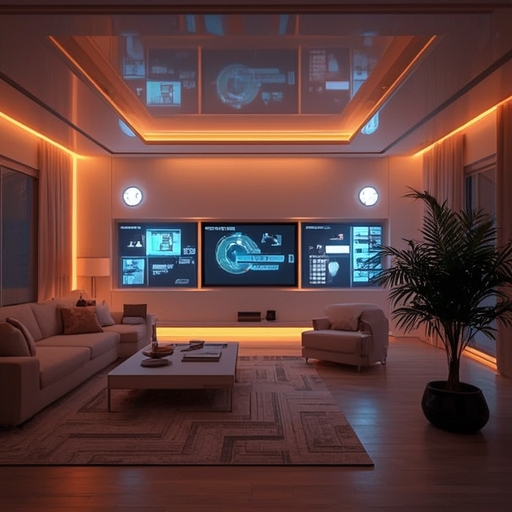
The presentation at CES 2026 illustrated not only the sophistication of this technology but also its emphasis on human-centered design. The aesthetic of modern smart homes — minimalistic, harmonious, and illuminated by subtle ambient glows from interconnected devices — reflects a coexistence between functionality and beauty. The interaction between users and their environments is no longer limited to voice commands or isolated apps; it unfolds as a dynamic dialogue between intelligent systems designed to anticipate and respond to human needs.
Furthermore, the implications of Matter extend beyond household convenience into broader societal and environmental dimensions. Increased compatibility fosters longevity of devices and reduces electronic waste, while optimized energy usage contributes to sustainability efforts. The notion of a home that is intelligent, energy-conscious, and interconnected in real time is quickly transforming from futuristic speculation into everyday expectation.
In essence, CES 2026 did not merely display a collection of gadgets. It marked a defining moment in the narrative of technological integration, where connectivity matured into true cohesion. Matter’s debut as the unifying language of smart devices has opened a new chapter in innovation — one where our homes evolve into intuitive ecosystems that enhance the rhythm of human life rather than complicating it. Through this breakthrough, the once lofty vision of a frictionless, intelligent living space is now within reach, guiding us toward the age of authentic connected living.
Sourse: https://gizmodo.com/the-best-smart-home-tech-at-ces-2026-2000708333