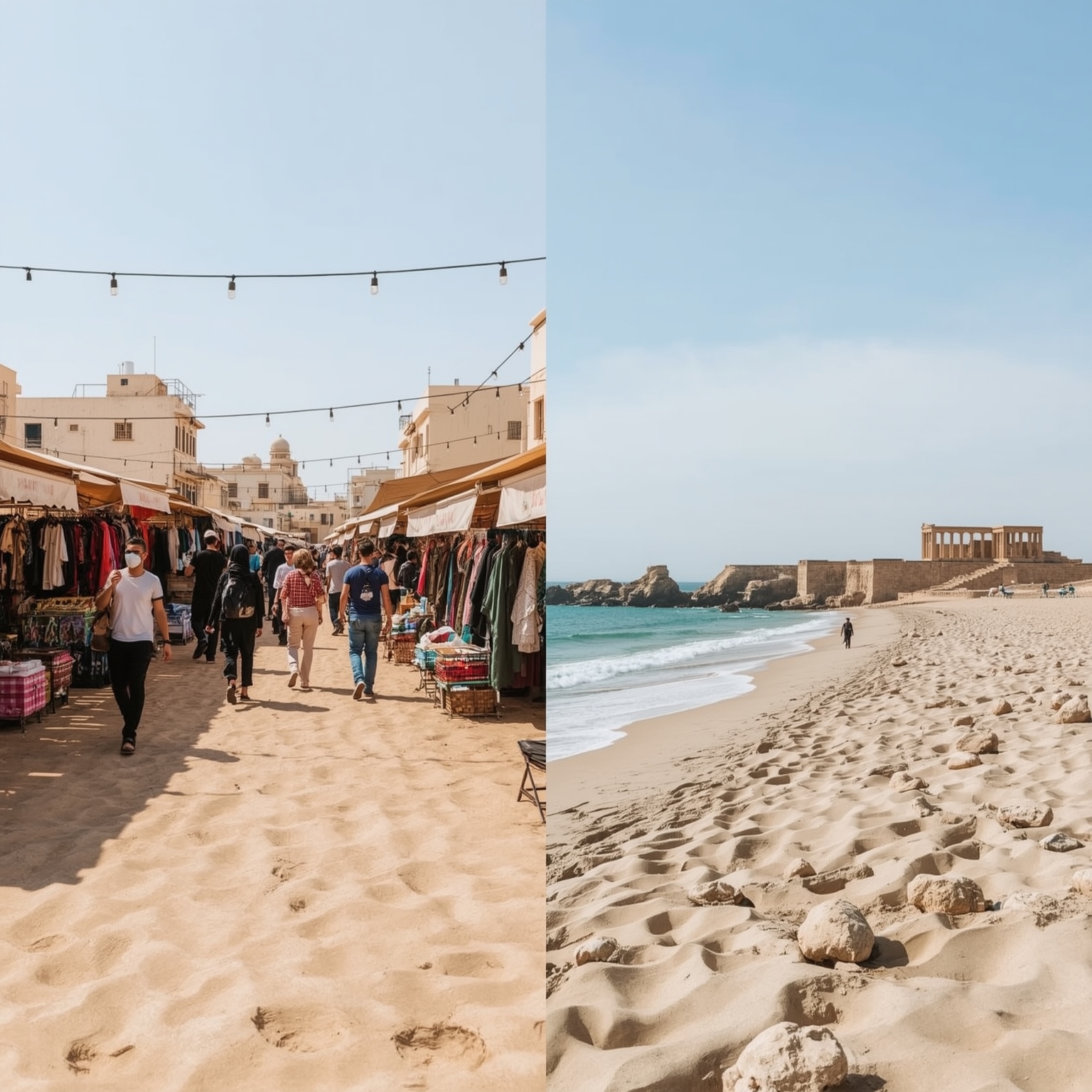
When my partner and I first began discussing the idea of taking a couple’s getaway to Tunisia, our initial excitement quickly evolved into a shared determination to make this trip unlike any we had planned before. We wanted to avoid the predictable cycle of browsing endless travel blogs, scrolling through curated itineraries, and relying on crowd-sourced reviews that usually dictate where to go and what to eat. This time, we craved something more experimental, more reflective of how technology is reshaping even the most personal experiences. Thus, instead of turning to traditional travel sites, we decided to relinquish the reins to artificial intelligence and let it chart our path across North Africa.
Over the past year, I had already integrated AI deeply into my daily routine. I had used ChatGPT for everything from complex work projects that demanded efficient brainstorming and editing support to mundane but time-consuming personal errands such as drafting emails or organizing grocery lists. So, as we began outlining this trip, a thought naturally surfaced: if AI could manage my professional life and streamline my chores, could it also reinterpret the art of travel planning? For me, the answer seemed obvious — why not? ChatGPT had long been my reliable digital collaborator. My partner, however, had her own preference: she admired the conversational style and intuitive subtlety of Claude, the AI she felt best understood her meticulous and reflective approach to travel. What began as a spontaneous idea soon turned into a friendly experiment — a quiet competition between two machines, each representing not only different algorithms but also different sides of our personalities.
We set the stage carefully to avoid confusion or chaos. Together, we decided on a clear framework: the duration of the trip, the destinations we wanted to explore — Tunis, Tozeur, and Hammamet — and a limit on how much freedom each AI would have in crafting its part of the itinerary. Each system, we agreed, would design one full day in each city. That way, we could compare them on equal footing and select the best of both worlds when creating our final travel plan. The outcome, at least on paper, exceeded expectations. ChatGPT’s itinerary unfolded like a cinematic narrative bursting with momentum and sensory detail. It opened in the capital, Tunis, with a predawn stroll through the blue-and-white village of Sidi Bou Saïd, where pastries dusted with sugar and glasses of mint tea would accompany panoramic views of the Mediterranean. From there, it launched us into a whirlwind through the ancient Medina before sending us on a half-day escapade to the legendary ruins of Carthage. In Tozeur, the itinerary leaned into sheer spectacle — visits to the “Star Wars” desert sets, followed by camel rides through golden dunes at sunset. Finally, in Hammamet, it slowed just enough to serve as a grand finale by the sea, alternating between beachside walks and feasts of couscous beneath an orange sky. The plan was bold, restless, and slightly overstuffed — but undeniably exhilarating.
Claude’s approach, by contrast, was composed and deliberate, resembling a carefully balanced degustation rather than an action film. Its Tunis itinerary began with a guided culinary tour through winding streets lined with fragrant market stalls, allowing us to appreciate flavors, textures, and aromas while learning the cultural history behind each dish. The visit to Carthage in Claude’s plan was a far more meditative experience than ChatGPT’s version — unhurried and steeped in historical interpretation. In Tozeur, Claude diverged completely by omitting the desert adventure and focusing instead on the city’s oasis and intricately decorated Medina, creating a day built around relaxation and quiet observation rather than adrenaline. It even introduced two unexpected cultural pauses we had not considered: the Great Mosque of Kairouan and the monumental amphitheater at El Jem. By the time the plan reached Hammamet, the tone had become unmistakably peaceful — a short exploration of the Kasbah followed by an early dinner overlooking still waters. The rhythm was slower, the atmosphere contemplative; Claude’s trip spoke the language of logic and reflection.
Reality, inevitably, turned out to be a merciless editor. While both itineraries offered brilliant ideas, implementation quickly revealed the limits of algorithmic precision. We merged the best elements into a hybrid schedule — a patchwork stitched from both machine imaginations. ChatGPT’s adventurous Tozeur day, as it turned out, was nearly impossible in practice. The long drive across the arid expanse was arduous rather than breezy, and a sudden sandstorm forced us to abandon the dream of visiting the famous desert movie sets altogether. It was a reminder that no matter how thorough a plan is on paper, nature still dictates the final draft. Yet, other parts of ChatGPT’s itinerary proved enchanting. Our morning in Sidi Bou Saïd was pure bliss: whitewashed walls haloed by sunlight, cobalt shutters gleaming against the sky, and mint tea sipped from a terrace high above the shimmering sea — a moment so vivid it felt painted.
Claude’s contributions shone in more subtle ways. The curated food tour through central Tunis was an experiential revelation. We wandered narrow alleys, tasting sesame pastries and peppery olives while local guides shared anecdotes about spices and family recipes we would never have found without that precise structure. Its proposed detours to Kairouan and El Jem transformed the trip into something profound — an immersion into Tunisia’s layered past, from the spiritual gravity of the mosque’s courtyards to the haunting grandeur of ancient Roman arches.
By the journey’s end, we realized that our experiment had evolved far beyond a simple comparison of digital assistants. The two itineraries had exposed something more personal: they mirrored our internal approaches to life and adventure. ChatGPT’s version radiated my own energy — impulsive, curious, willing to risk overexertion for a mosaic of sensory experiences. Claude’s itinerary reflected my partner’s sensibility — measured, attentive, and grounded in cultural immersion rather than spectacle. If we framed the results as a score, perhaps ChatGPT delivered the unforgettable memories that burn bright and chaotic, while Claude offered serenity, comfort, and connection. But declaring a single winner felt impossible. The true reward lay in the synthesis — a harmony of opposites where two distinct temperaments, filtered through AI, found their rhythm together.
Tunisia itself proved the perfect stage for this layered experiment — a luminous, multifaceted land where antiquity and innovation coexist in every breeze and stone. Our journey, both beautiful and bewildering, became slightly AI-engineered yet deeply human. It taught us that the essence of travel is not about allegiance to one approach over another but about learning how we as travelers — and as partners — move through the world. Whether through digital intelligence or physical experience, the path is most meaningful when it captures who we are, even when those paths diverge.
Sourse: https://www.businessinsider.com/used-chatgpt-plan-trip-my-partner-used-claude-2025-10