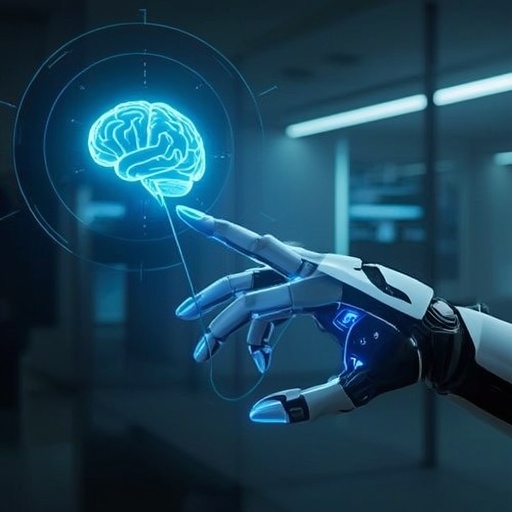
China has marked a revolutionary turning point in the advancement of neurotechnology by accomplishing something once confined to the frontiers of science fiction—a fully commercialized brain-computer interface implant. This pioneering procedure, centered on a device known as NEO, represents the very first instance in which such a system has been successfully introduced into a human subject under practical, commercial conditions rather than purely experimental ones. The device, astonishing in both design and application, bridges the human mind directly with an external mechanism: it interprets electrical activity within the brain—those faint yet complex neural impulses that encode intention—and translates them into actual physical motion manifested through a robotic glove.
This achievement signifies far more than an isolated triumph of biomedical engineering. It is the culmination of interdisciplinary progress across neuroscience, computational science, robotics, and material innovation, united by a shared ambition to extend the boundaries of human capability. By transforming thought into tangible movement, this interface provides a profound glimpse into a future where paralysis could be overcome, where neurorehabilitation might achieve unprecedented precision, and where communication between human cognition and machines becomes nearly seamless.
Beyond the immediate medical potential for individuals recovering from injury or coping with neurodegenerative diseases, the implications stretch into entirely new domains of human-computer interaction, cognitive enhancement, and artificial intelligence integration. Each pulse of neural data captured by the NEO system represents a testament to decades of research into the mysteries of the brain—once considered inaccessible, now rendered interpretable through advanced algorithms and real-time feedback systems.
China’s successful implantation of NEO therefore stands as both a technological milestone and a philosophical statement: that the frontier between human thought and mechanical execution is dissolving faster than ever before. Its emergence opens an era where tools no longer merely extend physical reach but integrate directly with the essence of human intention itself. This delicate and transformative harmony of biology and engineering heralds a future in which rehabilitation, medicine, and interaction with intelligent systems could attain levels of sophistication once beyond imagination. #Neurotechnology #Innovation #ScienceAndTech #FutureOfHealth #BCI #MindControl
Sourse: https://gizmodo.com/china-just-performed-the-worlds-first-implant-of-a-commercial-brain-computer-interface-2000785981