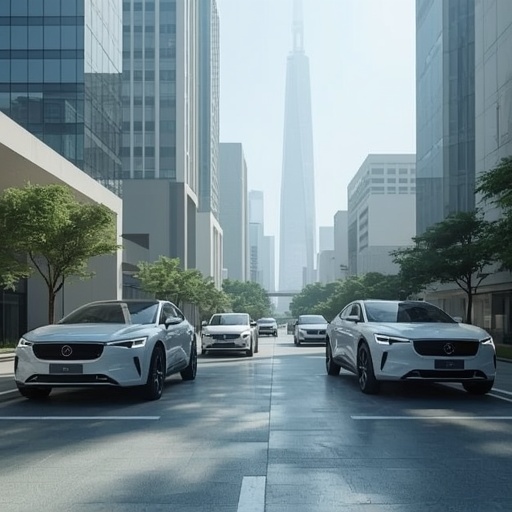
China’s electric vehicle industry is undergoing a remarkable transformation, one that signals a new phase in the nation’s ambitious pursuit of sustainable transportation and technological leadership. After a lengthy period characterized by the production of EVs equipped with increasingly large batteries, weighty designs, and feature-saturated interiors, the country’s automotive policymakers and manufacturers are now shifting toward a paradigm that places efficiency, reduced mass, and intelligent use of materials at its center. This recalibration in design philosophy represents not only an aesthetic and engineering evolution but also a strategic response to global environmental imperatives and market dynamics demanding cleaner, more resource-conscious mobility solutions.
The renewed emphasis on building lighter and more aerodynamically refined electric vehicles stems from both ecological and practical motivations. On an environmental level, reducing vehicle weight translates directly into greater overall efficiency, as lighter cars require less energy to accelerate and maintain motion, thereby extending range without necessitating excessively large battery packs. This approach mitigates the resource strain involved in battery production—especially concerning critical minerals such as lithium, cobalt, and nickel—while simultaneously lowering total lifecycle emissions. From an industrial standpoint, crafting slimmer EVs also improves performance agility and system optimization, fostering innovations in chassis materials, battery integration, and power management systems.
China’s regulatory push for this transition underscores a larger national commitment to sustainable growth and technological modernization. By encouraging automakers to innovate within these new constraints, the government is shaping the competitive landscape of the global EV sector, prioritizing quality and responsibility over sheer expansion. Companies are challenged to rethink their design processes, advancing techniques such as lightweight composite manufacturing, modular architecture, and intelligent software-based efficiency management. The result is a new generation of vehicles that are not just cleaner and faster, but also more elegant in their engineering logic—an embodiment of progress achieved through precision rather than excess.
Ultimately, this strategic evolution reflects China’s recognition that the future of electric mobility lies in balance: balancing performance with sustainability, innovation with practicality, and growth with ecological stewardship. As the nation redefines what an electric vehicle should be—streamlined, energy-efficient, and environmentally considerate—it sets an example for the global automotive industry, illustrating that the path forward is not necessarily about accumulation, but about refinement and intelligent design.
Sourse: https://www.bloomberg.com/news/articles/2026-06-07/china-puts-evs-on-a-diet-as-battery-boom-adds-bulk-cctv-reports