Across the contemporary global landscape, few dynamics illustrate the interplay between conflict and innovation as vividly as the current transformation within the energy sector. As escalating tensions and persistent instability in the Middle East continue to disrupt traditional oil and gas markets, they simultaneously expose the vulnerabilities of a system long dependent on fossil fuel supply chains. This turmoil has sent tremors through the world economy, compelling nations and industries to reconsider their energy dependencies, diversify sources, and seek more resilient and sustainable alternatives. In this shifting environment, China has emerged not merely as a participant but increasingly as a driving force shaping the future of renewable energy development.
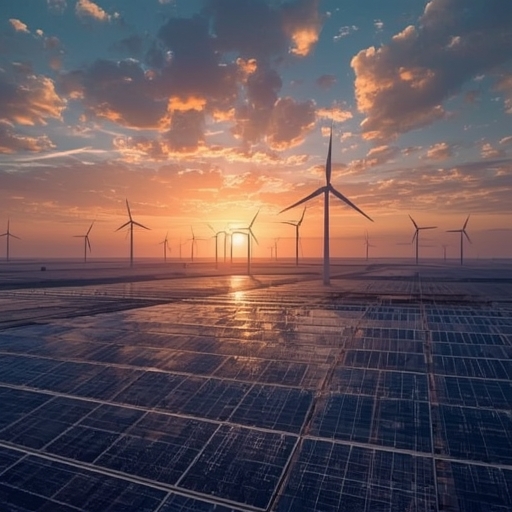
Leveraging its vast industrial capacity, advanced manufacturing ecosystem, and coordinated national strategies, China’s green technology sector has accelerated its expansion with remarkable speed and precision. The nation’s solar and wind industries—already global leaders in both scale and innovation—are transforming crisis into opportunity, turning short-term disruptions in conventional markets into long-term competitive advantages. For every barrel of oil jeopardized by regional strife, new megawatts of clean power are being generated through photovoltaic arrays and wind farms stretching across China’s diverse landscapes, from arid western plateaus to coastal industrial zones.
Yet this progression is not driven by opportunism alone. China’s green industrial complex reflects an intentional alignment of economic ambition and environmental responsibility, seeking not only to meet rising domestic energy demands but also to position the country as a cornerstone of the global sustainability movement. Through continuous investment in research, advanced production methods, and international partnerships, Beijing is reframing the narrative of energy security from dependence on volatile geopolitics to empowerment through technology and innovation.
The broader lesson is one of strategic adaptation. Where geopolitical upheaval could easily lead to stagnation or retreat, China has instead leveraged volatility as a catalyst for transformation. This approach demonstrates that periods of uncertainty can generate momentum for progress when guided by vision and foresight. The nation’s emphasis on clean energy underscores a redefinition of power—not solely in terms of resource control, but in the capacity to innovate, manufacture, and lead.
In essence, the world is witnessing a historic transition: a move away from the traditional energy order rooted in finite resources toward a more sustainable, technologically driven future. As the Middle East continues to grapple with conflict and the challenges of an evolving global framework, China’s success in harnessing renewable energy offers a compelling example of how crises can yield renewal. It reminds us that the path to sustainability is neither linear nor effortless, but through persistence and innovation, it can transform instability into a new equilibrium that benefits both the planet and global prosperity. #CleanEnergy #Sustainability #China #EnergyTransition #RenewablePower
Sourse: https://www.wsj.com/business/energy-oil/an-iran-war-winner-chinas-green-industrial-complex-1ef8a2bc?mod=pls_whats_news_us_business_f