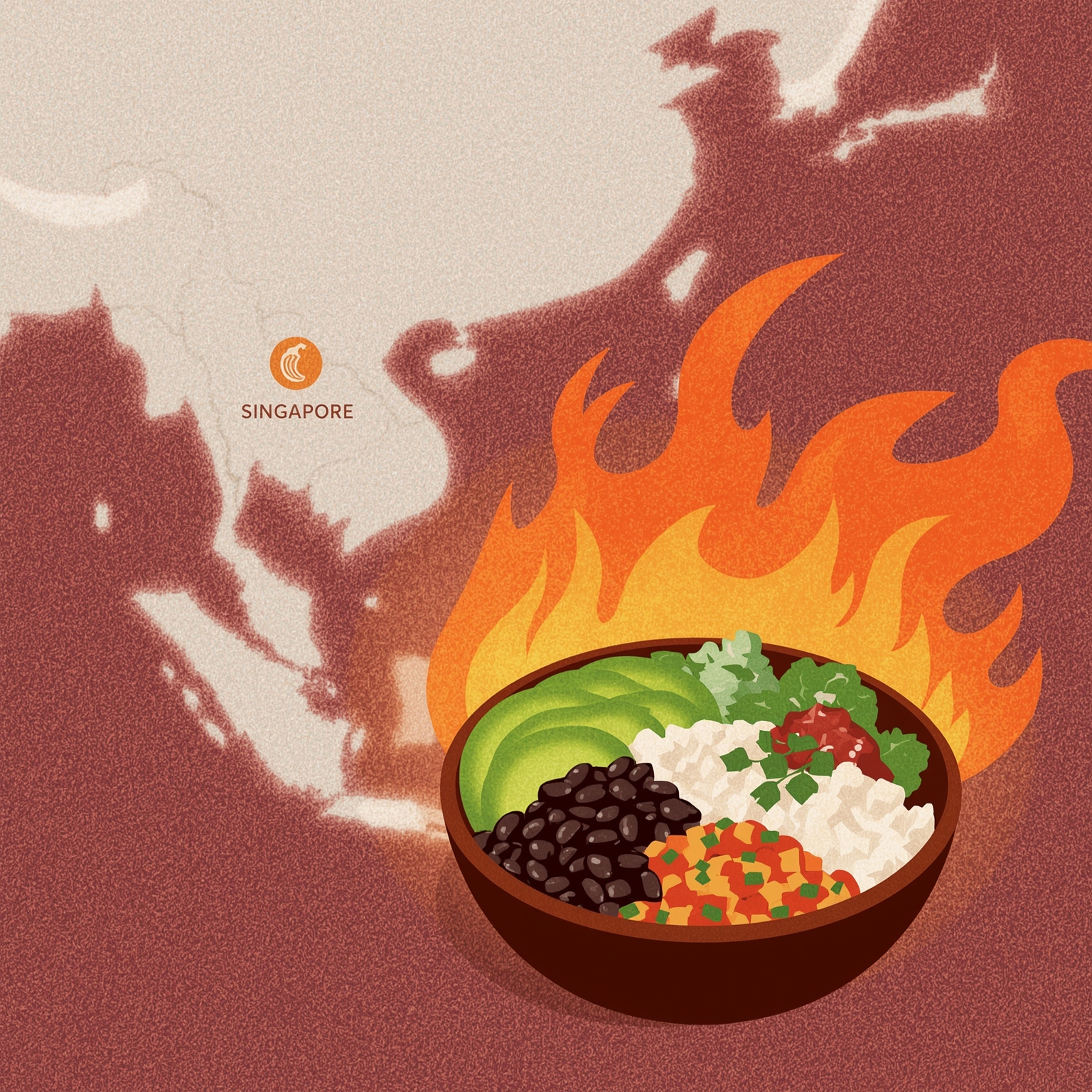
The so-called “slop bowl” rivalry, a playful term for the intensifying competition within the rapidly growing international fast-casual dining market, has reached a new level of intensity. Earlier this week, Chipotle Mexican Grill, the globally recognized brand celebrated for popularizing ingredient-forward burritos and customizable bowls, announced its strategic decision to expand into Asia for the very first time. Specifically, the chain will establish a presence in both Singapore and South Korea, with the first locations slated to debut in 2026. This pivotal move represents not merely geographic growth but a deliberate effort to test the resonance of Chipotle’s established model in cultures that already demonstrate robust enthusiasm for cosmopolitan dining experiences.
Chipotle has chosen to pursue this expansion through a high-profile partnership with SPC Group, one of South Korea’s leading food conglomerates, which brings decades of regional expertise, culinary credibility, and operational infrastructure to the table. By leveraging SPC’s embedded familiarity with consumer expectations and its extensive footprint in retail food service, Chipotle is positioning itself for a smoother entry into markets where American dining brands already enjoy significant recognition. The collaboration represents a fusion of Chipotle’s globally recognizable branding and SPC’s local insights, which together could accelerate consumer adoption and reduce the risks often associated with international market penetration.
According to a Chipotle spokesperson speaking with Business Insider, the company selected Singapore and South Korea for deliberate strategic reasons. Both nations are characterized by vibrant, fast-expanding out-of-home dining cultures, meaning that residents consistently seek restaurant-quality meals as part of everyday life. Moreover, consumer bases in both regions place a high value on “real food”—a concept Chipotle highlights in its promise of fresh, responsibly sourced ingredients and on-site preparation—making brand positioning particularly resonant. Additionally, the spokesperson noted that consumers in these regions are already steeped in American culinary and lifestyle brands, thanks to international education pathways, the popularity of overseas travel, and constant exposure via social media platforms where celebrities and influencers frequently showcase American dining experiences. This cultural familiarity creates fertile ground for Chipotle to establish meaningful brand awareness quickly.
From a purely operational perspective, the decision also reflects logistical pragmatism. The dense, urban layouts of cities like Seoul and Singapore provide an ideal environment for Chipotle’s quick-service yet premium model. Compact retail footprints, high population concentrations, and consumer willingness to pay for convenience enable streamlined operations that echo the success of Chipotle’s U.S. urban locations. The brand intends to replicate its established formula overseas: restaurants will showcase the signature open kitchen arrangement, which allows consumers to view meals being freshly assembled to order, and the full breadth of the American core menu will be available, ensuring that patrons abroad receive an experience closely identical to that of diners in the United States.
At present, Chipotle operates approximately 3,800 restaurants distributed across the United States, Canada, the United Kingdom, France, and Germany. The scale of its ambitions is evident in corporate projections: in 2024 alone, up to 345 new restaurants are anticipated to open, underscoring both domestic momentum and international appetite for expansion. Long-term, the corporation has declared a target of scaling up to an astonishing 7,000 outlets across the United States and Canada alone, a number that signals confidence in ongoing consumer demand, even as it tests new frontiers abroad.
Naturally, Chipotle’s foray into Asia thrusts it into direct competition with other players engaged in the expanding global Mexican-inspired fast-casual market. One notable rival is Guzman y Gomez, an Australian-born chain specializing in a similarly customizable Mexican menu. Guzman y Gomez already commands a visible footprint in Singapore, making it one of the central competitors that Chipotle will need to confront. The Australian brand has itself articulated bold long-term growth strategies, including the establishment of up to 1,000 outlets across Australia over the next two decades. This means that Chipotle enters not a vacant market, but an arena where market share is actively contested by other brands seeking to entrench themselves in local dining cultures.
Moreover, Chipotle is hardly alone among U.S. fast-casual Mexican operators eyeing Asia as the next frontier. In July, GoTo Foods—the parent company behind Moe’s Southwest Grill—announced its intention to introduce a reimagined branch of its Mexican dining concept, called Moe’s Casa Mexicana, in India. This reinvention reflects how global brands are not only exporting their menus but also recalibrating them to align with distinctive cultural and culinary contexts unique to different regions. Thus, Chipotle’s entry into Singapore and South Korea represents not an isolated event but rather one more move in a broader trend of Western fast-casual chains seeking growth opportunities within increasingly food-savvy Asian markets.
In sum, the expansion plan underscores Chipotle’s ambition to transform itself from a North America–focused brand into a truly global competitor. By aligning with an influential regional food authority, highlighting shared values around transparency and quality in food preparation, and entering culturally receptive and logistically manageable markets, Chipotle is laying the groundwork for long-term success abroad. Yet, the journey is anything but assured, as entrenched competitors like Guzman y Gomez and innovative newcomers such as GoTo’s Moe’s Casa Mexicana simultaneously crowd the playing field. The outcome of these expansions will shape not only Chipotle’s international trajectory but also the future contours of the global fast-casual dining sector itself—a sector that is increasingly defined by rapid growth, inventive adaptations, and intense battles for consumer loyalty in what some have colorfully dubbed the ongoing “slop bowl wars.”
Sourse: https://www.businessinsider.com/chipotle-first-asian-expansion-singapore-south-korea-guzman-gomez-2025-9