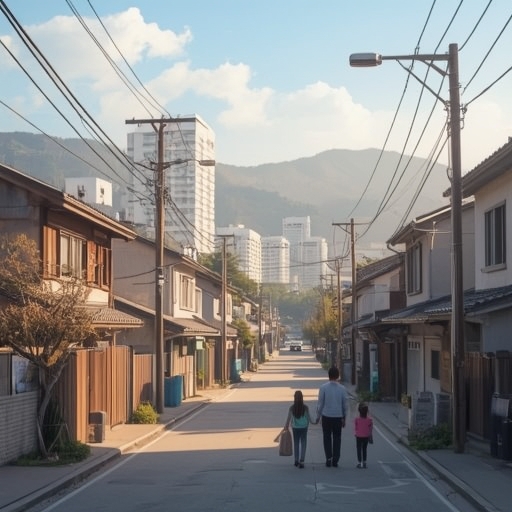
An American father, once driven by professional ambition and financial gain, made a profound decision to exchange a higher salary in the United States for a more immersive and personally fulfilling life in South Korea. Initially, the move represented a quest for experience — a deliberate choice to prioritize cultural enrichment, human connection, and day‑to‑day liveliness over the accumulation of wealth. In Korea, he discovered a rhythm of life marked by community spirit and social harmony, one that contrasted sharply with the fast‑paced, individual‑oriented environment he had left behind. The joy of walking through lively local markets, the fascination of learning a new language, and the daily interactions that reflected a collective sense of respect and belonging all gave his life a new, more textured meaning.
However, as time passed and his family grew, the appearance of parenthood added a new layer of complexity to his understanding of purpose and happiness. The priorities that once seemed so clear inevitably shifted; questions about stability, long‑term opportunity, and his child’s future began to outweigh the earlier allure of adventure and cultural novelty. What once felt like liberation from the chase for money transformed into an ongoing reflection on responsibility and security. This tension between meaning and material comfort — between the soul‑nourishing richness of cultural discovery and the practical realities of providing for a family — became the defining theme of his journey.
Derek’s story illustrates how deeply personal decisions evolve alongside the stages of life. What seems meaningful in youth — the freedom to explore and the courage to choose authenticity over convention — gradually intersects with the demands of parenting, where love merges with duty. This transformation does not diminish his earlier choice; instead, it deepens its significance, showing that value systems are fluid, adapting to circumstance and growth.
In reflecting on his path, Derek realizes that balance is not a fixed destination but a living process of recalibration. The concept of success expands beyond income brackets or titles and encompasses emotional stability, family well‑being, and alignment between inner conviction and external reality. He still cherishes the early years of discovery that Korea gave him — the nights spent among new friends, the sense of wonder that comes with living in a foreign culture — yet he also embraces the maturity that fatherhood has brought. In seeking to build a life that honors both self‑fulfillment and security, he demonstrates that the art of living abroad is less about escape and more about evolving one’s definition of happiness.
Through this journey, readers are invited to consider their own values and to question the metrics by which they measure success. Would they, like Derek, trade financial comfort for the promise of deeper experience? Or would they, in time, find that love and responsibility reconstruct those very choices, turning idealism into a more grounded — but no less meaningful — vision of a good life?
Sourse: https://www.businessinsider.com/american-raising-kids-korea-daycare-american-education-better-2026-4


