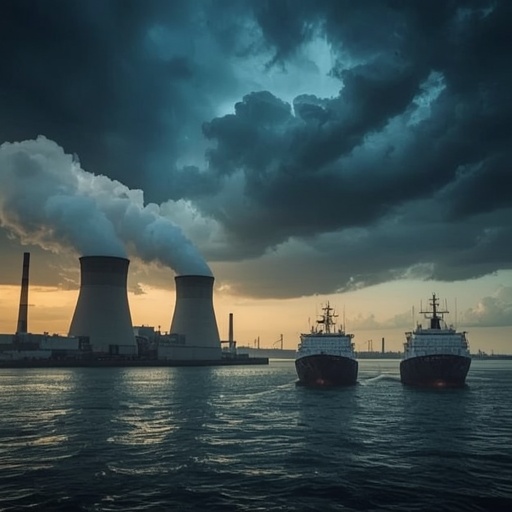
Across the global energy landscape, coal—a resource long considered a relic of a bygone industrial era—is witnessing an unanticipated resurgence. This revival has not emerged in isolation, but rather as a direct consequence of the unprecedented geopolitical upheaval stemming from the Iran war and, in particular, the closure of the Strait of Hormuz, one of the world’s most critical maritime chokepoints for oil and gas transit. As access to conventional petroleum routes becomes severely restricted, nations previously committed to ambitious renewable energy transitions are finding themselves cornered by necessity and forced to seek out more immediately reliable, though environmentally detrimental, alternatives. Consequently, coal, with its wide availability and familiarity as a steady energy provider, has regained temporary favor, despite being emblematic of the very environmental degradation the world has long sought to overcome.
This renewed dependence on coal reveals a stark duality at the heart of modern civilization’s energy dilemma. On one hand, governments must maintain a stable supply of power to sustain industries, transportation systems, and essential infrastructure; on the other, they face moral, scientific, and ecological imperatives to decarbonize in the face of accelerating climate change. The decision to revert to coal, therefore, is not merely a matter of convenience but an act driven by the sobering realities of geopolitical vulnerability and the fragility of global supply networks. By turning back to this carbon-intensive fuel, countries expose how thin the margin truly is between energy security and environmental stewardship.
Beyond its immediate economic implications, this crisis underscores a deeper lesson about the need for resilient, diversified energy strategies capable of withstanding disruptions of this magnitude. The current moment highlights not only the interconnectedness of modern economies but also how swiftly one regional conflict can cascade into a worldwide energy emergency. The closure of a single strategic passageway can recalibrate priorities across continents, forcing policymakers to confront the uncomfortable truth that sustainability, while essential, cannot yet fully replace stability when geopolitical tensions rise.
Ultimately, the world’s pivot back to coal serves as a cautionary reflection on the complexity of our energy transition. It reminds us that achieving a truly sustainable future requires not only technological innovation and environmental commitment but also robust global cooperation and adaptive policy frameworks. Until such systems are securely in place, moments of crisis—like the present one sparked by the Iran conflict—will continue to test our collective resolve to balance ecological responsibility with the imperative of immediate energy reliability.
Sourse: https://www.wsj.com/business/energy-oil/coal-makes-a-comeback-fueled-by-war-in-the-middle-east-fb4cd0a8?mod=pls_whats_news_us_business_f