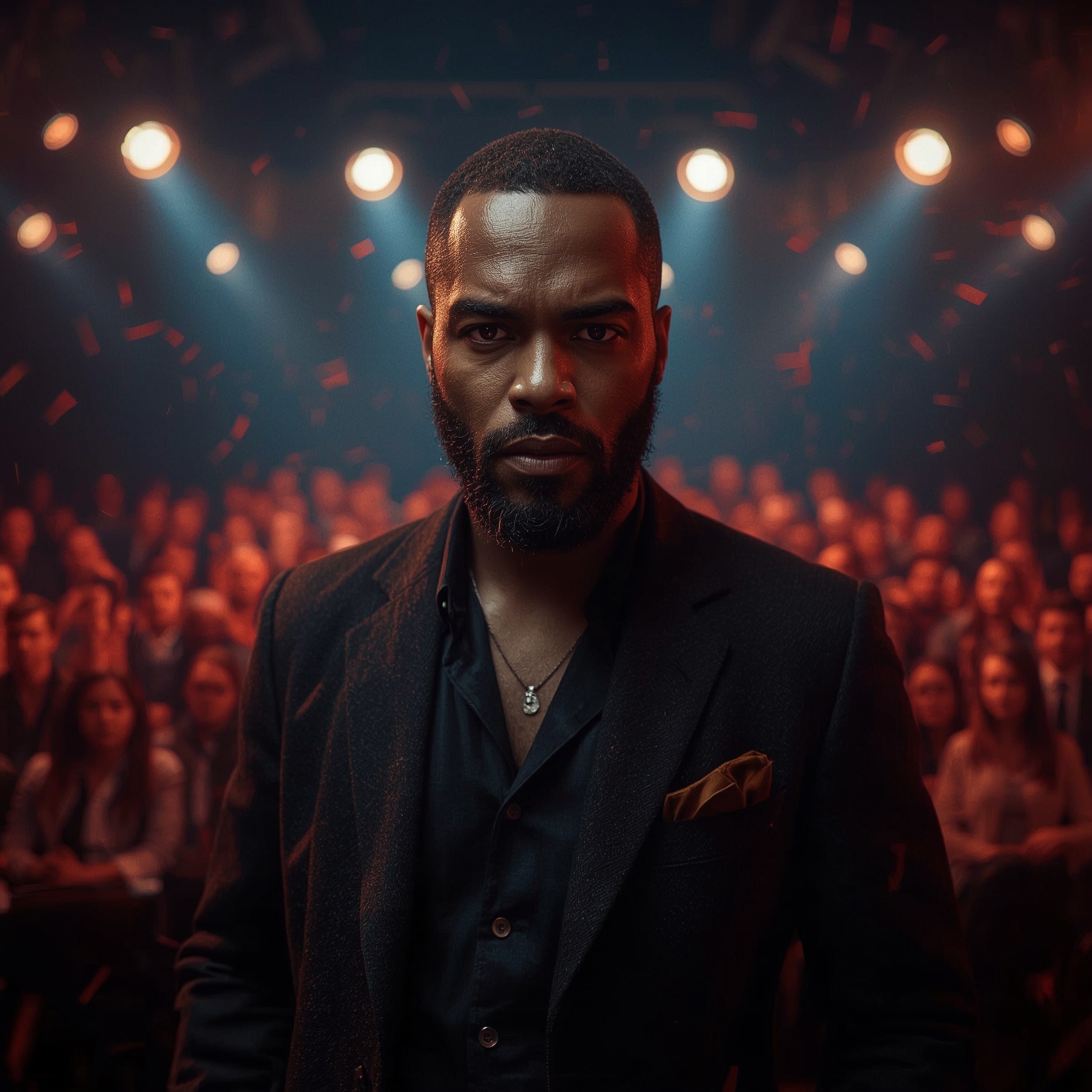
The forthcoming remake of *Running Man* reimagines a United States in which the nation’s collective fascination revolves around a brutal televised spectacle: ordinary contestants are forced to participate in a desperate fight for survival while being relentlessly pursued and hunted. In this dystopian landscape, the program itself has become a kind of national obsession, blending the adrenaline of competition with the macabre allure of human peril. Anyone familiar with contemporary game shows or the expansive world of reality television will recognize a familiar pattern—while the competitors themselves are crucial, the figure of the host often has an equally, if not sometimes greater, significance in shaping the viewing experience. Within this dynamic, Colman Domingo steps into a pivotal role.
Domingo portrays Bobby Thompson, the charismatic and calculating master of ceremonies presiding over the titular blood sport that captivates viewers across the country. In promotional glimpses provided through the film’s trailer, audiences are given only a tantalizing taste of the character’s flamboyant persona. Reflecting on his performance, Domingo has explained that embodying a figure such as Thompson feels not merely like joining a cast but almost like existing in an entirely separate cinematic register compared to the other characters. Speaking to *Entertainment Weekly*, he elaborated that Thompson is seen solely within the carefully curated environment of his own broadcast; in that space, his skills manifest as a combination of manipulation, persuasion, and charm—directed not only toward the eager studio audience but also toward the contestants who unwillingly become his unwilling guests.
What makes Thompson particularly compelling is the deliberate lack of personal backstory, forcing Domingo to invent nuances of presence and influence without traditional narrative scaffolding. To craft this illusion, Domingo drew inspiration from two strikingly different yet complementary sources. First, he recalled his formative years in theater, where he learned the delicate art of commanding and sustaining an audience’s full attention. Second, he looked to cultural icon Jerry Springer. For much of the mid-2000s, Springer’s infamous reality talk show functioned simultaneously as a guilty pleasure and a near-ritual pastime, especially for young viewers who stumbled upon its chaotic spectacles during unexpected school closures or snow-filled days at home. On the eve of filming, Domingo immersed himself in a two-part documentary chronicling Springer’s career, and in doing so, he came to admire Springer’s uncanny aptitude for orchestrating chaos. As Domingo described it, Springer possessed a rare ability to provoke conflict, to incite guests to act out their worst impulses, and then to paradoxically maintain an air of detachment. He moved the show along with apparent ease while subtly evading moral or ethical responsibility for the turmoil he facilitated—a strategic balancing act that fascinated Domingo and directly informed his own portrayal of Bobby Thompson.
Thompson’s insistence on captivating the masses extends well beyond what he says or does; it also radiates through his carefully curated visual identity. Domingo emphasized that the look of this character was meticulously crafted by writer-director Edgar Wright in collaboration with the costume design team, ensuring that Thompson appeared impeccably polished, sophisticated, and almost theatrical in every frame. For Domingo, the role seemed tailor-made, as Wright likely recognized that the actor’s innate charisma and gravitas could carry the striking aesthetic choices with authenticity. This emphasis on style is hardly surprising when considered within the broader framework of Wright’s filmmaking, which has long been distinguished by dynamic visuals and a distinct sense of flair. In keeping with that tradition, *Running Man* promises to deliver not only visceral thrills but also an unmistakable visual bravado.
Domingo’s enthusiasm for the project is matched by his conviction that audiences will find the experience on the big screen electrifying. With a release date slated for November 14, just as the holiday season begins to usher in high-profile event films, the actor is confident that this interpretation of *Running Man* will emerge as nothing short of a defining cinematic occasion. In his view, the film’s combination of spectacle, provocative themes, and striking performances positions it to be a nationwide cultural event, one that is best appreciated within the collective energy of a theater. For devotees of ambitious storytelling and fans of Edgar Wright’s signature style alike, the film promises a unique convergence of entertainment and commentary that underscores why some stories demand to be witnessed communally, larger than life, on the silver screen.
For readers eager to stay connected with the evolving landscape of popular media beyond this film, there is also much anticipation surrounding forthcoming milestones: from upcoming chapters in the *Marvel* and *Star Wars* universes to fresh ventures in *Star Trek*, new directions emerging within the *DC Universe*, and even the continually evolving saga of *Doctor Who*. In such a crowded yet exhilarating entertainment environment, *Running Man* stands proudly positioned as both a homage to the power of television spectacle and a provocative reminder of the strange intimacy between performer, audience, and cultural appetite.
Sourse: https://gizmodo.com/colman-domingo-used-jerry-springer-to-build-his-running-man-villain-2000658619