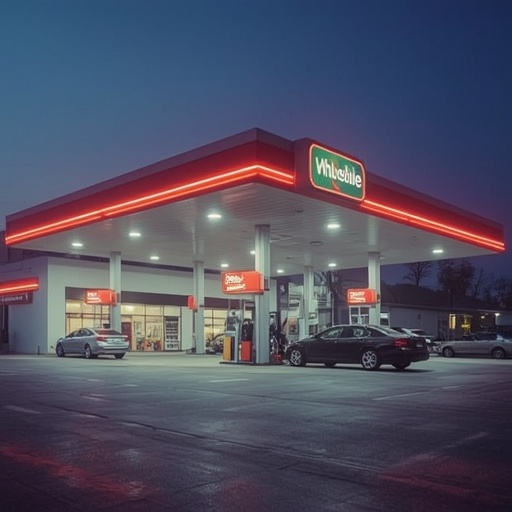
Costco, the globally recognized wholesale retailer known for its value-driven approach and extensive membership base, is embarking on an intriguing and forward-looking phase of expansion. The company is actively exploring the development of stand-alone gas stations — a notable evolution from its longstanding model in which fuel stations are situated adjacent to, or within close proximity of, its massive warehouse stores. This strategic experiment has emerged from a distinctly practical challenge: many existing Costco warehouse locations are reaching physical capacity, leaving insufficient room for additional fuel infrastructure. As available land surrounding key warehouses tightens due to urban development, zoning limitations, and high property utilization, Costco must identify innovative ways to sustain and grow one of its most popular and profitable services.
By testing independent gas stations that are not directly attached to a retail warehouse, Costco demonstrates both adaptability and foresight. Such an approach allows the company to continue serving its members with competitively priced fuel — a cornerstone of its brand value — while maintaining operational efficiency even when traditional spatial configurations are no longer feasible. Essentially, these stand-alone fuel outlets will enable Costco to extend its customer reach beyond the immediate footprint of its warehouses, ensuring that convenience, savings, and brand loyalty remain intact.
This move also underscores a broader retail trend: large-format retailers are experimenting with flexible, decentralized business models that align with shifting consumer geographies and infrastructure constraints. For example, as urban density increases and real estate near existing commercial hubs becomes more limited, companies are opting to separate complementary services such as fuel, pickup logistics, or specialty departments to maintain service continuity. In Costco’s case, implementing standalone stations preserves customer expectations of accessibility and affordability while preventing overcrowding and long lines at existing warehouse pumps.
From a strategic standpoint, this initiative is more than a matter of operational necessity — it reflects a keen understanding of long-term growth dynamics. The decision suggests that Costco views fuel service not merely as an ancillary convenience, but as an integral component of its value ecosystem. By decoupling gas stations from warehouse constraints, Costco effectively future-proofs this essential arm of its business, ensuring scalability in dense or spatially restricted markets.
Ultimately, the introduction of independent Costco-branded fuel stations signals a broader adaptability within the company’s retail strategy. It illustrates how even established market leaders can evolve when faced with tangible limitations, transforming potential real estate challenges into opportunities for innovation. Members and observers alike will watch closely to see how these pilot locations perform and whether the concept evolves into a full-scale expansion — potentially reshaping how Costco integrates fuel services into its global operations.
Sourse: https://www.wsj.com/business/retail/costco-gas-pumps-are-so-popular-the-retailer-is-building-stand-alone-stations-f6b02782?mod=pls_whats_news_us_business_f