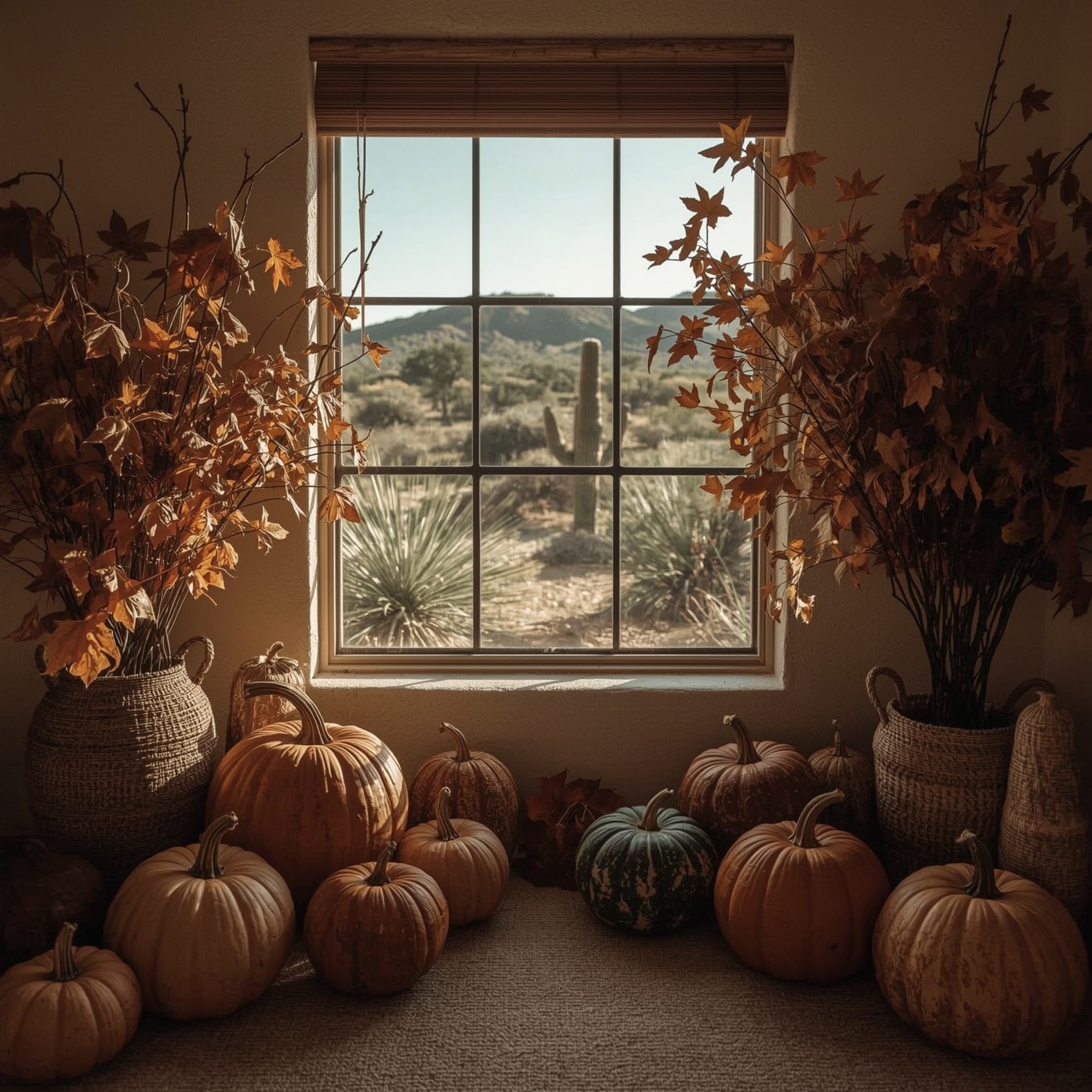
Autumn has arrived—or so the calendar claims. In many parts of the world, it’s a season defined by golden fields, busy harvests, the crisp descent of temperatures, and trees shedding their leaves in a blaze of rust and amber. Yet, for those of us residing in Mesa, Arizona—a landscape dominated more by saguaro silhouettes than by maple groves—these emblematic signs of fall are little more than romantic myths imported from elsewhere. Here in the Sonoran Desert, our principal harvest is not of corn or apples but of unrelenting sunlight. While others slip into sweaters, we remain firmly in short sleeves, our so‑called autumn temperatures still resembling the midsummer heat of the Midwest. By September, thermometers frequently soar into the triple digits, and Halloween nights that linger around 100 degrees are far from uncommon. The faintest whisper of autumn color—usually from ornamental trees or imported foliage—doesn’t reveal itself until around Christmas. In truth, fall in the East Valley of Phoenix exists more as an abstract entry in a calendar than as a visible transformation of the land.
And yet, almost paradoxically, each September I feel an irresistible urge to embrace the illusion of autumn with unbridled enthusiasm. By the middle of the month, I’m rummaging through my garage—sweltering though it may be—to unearth my oversized plastic storage bin labeled “Fall Décor.” Once opened, my home undergoes a metamorphosis worthy of any New England postcard: garlands of artificial leaves elegantly drape the mantel, clusters of faux pumpkins march across countertops, and wooden signs bearing cheery inscriptions like “Gather” or “Welcome Fall” assume their seasonal stations. The effect may be contrived, but it is also deeply satisfying. Nor am I alone in this pursuit of decorative delusion. A leisurely drive through the suburban neighborhoods of Phoenix reveals xeriscaped yards where scarecrows stand sentinel beside agave plants and silk leaves shimmer uncertainly beneath the desert sun.
Admittedly, I am fully aware of the absurdity inherent in such a ritual. After all, my decorations attempt to evoke a season that never truly materializes outside my door. Logically, one might expect me to dismiss such efforts as futile seasonal cosplay. Yet, for reasons that blend nostalgia, identity, and simple aesthetic pleasure, I find this annual tradition impossible to relinquish. It’s far more than a whimsical indulgence—it’s a practice that connects me with my past, with my community, and even, in a broader sense, with my country.
My devotion to fall decorating is rooted most deeply in memory. When my family relocated to Arizona from Illinois, I was still too young to grasp the full magnitude of that change. My mother, however, carried with her an unbroken sense of Midwestern tradition. Each year, she would lovingly unpack the same trinkets and motifs she had used back home—ceramic gourds, miniature hay bales, plaid tablecloths—transforming our desert house into a nostalgic echo of her former life. Those gestures imprinted themselves upon me. They bridged the distance between past and present, between our family’s Illinois heritage—stretching back continuously from the 1830s through the 1980s—and the sun-drenched reality of our new home. Now, when I unfurl my own garlands and candles, I feel a quiet continuation of that lineage, a small but meaningful homage to where I come from.
This impulse toward decorative devotion may also reflect a collective longing among the people of greater Phoenix. Ours is a city of transplants, a diverse mosaic of individuals who have journeyed from elsewhere—often from climates where autumn is far more tangible. The U.S. Census Bureau reports that roughly sixty‑one percent of Arizona residents were born outside the state. Perhaps it’s no wonder, then, that so many of us cling to rituals that preserve the seasonal cadence we once knew: the feeling of belonging to a rhythm that oscillates between renewal and rest. To decorate for fall in the desert becomes an act of emotional geography—a way to mark time meaningfully in a place that rarely changes its face.
Even for those who are Arizona‑born or nearly so, the yearning for connection with the broader American experience persists. Across the country, autumn carries with it shared symbols—crackling football games under floodlights, Thanksgiving gatherings fragrant with spice and gratitude, trick‑or‑treating adventures that animate neighborhood streets. These customs have become embedded in the cultural DNA of the United States, and they collectively render autumn the season most intimately associated with the American spirit. When I scatter pumpkin motifs around my home or light an apple‑cider‑scented candle, I feel not only comfort but also communion. Through these gestures, I participate—albeit symbolically—in the same national pageant unfolding thousands of miles away, reaffirming a subtle but meaningful sense of belonging.
On a more personal note, there is also undeniable joy in transformation for its own sake. In a region where six consecutive months of searing heat can blur one day into the next, simply altering one’s surroundings can provide an essential psychological refresh. When the desert outside remains stubbornly monotone, I take solace in creating a seasonal sanctuary within my own walls. With each rearranged display and color change, I reclaim a sense of dynamism, reminding myself that, even here, cycles of renewal are possible. The aesthetic pleasure matters too—the soft glow of amber lights, the earthy palette of rust and gold, the faint sweetness of cinnamon lingering in the air. These small details conspire to make everyday living just a bit more beautiful, a welcome antidote to the beige sameness of suburban architecture.
In the end, no amount of décor can alter the weather itself. The relentless Arizona sun will continue to blaze, regardless of how many pumpkins populate my shelves. But within my sphere of influence—my home—I can curate mood and meaning. That deliberate act of creation transforms what could be mere pretense into genuine satisfaction. So yes, perhaps my “Arizona autumn” is more fantasy than fact, an elaborate performance staged against a desert backdrop. Still, it’s a fantasy that brings comfort, evokes memory, fosters connection, and instills hope that, someday soon, the air outside will finally cool. Until that moment arrives, I’ll be here, reveling in the amber glow of my own imagined fall.
Sourse: https://www.businessinsider.com/decorate-house-arizona-for-fall-despite-heat-2025-10