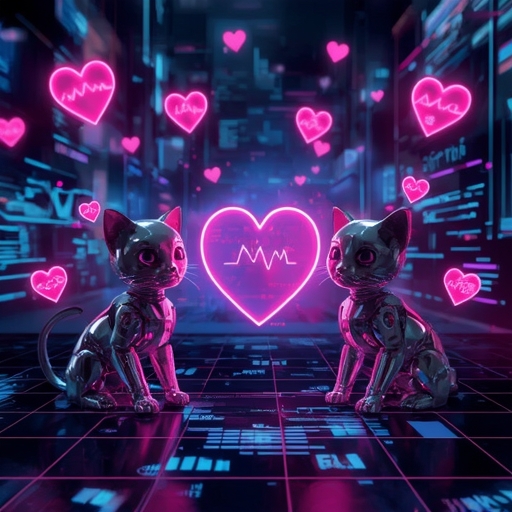
China’s rapidly evolving technological landscape has given rise to a new phenomenon that fuses artistry, code, and community in unexpectedly delightful ways. Known as the OpenClaw craze, this trend embodies how artificial intelligence has begun to permeate both personal and professional spheres of life with a spirit of curiosity and joyful experimentation. It stretches far beyond the confines of traditional tech development, illustrating a cultural shift toward innovation as a shared form of creative play.
At the heart of OpenClaw lies an ecosystem of inventive digital experiments—AI companion apps that engage users in friendly banter, stock-trading bots capable of analyzing minute-by-minute market data, and virtual blind-date partners designed to make social interactions more comfortable and spontaneous. These examples reveal the extent to which individuals in China are not merely adopting AI tools but actively reshaping their purpose to reflect human imagination, humor, and emotion. The movement captures the uniquely dynamic relationship between technology and everyday living, transforming AI from a distant technical concept into an approachable collaborator in work, entertainment, and relationships.
Unlike past waves of automation or app development that prioritized efficiency alone, OpenClaw emphasizes a hybrid of functionality and fun. AI-powered trading assistants do not simply execute transactions; they often come with stylized personalities or playful visual interfaces that make serious financial processes feel engaging and accessible. Virtual dating helpers, meanwhile, offer conversation cues and empathetic feedback that help users navigate emotional landscapes rather than purely logical scenarios. The creation of digital pets—adorable, responsive entities animated through neural-network design—represents perhaps the most charming manifestation of this trend. They enable users to experience companionship shaped by artificial intelligence but grounded in something deeply human: the desire for connection.
Culturally, OpenClaw reflects the broader ethos of China’s thriving developer and creative communities, who are blending open-source experimentation with the expressive freedom once reserved for the arts. Through social media platforms, livestreaming sessions, and collaborative workshops, coders, artists, and enthusiasts share their AI-driven projects, testing the boundaries between software engineering and storytelling. This collective approach embodies a democratic form of technological creativity, where code becomes both a medium of innovation and an instrument of personal expression.
In a society that has long celebrated technological progress, OpenClaw distinguishes itself by humanizing the process of invention. It demonstrates how generative AI can serve as an artistic partner, capable of translating abstract human impulses—curiosity, empathy, whimsy—into interactive digital realities. Each new creation, whether a market-savvy trading bot or a tender digital cat that mimics affection, signifies an evolution in how people imagine technology: not as a rival intellect, but as a companion capable of amplifying human creativity. In essence, OpenClaw is redefining what it means to live with technology by turning artificial intelligence into a coauthor of daily life, rewriting the boundaries between the mechanical and the emotional with every line of code.
Sourse: https://www.businessinsider.com/china-openclaw-craze-lobster-stock-trading-blind-dates-cyber-pets-2026-3