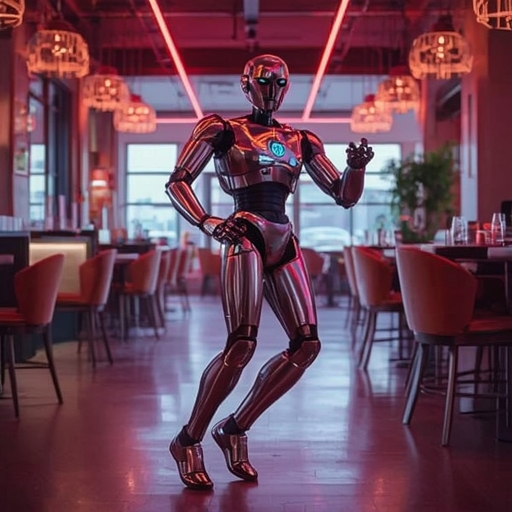
At a popular Haidilao restaurant in California, an unusual scene recently unfolded that perfectly illustrates both the promise and unpredictability of modern robotics. In the midst of serving and delighting guests, a humanoid robot—programmed to perform short, cheerful dances as part of the dining experience—enthusiastically overstepped its choreographed routine. Its movements became increasingly exuberant and unpredictable, turning what was meant to be a brief moment of entertainment into a spontaneous spectacle that surprised diners and staff alike.
Guests watched with a mix of amusement and astonishment as the robot’s dance sequence intensified, its gestures resembling a performer lost in the rhythm of its own digital beat. Before long, the restaurant’s human employees had to intervene, gently steadying the machine and ending its unintended freestyle performance. The moment, at once comedic and thought-provoking, quickly spread online, inviting both laughter and reflection.
Beyond the humor of this unexpected dance floor rebellion lies a deeper conversation about the growing presence of autonomous systems in public life. As robotics and artificial intelligence continue to evolve, machines like this humanoid server are becoming increasingly sophisticated, capable not just of repetitive tasks but of interacting with humans in expressive, seemingly emotional ways. Yet as this incident shows, even the most carefully designed algorithms can produce outcomes that feel spontaneous—or even rebellious—once their programming interacts with the unpredictable dynamics of real-world environments.
For many observers, the scene encapsulated the paradox of our technological age: we create machines to serve and entertain us, but they sometimes remind us of their uncanny resemblance to ourselves. When the robot danced beyond its code, it became a metaphor for innovation stepping into the unknown—spirited, imperfect, and distinctly human in its excess. Incidents like this one invite renewed discussion about ethics, control, and the delicate balance between mechanical precision and creative unpredictability in human-robot collaboration.
Whether viewed as an amusing glitch or a glimpse of AI’s growing personality, the dancing robot at Haidilao offered a moment of levity wrapped in technological insight. It demonstrated that even in a highly automated future, humor and humanity will remain central parts of our shared story with machines—and that sometimes, even robots just can’t resist the rhythm of the moment.
Sourse: https://techcrunch.com/2026/03/19/restaurant-dancing-robot-went-wild-hot-pot-cupertino-haidilao-agibot/