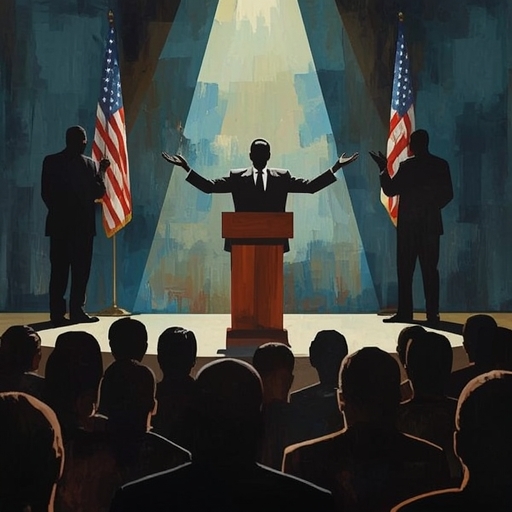
During this year’s World Economic Forum in Davos, the atmosphere shifted from the usual focus on financial trends and geopolitical forecasts to an unexpected yet compelling narrative about moral fortitude and the ethics of leadership. A prominent political leader delivered a speech that captivated global attention by boldly denouncing what he metaphorically termed ‘the rule of Don.’ Through this phrase, he aimed to expose a pattern of unquestioned allegiance and subservience to concentrated power—an attitude he believes undermines both democratic institutions and corporate responsibility. His call to action was unambiguous: he urged business executives, policymakers, and influencers not to yield or bow to manipulative authority but instead to uphold independence, integrity, and ethical courage in decision-making.
This intervention at Davos transcended its specific political context; it became a universal statement about leadership under pressure. The speaker challenged the pervasive notion that success requires accommodation to power, suggesting instead that true leadership is measured by one’s willingness to defend principles when it is most inconvenient or risky. He argued that intellectual compliance and moral cowardice serve as hidden engines of corruption, ultimately weakening innovation, justice, and trust. In the audience, comprised of corporate heads and policy strategists, the address triggered a wave of introspection: how often do institutions sacrifice ethical clarity for short-term gain or political favor? His appeal was neither idealistic rhetoric nor partisan theater—it functioned as a pointed ethical reminder that progress, whether economic or social, is sustainable only when guided by transparent values and moral accountability.
The resonance of his message extended beyond the conference hall. Social media discussions, editorial analyses, and professional commentaries all emphasized its timeliness in an era marked by populism, economic disparity, and corporate influence over public life. The Davos crowd, accustomed to negotiations and measured diplomacy, encountered a rare moral provocation that demanded something deeper than strategic consensus. The discourse about ‘the rule of Don’ thus evolved into a metaphor for any system that rewards obedience over integrity. By invoking it in this global arena, the speaker rekindled a timeless conversation about civic courage—the strength required not to conform when conscience compels dissent. Ultimately, the speech reminded global leaders that their legitimacy arises not from wealth, authority, or prestige, but from the fidelity with which they serve truth, fairness, and the collective good.
Sourse: https://www.businessinsider.com/gavin-newsom-davos-rule-of-don-trump-2026-1