The CEO of DeepMind, Dr. Demis Hassabis, recently offered a profound reflection on the ongoing pursuit of artificial general intelligence (AGI), identifying three fundamental challenges that continue to separate current AI systems from true human-like intelligence. He emphasized that, while the field has evolved at an extraordinary pace—with machine learning architectures, multimodal models, and predictive systems achieving feats once considered far-fetched—there remain intrinsic limitations that define the current state of artificial cognition.
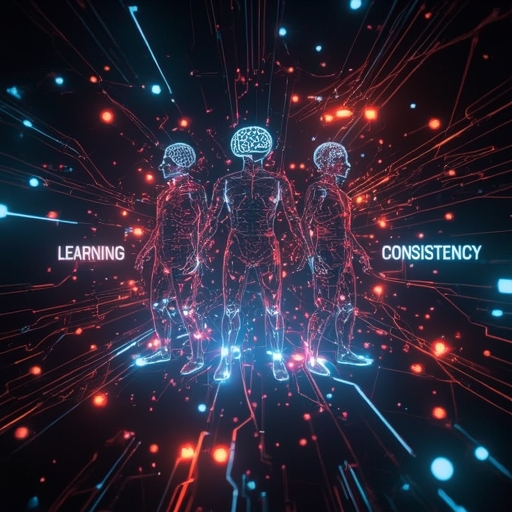
Foremost among these obstacles is the issue of **continuous learning**. Modern AI systems, despite vast computational capacity, are typically constrained by static training data and structured learning environments. Once deployed, they often fail to adapt fluidly to unforeseen situations without extensive retraining or fine-tuning. By contrast, the human brain excels in lifelong learning—absorbing new information, integrating it seamlessly with prior experiences, and recalibrating behaviors dynamically. To achieve comparable adaptability, AI must evolve mechanisms that allow real-time updating of knowledge without catastrophic forgetting or the need for massive data re-ingestion.
The second major challenge, according to Hassabis, lies in **long-term planning**—the ability to conceptualize strategies across extended stretches of time and uncertainty. Human cognition is inherently anticipatory; we simulate potential outcomes, envision distant objectives, and adjust actions accordingly. Current AI models, however, frequently operate within narrow scopes, optimizing immediate or short-term goals instead of considering wide-ranging implications or future contingencies. Building architectures capable of sustained strategic reasoning will demand not only greater memory and planning frameworks but also the embedding of nuanced abstractions akin to foresight, patience, and contextual judgment.
Finally, Hassabis underlined the necessity of **consistency**—an often-overlooked characteristic that encompasses reliability, coherence, and alignment between intention and action. AI systems today can exhibit remarkable performance in isolated tasks yet falter when integration is required across diverse domains. This inconsistency arises because different components of an intelligent system—perception, reasoning, and decision-making—do not always align harmoniously. True AGI would need to maintain internal logical stability while responding flexibly to external variability, ensuring that conclusions and actions remain grounded, explainable, and ethically sound.
Taken together, these three dimensions—continuous adaptability, enduring foresight, and internal coherence—represent the critical frontiers where artificial intelligence still diverges from human intuition and experience. While tremendous advances have brought AI closer to understanding language, recognizing patterns, and assisting with complex problem-solving, the essential qualities that define intelligence in its deepest sense are still works in progress. As Hassabis noted, the future of intelligence—both synthetic and organic—is still being written, and each new discovery pushes us nearer to unraveling how machines might one day think, learn, and reason as fluidly as we do. 🤖
Sourse: https://www.businessinsider.com/deepmind-ceo-demis-hassabis-agi-real-intelligence-gap-2026-2