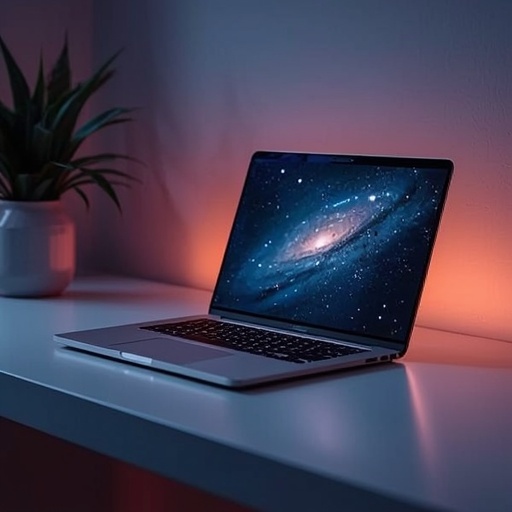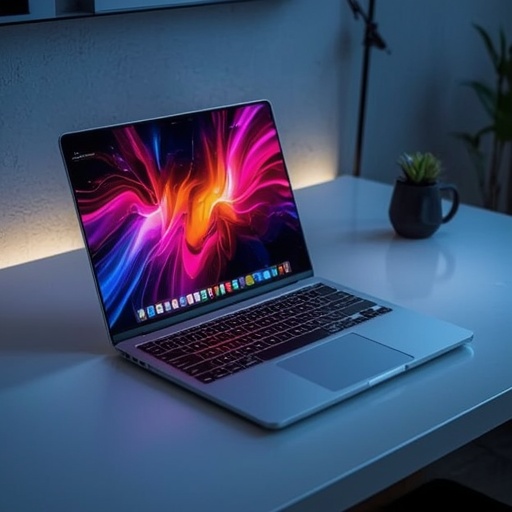
Dell has once again made headlines by unveiling its next-generation XPS 13, a device that redefines the balance between cost and capability in the premium laptop category. Available for just $599 for students and $699 for the broader consumer market, the new XPS 13 represents a direct and unapologetic challenge to Apple’s popular MacBook Neo. Designed with a larger display, lighter chassis, and superior selection of ports, Dell’s latest iteration takes deliberate aim at users seeking an alternative that offers comparable refinement but at a far more accessible price point.
At the announcement ahead of Computex 2026, Dell Chief Operating Officer Jeff Clarke embraced comparisons to Apple’s entry-level MacBook without hesitation. Instead of shying away from the inevitable rivalry, he affirmed Dell’s confidence in its design philosophy, emphasizing that no compromises were made in preserving the XPS line’s hallmark qualities. In his words, the company stayed true to the defining spirit of the XPS brand — and the highly competitive $599 starting price stands as a statement of that commitment.
This assertive positioning is significant because it marks one of the few occasions in which a major PC manufacturer has deliberately framed its flagship entry-level product as a direct competitor to Apple’s dominant budget laptop. By doing so, Dell not only underscores its technological ambition but also signals a renewed willingness to compete head-to-head in a market segment where Apple’s streamlined design has long set the standard.
The new XPS 13 is being released at a strategically opportune moment. Memory and component costs continue to rise sharply, pushing the prices of everyday laptops higher. Dell’s timely entry seeks to provide relief for a broad audience — particularly students, young professionals, and value-driven consumers who are unwilling to sacrifice speed, efficiency, or visual quality for affordability. The device offers an equilibrium between accessible pricing and high-end refinement, reinforcing Dell’s reputation for delivering functional sophistication without superfluous expense.
Central to this approach is Intel’s latest “Wildcat Lake” Core Series 3 processor family, designed especially for budget-conscious PCs. These chips – successors to earlier budget architectures – are engineered using the same advanced 18A process that powers Intel’s more powerful “Panther Lake” Core Ultra processors. Although they trade maximum computational output for efficiency and lower costs, they maintain impressive battery performance. Dell reports the new XPS 13 can deliver up to 17 hours of runtime on a single charge, a benchmark that will appeal to mobile users who value endurance over raw processing strength.
Configurations include the Intel Core 5 with six cores or the slightly more powerful Core 7 with eight cores. Paired with integrated Intel GPUs offering 2xe or 4xe cores respectively, the system can handle everyday productivity, creative applications, and light multitasking with surprising agility for its price class. Customers will be able to select from 8GB, 16GB, or 32GB of LPDDR5X memory and between 256GB and 1TB of storage, ensuring that both entry-level users and professionals with more demanding workloads can find a suitable configuration.
Clarke was quick to clarify that despite the competitive pricing, the new XPS should not be perceived as a bare-bones budget device. “We’re not in a race to the bottom,” he remarked, emphasizing Dell’s intention to balance affordability with craftsmanship. The streamlined base model achieves its low cost mainly through modest RAM and storage configurations paired with the Wildcat Lake processor, rather than by sacrificing build quality or core design elements.
The display is another area where Dell refuses to compromise. The XPS 13 features a 13.4-inch 2.5K LCD touchscreen capable of a 120Hz variable refresh rate and brightness levels reaching 500 nits, supporting 100% of the DCI-P3 color spectrum. This results in vivid color reproduction and smoother motion handling suitable for modern creative workflows and media consumption alike.
When compared directly to Apple’s MacBook Neo, the performance distinctions become even more pronounced. The XPS 13 is notably lighter, weighing only 2.2 pounds to the Neo’s 2.7, while also offering a marginally larger screen. Its InfinityEdge design allows for razor-thin bezels, maximizing screen real estate without increasing overall size. In addition, the integrated touchscreen provides a level of interaction still absent from Apple’s current laptop lineup. The inclusion of a backlit keyboard — while utilizing functional chiclet-style keys reminiscent of the MacBook aesthetic — further enhances everyday usability, ensuring comfortable typing in all lighting conditions.
Connectivity and expansion options are another decisive advantage. The XPS 13 comes equipped with dual USB-C 3.2 ports — one situated on each side — both supporting power delivery and DisplayPort 2.1 output. By contrast, the MacBook Neo offers a single USB-C port with 10Gb/s bandwidth and a secondary, significantly slower USB 2.0 port. Dell also doubles Apple’s storage ceiling, offering up to 1TB of onboard capacity versus the Neo’s 512GB maximum, addressing one of the most frequent limitations cited by Apple’s target audience.
Yet Dell’s strategy extends beyond mere specification one-upmanship. By constructing a system that starts accessibly at $599 but can scale upward through configurable components, Dell empowers users to adapt the system to their specific performance needs and budgets. For example, upgrading to 32GB of memory and a 1TB SSD boosts capability dramatically, although it also brings the price closer to that of the larger XPS 14 — a reminder that Dell’s product lineup remains intentionally tiered to cater to a range of performance expectations.
In addition to the initial configurations, Dell has confirmed that higher-end versions of the XPS 13 will be introduced later featuring Intel’s Core Ultra Series 3 processors, appealing to users who demand more intensive computing power. These premium models are expected to arrive in the fall of 2026, following the summer launch of the baseline versions. While pricing details for the future variants remain undisclosed, Dell’s clear message is that it intends to maintain flexibility in performance and pricing without compromising the XPS brand’s hallmark quality.
In short, Dell’s 2026 XPS 13 represents more than just a new entry in an established product line — it is a carefully calibrated response to market pressures and consumer demand. By merging affordability, design excellence, and thoughtful engineering, Dell has positioned this device as a credible and confident alternative to Apple’s entry-level MacBook, while reinforcing the enduring identity of the XPS family as a symbol of accessible innovation and modern computing elegance.
Sourse: https://www.zdnet.com/article/dell-xps-13-2026-macbook-neo-competitor/