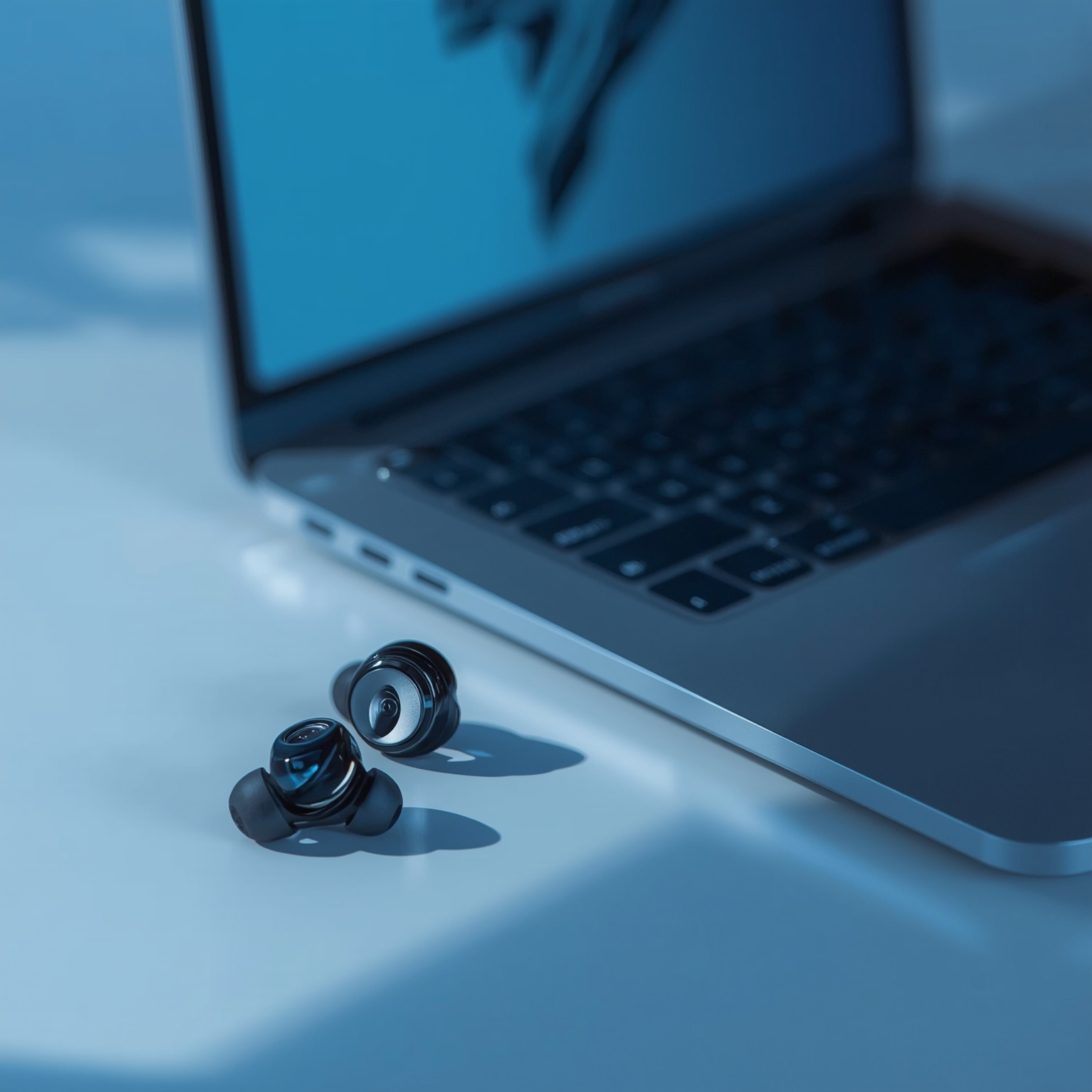
The Dell Pro Plus wireless earbuds mark a notable and ambitious step forward for Dell, representing the company’s deliberate entry into the increasingly competitive world of premium audio accessories. Priced at $230, these earbuds are strategically positioned for a professional audience, individuals who prioritize seamless communication, call accuracy, and multitasking efficiency over pure recreational listening. While they certainly handle music playback respectably, their true strength lies in how effectively they elevate productivity-oriented experiences such as video conferencing, phone calls, and hybrid work meetings.
From the outset, Dell presents the Pro Plus as more than just another pair of wireless earbuds; it is clearly a tool designed to enhance the professional’s daily workflow. The earbuds deliver consistently impressive call clarity, maintaining a balanced and articulate vocal output even in environments with moderate background noise. Their ability to produce crisp midrange tones ensures that voices come through distinctly, a crucial factor during online meetings or collaborative sessions. Although these earbuds can handle music with reasonable competence, they lack the fully immersive sound signature found in audio gear tailored specifically for casual or audiophile-level use. This distinction, however, feels intentional, emphasizing the Pro Plus’s priority: dependable, professional-grade communication.
During extended testing, audio performance during calls remained remarkably consistent across multiple devices, thanks in part to Dell’s intelligent noise management and AI-assisted processing. The integrated artificial intelligence actively reduces ambient interference, cleaning up background sounds to maintain clear and focused speech transmission. This same technology underpins the earbuds’ adaptive Active Noise Cancellation (ANC). When enabled, ANC automatically adjusts its intensity according to the user’s environment, suppressing distractions when necessary yet allowing a natural sense of spatial awareness when conditions are quieter. The outcome is a conversation experience that feels organically smooth and realistic, even when callers on the other end use lower-quality microphones. The earbuds subtly compensate for deficiencies in incoming sound, balancing audio levels to produce a cohesive and intelligible dialogue.
Although Dell’s Pro Plus earbuds perform admirably in professional or controlled settings, they begin to reveal slight weaknesses when applied to pure entertainment or high-fidelity musical playback. Compared to specialized consumer earbuds like the Technics EAH-AZ100, the Dell model tends to emphasize bass frequencies a bit too heavily, causing higher tones to occasionally feel recessed. As a result, songs can sometimes sound unbalanced, with treble details muted in favor of a deeper low-end character. Nonetheless, the audio remains vibrant and engaging overall, particularly after artistic adjustment through the Dell Audio app. This companion software allows users to personalize their listening experience by modifying bass, treble, or midrange parameters individually, or by saving custom sound profiles suitable for different environments and activities.
While these earbuds largely deliver a robust sound experience, occasional imperfections surfaced during testing. A faint crackling or static noise appeared intermittently while playing certain mobile games or low-bit-rate online videos featuring spoken-word content. Interestingly, this anomaly disappeared in well-produced material, such as official artist tracks on YouTube, suggesting that the irregularity stems from inconsistent audio source quality rather than from any inherent hardware defect. These subtle nuances underscore an often-overlooked truth in the digital audio landscape: no matter how advanced the playback device, the end result ultimately depends on the fidelity of the input file.
The Pro Plus charging case presents another design consideration worth noting. With its substantial build—slightly bulkier than Apple’s AirPods case—it offers functionality to match its physical presence. A USB-C port sits conveniently at the bottom for easy recharging, while a discreet pairing button hidden along the back maintains a streamlined, modern aesthetic. Inside lies a formidable 5,000mAh battery that can provide up to thirty-three hours of playback with ANC activated, significantly outlasting competing models such as the AirPods Pro 3, which offers an advertised twenty-four-hour runtime. Under moderate daily use, these earbuds comfortably last about four full days before requiring a recharge.
Opening the lid of the sturdy case reveals a compact yet clever design addition: a detachable USB-C adapter. When plugged into a desktop or laptop, this adapter activates Bluetooth Multipoint functionality—a particularly valuable feature for professionals juggling multiple devices. In practice, it means you can, for instance, listen to an audiobook on your phone and instantly transfer to your computer when a virtual meeting begins, seamlessly switching between devices without manual reconnection. The transition feels smooth and near-instantaneous, underscoring the Pro Plus’s intent to support adaptive, multitasking workflows.
Active Noise Cancellation remains a headline feature of the Dell Pro Plus, though its effectiveness is shaped by the earbuds’ physical form. The design features an elongated stem extending from the bulb, somewhat reminiscent of Apple’s AirPods aesthetic. While this structure contributes to sleek styling and a stable fit, it does allow a modest degree of external sound to bleed through, thereby softening ANC performance in very loud environments. Even with noise cancellation fully enabled, it is possible to sustain casual conversations—something not typically achievable with models like the Sony LinkBuds Fit, which use a more ear-hugging design to achieve near-complete acoustic isolation. That said, Dell’s ANC performs admirably within typical workplace or household settings, filtering out ambient distractions effectively without causing the pressure or ear fatigue that sometimes accompanies more aggressive systems.
Perhaps the most divisive design choice lies in the earbuds’ control scheme. Rather than adopting conventional tap-based touch controls, Dell introduces an unconventional pinch gesture system that requires users to squeeze each earbud between thumb and forefinger to execute commands like pausing, playing, or adjusting volume. While distinctive, this interface feels somewhat unintuitive at first. The gesture demands precision, and the response feedback, indicated by a faint click or tone, can be subtle. Over time, users may adapt, but the learning curve can prove mildly frustrating, especially when trying to perform simple tasks quickly. Despite this, the system’s core functionality is consistent once mastered—though finickiness lingers when performing volume adjustments or command variations.
From a pricing and positioning perspective, Dell’s Pro Plus earbuds occupy a logical niche. At a cost of $230, they represent a premium investment focused on efficiency, connectivity, and call performance rather than on luxury sound reproduction. For remote workers or professionals navigating between virtual and physical workspaces, their clarity, exemplary battery life, and dependable multipoint connectivity make them a thoughtful, productivity-enhancing choice. Those seeking superior music immersion or deeper noise isolation might consider alternatives such as Sony’s LinkBuds Fit, which excel in active noise suppression, or the Status Pro X, celebrated for its multi-driver configuration and rich tonal balance. Still, the Pro Plus earbuds hold their own by successfully blending business-oriented practicality with comfort and convenience—qualities that align seamlessly with Dell’s broader ecosystem of performance-driven technology products.
Sourse: https://www.zdnet.com/article/i-was-not-expecting-these-dell-wireless-earbuds-to-be-this-good-right-out-of-the-box/


